Columbus, Ohio USA
Return to homepage www.shortnorth.com
Thurber Connection
written by Gazette Publisher Tom Thomson
January/February 2020
Fast Forward to 1950
Visit Thurber Connection Archive
Return to homepage www.shortnorth.com
We were talking about Mame, James Thurber’s mother – when she was a young girl, a teenager.
We were trying to imagine what it might have been like when she pulled off her great wheelchair caper. Now, we’re going to fast-forward, but first let’s look at a few vital statistics.
Mame was born in 1866 and died at the ripe old age of 89 in 1955. James died just six years later in 1961. All that high living must have caught up with him! Cigarettes, whiskey, and late hours.
He and his brothers, along with their mother, are buried in the Fisher family plot at Green Lawn Cemetery in Columbus. The grave site is located at the southwest corner of the pond near the sculpture of Emile Ambos, the fisherman.
Fishing in some eternal stream.
Now, hang on as we go zipping through time. Swooosh! Suddenly it’s 1950. World War II is long over. North Korea and Vietnam loom on the horizon. The man with no middle name is in the Oval Office. The economy is booming. Our cast of characters are alive and kicking.
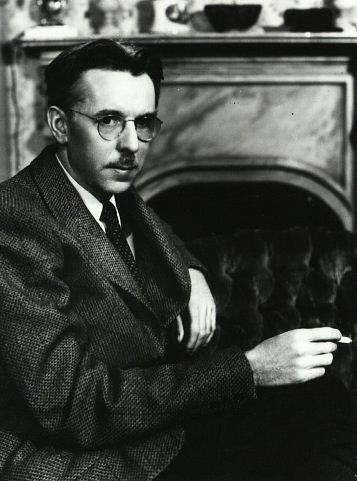
James is living alone in midtown Manhattan and is probably at the zenith of his creative career. He is a star! One new book follows another. Once or twice a year he takes time away from his busy schedule to come out here to Columbus to see his mother.
Althea his wife is in Connecticut with her show dogs. Her marriage to James is obviously on the rocks.
Mame is in the sunset years of her life and has moved into the stately old Southern Hotel. She is 84 years old.
Like many hotels in those days, the Southern catered to permanent residents in addition to transients. There weren’t as many apartments back then as now, and there certainly weren’t a lot of retirement centers.
Thus it was that my maternal grandmother (my “Orbiting Grandmother” of many Legendary Tales) decided to roost at the Southern.
The two ladies, although of vastly different backgrounds, and temperaments, became friends. Maybe acquaintances would be a more accurate word.
My grandmother was a staid and no-nonsense kind of individual. A study in lavender and old lace. Mame, on the other hand, was as bright-eyed and chattery as a squirrel in a nut shop.
Another word or two about Southern Hotel living might be appropriate here: They enjoyed a comfortable room, adjoining bathroom, maid service. Not only all that, there was also a fine dining room and cocktail lounge right off the lobby. Not a bad life!Reprinted from the July 2006 issue.
© 2020 Short North Gazette, Columbus, Ohio. All rights reserved.
Return to homepage www.shortnorth.com