
Columbus, Ohio USA
Return to Homepage www.shortnorth.com
Ralph Whitlock began contributing his country columns to the British Guardian Weekly in 1981 after an already extensive literary career
and continued until his death in 1995 at the age of 81. He was considered one of the most popular writers the Guardian ever had.
(Some editing to American spelling may have occurred in our hard copy version reprint in the Short North Gazette.)
About Ralph WhitlockTinged with Sepia
by Ralph Whitlock
January/February 2020 Issue
Guardian Weekly May 9, 1993
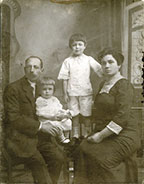
I have just been enjoying a rare treat – a visit from a 26-year-old Californian grandson whom I had not seen for 12 years. We rejoiced in the sunshine, which enabled him to make a pilgrimage to many of the places where his ancestors lived, but a rare rainy evening inspired us to bring out an old family photograph album. What a treasure it is!
Our oldest album dates from the 1860s. It must, for it features my paternal grandparents on their wedding day, which I believe was in 1868. There is a picture of my maternal grandmother in the 1890s and an older one of her mother in mid-Victorian costume. These portraits take us back nearly to the beginning of photography, for William Henry Fox Talbot, the father of photography, was born at Lacock Abbey in the year 1800 and started his investigations into what one contemporary encyclopedia happily terms “the fixing of shadows” in 1833. The Royal Society presented him with a medal for his work in 1842. So when my grandfather and grandmother were married the youthful art was then only about 30 years old.
Their wedding picture is obviously a studio affair. Grandmother is sitting bolt upright while an ill-at-ease grandfather stands beside her in a formal attitude, one hand resting lightly on the back of her chair. The photograph of my great-grandmother, taken at about the same time, reveals similar careful posing, as for an oil painting.
Those of the 1880s and 1890s are likewise all studio efforts, but by the turn of the century, although still posed, the subjects are taken against their own background. They arrange themselves in family groups in the garden, or pose bytheir front doors. Here is one of ten persons – six men and four women taken around the year 1900, I would judge; and the interesting feature is that five of the men (though none of the women, of course) are smoking cigarettes. And here is another, of my father’s cousin, dating from about 1895. The young man, then about 20, is posed with his bicycle, against a studio background. The significant feature is the bike, which was then such a novelty as to be thought worth a studio picture. He and my father were the first persons in our village to own bicycles, so recent is the innovation.
In the studio portraits of children the youngsters have invariably been overdressed for the occasion, especially in the more affluent Edwardian days. In one of some cousins of mine of that time the babies wear unbelievably elaborate bones, lace collars, fur capes and fur scarves.
In earlier and presumably more stringent times the dresses are plainer. Nearly all the women and girls, even the quite tiny ones, have high collars, Chinese cheongsam-style, and the dresses have a line of thickly studded buttons down the front. In Edwardian photographs, too, sailor suits are popular for little boys.
After the World War I things become much more free and easy. The era of the Brownie camera has arrived, and snapshots show people doing things other than posing. I have a lot of photographs of farm men about their accustomed tasks, working, of course, with horses. From a family point of view, though, there is a lot of interest in the more formal pictures of schools, sports clubs and Sunday school outings.
However, the quality has deteriorated as the quantity has increased. The early photographs, as I suppose one might expect from studio studies, are of excellent quality, most of them turned to a shade of sepia but still clear and sharply defined, after 90 years and more. The more recent ones are also quite good, depending on the skill of the photographer, but those of the 1920s and 1930s have, on the whole, faded quite badly. This particularly applies to the home-processed ones. A cousin of mine who lived with us in the 1920s was a keen amateur photographer, spending hours developing and printing his photos in a little room at the back of the house, but the copies I have are now faded almost past recognition. Which is a pity, for some of his subjects are of Egyptian scenes, taken when he was in the army.
Incidentally, in the Edwardian sections of my albums I notice a cult of using photographs as Christmas Cards. Here, for instance, is a Christmas card, featuring, of all places, Barnes Station! And many of the pictures of places seem strangely empty. In a photograph of Wherewell, Hants, 10 little children and a dog are playing in the middle of a village street. It fills me with nostalgia for the spacious days when children and dogs could play unhindered by fear of being cut off by a speeding car.
Coming to the Aid of the Injured Party
by Ralph Whitlock
March/April 2019 Issue
Guardian Weekly, November 3, 1991
Drawing © Roger Pearce A Saskatchewan reader expresses interest in my recent article on birds and animals that tolerate each others presence but then asks, “Have you ever known one species come to the aid of another?” He then proceeds to give a remarkable instance of this:
“Before coming to Saskatchewan, I lived in Hamilton, Ontario, on the western point of Lake Ontario, in the end suite on the fourth floor of an apartment. Immediately off the balcony stands a tall poplar tree in which nest a pair of Baltimore orioles, a beautiful bird with a lovely song. High above the ground, they were at the height of my balcony. I looked for their return every year and watched them nesting only a few yards away.
“One afternoon I heard them making a terrific din, far removed from their usual warble. I went out on the balcony and saw the pair frantically dive-bombing a large black squirrel which was making its way up the tree towards their nest. It ignored their harsh cries and their wings as they swooped and struck at its head. Their cries grew more strident as the squirrels got to within a couple of feet of their nest.
“I had reached for an empty flower-pot to throw at the squirrel when I was astonished at what happened next. Down at ground level, extending out from the back of the building, is a roof which covers the parking area. It is not a closed area, for the sides are open, and it shelters several dozen common English sparrows, which nest in the rafters, feed on the ground, and very rarely ever fly higher than the roof. To my amazement, a squadron of seventeen sparrows suddenly flew out from under the roof – I counted them – and rose straight in a body to my end of the roof, now circling. They flew in formation directly to the poplar tree, where they immediately began to dive-bomb the squirrel, in groups of two or three, one after the other.
“The squirrel kept going but could not resist so sustained an attack and, after a couple of minutes, turned tail and beat it down the tree. Once he began to flee the sparrows regrouped in the air. They did not light in the tree but flew straight back down to the parking area and disappeared under it. The exhausted orioles then disappeared into their nest and did not emerge for an hour or so.
“Their distress call is certainly far removed from their song. I heard it while inside the apartment, recognised it as something wrong, and went out to investigate. But have you ever heard of one species of bird responding to the distress cry of another?”
No, I don't think I ever have, though I think that it happens with certain com-munal-nesting sea birds. For instance, let a predatory skua gull appear in the middle of a nesting colony of terns and I imagine the entire colony would take alarm, regardless of which species of tern was immediately threatened. However, the nearest parallel that I have come across concerns a dog and a cat of my acquaintance. I believe I may have related it before, but it will bear repetition.
Some years ago I sold a house in which I had been living, and, as the new resident was a relation of ours, we decided to leave our cat behind. They had a dog, but the dog had been used to living with a cat and the cat had been living with our dog, so each was used to sharing quarters. As a matter of fact, they settled down quite amicably and took very little notice of each other.
About a week after the move a big dog came into the garden from next door and, finding a strange dog in residence, pitched into it. An almighty rumpus ensued and people came running. So did the cat. Spitting and with talons extended, she made straight for the intruder and, before anyone else could act, landed on his back. The boxer, disconcerted, left attacking the dog and fled back to his own territory, the cat in hot pursuit. It never ventured into the garden again. The newly resident dog retired to the kitchen and remained there, cowering, for an hour or two; the cat proceeded to wash herself.
Now the more you think about this the odder it seems. Here was a cat answering a cry for help not only from an animal of another species but for help against an animal of the same species as was being attacked. If it had been two cats ganging up against a dog it would at least have been logical. And the fact that the dog and cat concerned had been living together for only just over a week makes the incident all the more remarkable. Clearly the bond between the cat and the dog was their home; each had accepted that the other had come to share it and resented the intruder.
Come to think of it, the most fertile source of examples of animals reacting in defiance of the species instinct is when one of the species is human. From the days of Romulus and Remus, fostered by a she-wolf, to dolphins that deliberately play with humans and rescue them if they get into difficulties, instances abound. Pumas are credited with saving the lives of lost children; films of sea lions in the Galapagos Islands show the animals enjoying a frolic with humans; examples are known of deer soliciting the aid of humans in freeing their young from a snare.
In a perfect world in which mutual trust prevailed there would be many similar instances of humans using their superior technical abilities to rescue our fellow creatures from scrapes into which they had been tempted.Can Spring Be Far Behind
by Ralph Whitlock
January/February 2019 Issue
Guardian Weekly, January 20, 1985
Harsh “chukk-chukka” cries from black-and-white birds drifting distantly against the grey sky were the first evidence we had last November of the arrival of the fieldfares. Now, tamed to some extent by frost and hunger, we watch them, as chestnut-and-grey rather than black-and-white birds, feeding on apples in the orchard. Deer venture into the swede field just down the road, and the garden has filled up with tits, robins, chaffinches, greenfinches, blackbirds and other small birds which, when the autumn woods were replete with food, were consipicuously absent.
I am weary of winter and its dark days. Last summer, warm and dry though it was, passed all too quickly. And too soon we had entered the diminishing days of autumn. By November we were having to cope with sunrise at eight and sunset at four, or thereabouts, and on cloudy days only a half-light even at mid-day. Christmas was a welcome relief, a chance to forget momentarily the prevailing gloom, but here in January we are no more than half-way through the domain of winter. Winter proverbs and maxims emphasize the fact:As the day lengthens /
So the cold strengthensOne warns,
On your farm on Candlemas Day
Should be half the straw and
two-thirds the hay.By Candlemas Day, February 2, the hungriest months of the winter are still ahead. There will be little grazing in the fields until the beginning of May – another three months at least. So the short days and the long nights drag on. English farms spend five hectic months of summer trying to grow enough food to keep their livestock alive during the other seven months. And the Scilly Islanders reap a rich winter harvest by catering, through their lovely fragrant flowers, for our longing for a glimpse of color and a breath of spring.
I often yearned to escape from the winter, and one year I did so. My wife and I flew out to Nairobi on the day before Christmas Eve and arrived back at Heathrow on the day before Good Friday. In the interval we had travelled right across Africa and along the west coast to The Gambia.
On Boxing Day we were on a safari in Kenya. At the end of January we were camping under palm trees by the Indian Ocean. We had adventures, not to be related here, in the bush country of Nigeria, Dahomey and Sierra Leone. Late February saw us a hundred miles or so up the River Gambia revelling in the abundance and beauty of the bird life there.
What a paradise for birds that is! The local birds are driven back to the river by the drought which is absolute all through the winter months, and there they mingle with innumerable visitors from Europe, refugees from the European winter. Swifts, warblers, and wagtails, fuelling up for their marathon journey to the north, are eclipsed by the scintillating bee-eaters, rollers, paradise flycatchers, bushshrikes, kingfishers and various storks, spoonbills, herons and ibises.
Travelling home via the Canaries, we made a detour to southern Spain, where we spent a fortnight with a daughter and her family who were then living near Malaga. From the clifftops overlooking the Mediterranean we saw the swifts again, and this time the swallows and martins, flying strongly in from sea. We heard cuckoos calling in the olive groves and watched hoopoes displaying around old, dilapidated farm buildings. Oleanders and mimosa were in bloom, and one day, on wasteland near the cliff, I came across a colony of spider orchids in full bloom, as they would be in Dorset in May.
Back in England, we arrived to clear, chilly weather and a sky so pale by contrast with the vivid blue we had been used to. As usual at Easter we went walking in the woods with our grandchildren and were pleased at their delight at finding the first primroses and sweet-scented violets. The church was decorated not only with daffodils and narcissi (sent up from Cornwall, for it was too early for the local ones to be in bloom) but also with branches of pussy willow, or sallow, or “palm” to us northerners, who seldom if ever see real palm and so substitute our willows for Palm Sunday displays.
Everyone was happy about the return of spring. “It’s come early this year,” they said. And the farmers cast a cheerful eye over verdurous grassfields and calculated how soon they would be able to turn out their cattle for an early bite. But to us the weather was cold and the countryside cheerless and bleak.
Then we realized what had happened. To appreciate an English spring you need to live through an English winter. And we had escaped the winter. Well, it was one of the things I had long dreamt about doing. One of them.
A book which I was given to read when I was a boy made a considerable impression on me. Entitled By Log Cabin and Camp Fire or something like that, it was an account of a missionary’s life in northern Canada. I revelled in the descriptions of journeys on snowshoes and by dog sleigh across the sparkling snow, to the wavering illuminations of the Northern Lights. I was enthralled by the migrations of the caribou, by encounters with wolves and polar bears, by the technique of spearing seals through blowholes in the ice.
But more than anything, though, I was attracted by the coming of spring. A dramatic event, when the weather suddenly turned many degrees warmer in a southern wind and the geese came flying overhead on their way to the tundra. Then the snow began to melt and water to collect in pools on the surface of the ice. Came a day when with explosions like thunder the ice on the frozen rivers broke up and the water started to flow again in frothing, clashing turbulence. Myriads of singing birds from the south would repopulate the woods, and the northern flowers would hasten to expand for their brief season of glory.
One year, I promised myself, I would spend a winter in the northern Canadian wilderness, just to participate in the stupendous triumph of spring. But I never have, and now I doubt whether I ever shall.
After our experiences of an African winter, though, it came to me that I needn't bother. All my previous life I had lived in a northern climate and experienced both a northern winter and the exhilaration of a northern spring, and I hadn’t realized it. So now I appreciate to the full the first signs of the inevitable awakening.
The hazel catkins are already shaking their pollen in the January woods. On mild mornings the song-thrushes are singing. Soon they will be joined by the chaffinches, the blackbirds and the skylarks. The redwings and fieldfares, resplendent in their new spring plumage, will be on their way back to Norway. In the garden, bulbs are thrusting their green spears sunwards, and very soon I shall have to be busy sowing seeds in the greenhouse.
When is the best season to take an overseas holiday in the sun? I don't know, and I don't mind if I never have another. Whenever you leave England you miss so much. Even in winter.
Animal Idiosyncrasies
by Ralph Whitlock
November/December 2018 Issue
Guardian Weekly, November 15, 1992
Intrigued by my recent article in praise of crows, several readers have written to me giving parallel instances of intelligent behaviour by them. I quote one from Canada, from a lady who lives by a six-mile-long lake on which she often goes canoeing with her husband.
“One afternoon we were paddling along,” she writes, “when we heard the greatest cacophony of crows. We angled over towards the sound but kept a discreet distance so as not to disturb the birds. I trained my binoculars on them.
“About 30 to 35 crows were gathered in a big tree at the edge of the water. Down at the waterline were some rocks, jutting out into the lake, and on these were about six of the crows, bathing. And, as I watched, I could see that they were taking it in turns!
“As each crow finished its ablutions it hopped up on to a branch and its place was immediately taken by another, yet there were never more than about six in the water at once. Those up aloft seemed to be doing two things, namely guarding the bathers and shouting encouragement.
“On another occasion, in the winter of 1990, I walked for 50 yards or so on the ice covering our lake and deposited there a dead squirrel recently killed by a car. The next day two crows turned up. It took them ages to investigate. One would sidle up to the carcass and start to peck at it, while the other stood some distance away. Then the first bird would fly up and alight on the ice, leaving the second bird to have a go. It approached the carcass very circumspectly and took ages before it attempted to take a bite. Then I noticed a third bird high up in a tree, simply watching.
“It took the crows four days to eat the squirrel. At no time did I see a bird on the ice without another in the high look-out perch on the tree, and at no time did I see two birds feeding together. The number of crows increased to four as the meal proceeded, but never more than one was busy on the carcass.”
Crows are said to be among the most intelligent of birds, and these instances seem to equate intelligence with caution. They must have been excessively cautious to take four days to dismember the carcass of a squirrel in the dead of winter.
At the tail-end of summer one encounters the usual number of damaged specimens of butterflies eking out their last few days of life. Recently I saw a Small Tortoise-shell butterfly so badly battered that it had only two complete wings left, the rear wings being reduced to tatters. Yet it was consorting with other butterflies of the same species and doubtless managing to mate. A colleague had observed a Peacock butterfly with the whole of one hind wing missing, badly affecting its ability to fly. But this one too had contrived to find a mate.
I am reminded of a series of experiments carried out on caterpillars by which the caterpillars were deprived of their heads with a minimum loss of blood. Being more or less fully grown, they proceeded to pupate and in due course emerged as complete and perfectly healthy butterflies, but without heads! They enjoyed a longer life than normal individuals, being content to sit around in the sunshine instead of wearing themselves out mating!
A Cambridge (Massachusetts) reader tells me the story of a honeymoon couple, recently returned from the Caribbean, who having been given an underwater camera, had difficulty in persuading the fish to pose; whereupon a member of the crew producing an aerosol can containing a disgusting concoction he called Cheez-wiz, saying it was an infallible attraction for fish. And, indeed, it was! The would-be photographer hadn’t even time to take the top off the camera before he became aware of fish swimming his way from all directions!Why the Tick?
by Ralph Whitlock
July/August 2018 Issue
Guardian Weekly, August 9, 1987
The daily grooming of our dog at this season too often reveals the presence of ticks – horrid, bloated creatures, their distended bellies filled almost to bursting with dog’s blood. They must cause the dog intense irritation, as I can testify from experience. When one fastens its jaws into my flesh the little wound stings and torments me for two or three days, even though I take measures to dispose of the pest before it really gets going.
A generally accepted method of ridding a dog of ticks, by gripping the creature between thumbnail and fingernail and pulling, is not to be recommended. The tick is almost sure to break in the wound. Smokers can apply a lighted cigarette to it, which usually causes it to release its grip. I simply smear a well-tried insecticide from a tube on and around it. The tick soon dies and falls off, though the irritation lingers on.
In my time I have quite frequently been persuaded to talk at harvest festivals, flower festivals, and the like. On these occasions I am expected to enlarge on the beauties of Nature, the exuberant song of birds, the exquisite color and texture of flowers, the cornucopia of fruits that
autumn produces, the perfume of bee blossoms, the strength of weather-defying great trees, the marvelous instincts that control the behavior of all living things, and the many other glories of the countryside. I have done so sincerely and to the best of my ability, for the earth is indeed filled with harmony and wonder. And yet, in the recesses of my mind, lurks the spectre of the tick.
Who invented the programmed and miserable little horror? And for what purpose? If it were a killer it would be more comprehensible. After all, the natural order of things is that every living creature survives by eating others whether animal or plant. So we learn to accept the flesh-tearing tools of claw and fang, the venom of snakes, and the knife of the slaughterman. We know that the primary principle in Nature is ruthless competition, in which even beauty is often used as bait for a trap.
At this season I frequently come across crab spiders (I believe their name is Thomisidae), cleverly camouflaged to match the vivid colors of the flower petals amid which they lurk. Beautiful creatures, yet death to the incautious bee or fly which alights for a sip of nectar. Even the apparently static plants of garden and wood are engaged in earnest endeavors to strangle or smother each other, as a speeded-up film of a patch of vegetation during spring and summer clearly reveals.
The tick is not like that. It doesn’t kill; it merely tortures. It can pass on to its host lethal parasites, but that is incidental. And the torture can be decidedly painful. The tick normally goes for sensitive tissues, such as eyelids. I have seen a warbler with a tick bigger than its eye attached to its eyelid. The bird frantically tried to rub it off against a twig.
Naturalist Gerald Durrell has given the lie to the myth attaching to animals enjoying life in the wild. On his numerous expeditions to procure specimens for his zoo he has found that his first task when confronted with a newly captured animal has been to mount a blitz on its assorted lice, fleas, ticks, and other parasites and to treat it for any infections.
I wonder whether that is the ultimate role of mankind in this complex world? To relieve suffering among wild creatures as well as in our domestic animals and in humans. After all, we have now a formidable array of weapons at our disposal, as my mail of press releases from the agrochemical industry amply illustrates.
The ducks and waders and terns that nest on the shores of the Arctic tundra surely deserve success after making their tremendous journeys into those inhospitable climes and assiduously incubating and protecting their eggs and young, especially as the chicks and ducklings are such appealing balls of fluff. Yet those same babies are the natural food of the native skuas and blackbacked gulls which, robbed of their victims, would go hungry. The same considerations apply to all predators and their prey.
How far down the wildlife scale do we take the argument? Those of us who have spent time in India have probably seen holy men there who have such regard for the sanctity of all life that they refrain from cutting and washing their hair in order to protect the lice and fleas which thrive there. These lowly forms of life, they maintain, have as much right to live as they themselves have.
Can that argument be applied to ticks? Am I justified in ridding my dog of an irritating parasite by depriving the tick of its meal? Has the tick the right to as much consideration as the dog? What do you think?
So many times at those harvest and flower festivals I have joined in the singing of the old hymn: “All things bright and beautiful, All creatures great and small, All things wise and wonderful, The Lord God made them all.” Including the tick?
Menus for Hedgehogs
by Ralph Whitlock
May/June 2018 Issue
Guardian Weekly, February 23, 1992
Events have conspired to dictate that the subject for today shall be hedgehogs. I have received no fewer than four letters raising different aspects of hedgehog lore, and then, a few days ago, I found a young hedgehog drowned in our garden pond.
This last was an almost inevitable casualty. More than half of our hedgehog population do not survive their first winter. They belong to a litter born in late September and so are not independent of their mother until November, which doesn’t give them much time to fatten up for hibernation. This one was obviously out searching for food when it should have been asleep. Incidentally it was the only hedgehog I have seen in my garden for more than a year, though that doesn’t necessarily mean that none were there. Hedgehogs, when not pressed for food, are essentially nocturnal.
An American correspondent, reminiscing about his Somerset childhood, says he is familiar with the loud snuffling and grunting that heralded a visit to the back garden by a family of hedgehogs. He and his brother used to hasten to offer them a saucer of milk, which, in spite of the doubts of some naturalists, is an acceptable treat. Hedgehogs will go up to a quarter of a mile for bread-and-milk, guided by smell.
A reader who has recently visited the Hausa and Djerma people of Niger tells me he was surprised to find that they eat hedgehogs. Actually, he says, he was surprised to find one there at all, and inevitably it was squashed in the road, implying that the African hedgehog has about as much road-sense as its British cousin. The natives roast hedgehogs caught well out in the countryside but regard those found in the vicinity of villages as unclean, due to feeding on human waste, and so have a special method of preparation.
They remove the internal organs and head, and then up-end the body directly over the fire and boil it. The “shell” serves as its own cooking-pot, and when the fat is bubbling the organs are returned to the shell, thereby creating a sort of stew. After the stew is eaten the shell itself is consumed, all the spines having by then been burned off.
A nicer part of the story is that the Hausa do not eat “dancing hedgehogs.” When a hedgehog is found, children and women surround it chanting a song, a rough translation of which is “Pithier patter, pitheir” (the local name for the hedgehog) “come dance for us, come dance!” Many animals do sway and move to the rhythm. If so, they are thanked and allowed to go on their way. If not, they are eaten.
My correspondent asks whether I have any English recipes for cooking hedgehogs. The only one I know is the gypsy formula for roasting a hedgehog. You wrap the hedgehog in a thick layer of clay and bury it in a hot fire. When it cools a little, peel off the clay, which takes off all the spines with it. The flesh is revealed as white and very tasty.
A New Zealand reader writes that hedgehogs seem to be one of the few success stories in the disastrous catalogue of the introduction of alien species. Rabbits, goats, pigs, cats, rats – the list is endless – but the hedgehog is the gardener’s and farmer’s friend.
She comments, “In Australia snails and slugs exist in plague proportions, but here we see only a few empty snail shells and the occasional slug in the too-long-unweeded parts of the garden. We are most grateful that we have hedgehogs in the garden.”
She quotes a book with a statement that, as hedgehogs are carnivores, bread-and-milk is entirely the wrong food for them, but my opinion is that the hedgehogs know best.
Finally I have a letter from a reader who lives on an island off the coast of Greece and who writes, “I want to tell you about my dog whose mania was catching hedgehogs. She used to bring them to me at first, never minding the prickles, but when she found I either released them over the wall, if still alive, or disposed of them if dead she took to burying them herself, to mature for her future delectation. I usually managed to find the tell-tale mound and remove the body while she was shut indoors, but sometimes she would stand guard over it all night, growling if I approached, only two green eyes to be seen in the dark.
“The strange thing is that a visitor, a Greek countryman, said immediately on seeing her, ‘That’s a hedgehog dog.’ She was a stray. I can only think that she was descended from a gypsy breed trained to fetch hedgehogs for supper.”
Well, I have met all sorts of dogs in my time, but this is the first “hedgehog dog” I have come across. Have any readers ever encountered one?
A Ringwood (England) reader sends me a query about a word used by his great-grandfather (born 1807). When referring to anyone who had upset him or whom he thought of no account he would call him a “wuzbird” or “woozebird,” but he could never find out what it meant.
Well, I can enlighten him. My father (born 1874) used it occasionally. The word is actually “husbird” or “housebird” and was used in a derogatory sense of a man who was a layabout, staying at home all day and consorting with his neighbours’ wives!
Surrogate Mums of the Farmyard
by Ralph Whitlock
March/April 2018 Issue
Guardian Weekly, April 29, 1990I suppose it must be just coincidence, though to me it sometimes seems uncanny. A reader in some distant corner of the globe sends me a query on some obscure subject which seems worth investigating. But before I have a chance to write anything about it, or even before I have answered his letter, several other letters on exactly the same subject fall on my desk!
For example, back in June a reader in Greece wrote to me on the subject of surrogate mothers in the farmyard. “Twenty to twenty-five years ago,” he told me, “my father had many kinds of birds on his farm – chicken, turkeys, ducks (green-necked mallards), pheasants, even a couple of peacocks. The last-named tended to proliferate to such an extent that our village, near Argos in the Peloponnesos, echoed to the shouting, to the exasperation of our neighbours. We even managed to ‘export’ this displeasure to France, where a friend who acquired some of our peacocks was given an ultimatum by the neighbours – either get rid of them or move elsewhere!
“Have you ever come across cases where hens have been used as surrogate mothers? Ducks and hen peacocks tended to disappear for some weeks and then come back with their hatched broods . . . if they ever did come back. So we used to follow them, or keep them in pens, in order to collect their eggs. When we had enough eggs we used to place them under broody hens, who in due course found themselves in charge of some decidedly strange offspring. Ducklings, of course, used to get the hens really worried, as they fussed around the edge of the pond, clucking and trying to coax the little ducks away from all that dangerous water.”
My correspondent poses a query. “The hens seemed able to change their clucking to appeal to almost every sort of foster-chick, except peacocks. Those never responded at all. I wonder why?” Now that particular query I cannot answer, except to say that I am not surprised at the question, for peacocks rank pretty low in the intelligence stakes. But what intrigued me is that within a week of receiving that letter I had one from Canada, asking whether I remember when broody hens were in strong demand by gamekeepers for hatching pheasant eggs.
And another from an English reader enquiring whether there were any snags about using broody hens to hatch turkey eggs. At the same time a neighbour was successfully acting as surrogate mother to a brood of orphan sparrows. And all coincided with the publication of my book, The Secret Lane, in which on the very first page the hero is sent down to the village to borrow broody hens. “Broody hens were at a premium in March and April. Farmers’ wives wanted them for incubating hens’ eggs; the keeper, Henry Upshot, for sitting on pheasant eggs.”
How do those coincidence arise?
Well, I can answer one of the questions categorically. On no account use broody hens for incubating turkey eggs. Domestic hens carry a whole range of germs to which apparently they have developed some immunity but which are lethal to young turkeys.
We knew nothing of this in the 1920s, when my parents started keeping turkeys with the other farm poultry. We bought turkey eggs in the market, popped them under domestic broody hens for a month and then put them in the orchard with the chicken, ducks, geese and bantams. The mortality rate was always alarming, but we had no idea what the trouble was until the Ministry’s poultry officer enlightened us.
Then we fixed up an old barn loft as a permanent turkey house, placing the day-old poults, purchased from hatcheries, there under infra-red lamps and allowing them to spend their entire lives there. We used then to achieve a survival rate of about 95 percent. Moral – always keep turkeys well away from other poultry from yards or pastures contaminated by poultry. Broody hens as surrogate mothers were satisfactory with most other types of poultry, even ducklings. But trouble sometimes resulted when we inadvertently used a broody hen that had, either in this or a previous year, hatched a normal brood of chicks. She would remember what normal chicks sounded like when they were hatching under her feathers and recognised that these alien ducklings were different. If my mother were not quick enough to rescue them she would peck them to death.
Ducks, of course, are not to be trusted to hatch their own broods. Apart from tending to desert the nest when there are still eggs to be hatched, their instinct is to take their ducklings on marathon cross-country treks on which a mortality rate of 50 percent or more is quite acceptable. Bantams are probably the best of all surrogate mothers and were much in demand.
When I was a small boy Billy Goodrich came to live for a time on the next farm. Billy was a lad of imagination, full of bright ideas. One spring, when demand for broody hens was at a peak and we couldn’t find enough to go round, Billy announced that if you got a cock thoroughly drunk he would serve the purpose equally well. Not for incubating the eggs, of course but for brooding the chicks. I suppose he argued that if the cockerel were too drunk to stand up, he would be glad to sit down anywhere, even on a brood of chicks.
So we picked out one of the biggest and best of our cocks and fed him on mash soaked in whisky till he could hardly stand. Then we sat him in a quiet corner and gave him a brood of chicks to foster. The experiment was a disaster. The pie-eyed cock refused to sit still. He staggered to his feet and went blundering about, scattering baby chicks right and left with his great splayed claws!
I forget how we got out of that one, but I do remember that Billy Goodrich was absent when the explanation time came.
EDITOR'S NOTE: - Here are some observations by Harvey Ussery, Mother Earth News
Using a broody hen to raise your chicks provides several additional benefits to both the chicks and you. The mother forages natural foods, mostly insects, for her chicks, keeps her young ones warm even while ranging on pasture and through cooler weather, and provides devoted protection from predators. The flock-keeper who chooses to foster broodiness (the inclination for a hen to hatch her own eggs) will be rewarded with a healthy, self-sustaining flock.
Modern Breeding vs. Broody Hens
Commercial hybrid breeds lay lots of eggs, but they aren’t a good choice if you want hens that will go broody. In today’s era of mass production of chicks via artificial incubation, broodiness is considered not merely an unnecessary nuisance but an economic calamity. After all, a broody hen ceases laying eggs when she’s incubating eggs and caring for chicks. Thus, a major component of modern poultry breeding has been to select against the broody trait in favor of hens that simply lay their egg per day, having forgotten that doing so has any relation to reproducing the species.
A Dabster For Rats
by Ralph Whitlock
September/October 2017 Issue
Guardian Weekly, April 29, 1990A dog book I have recently acquired, to pass on to my daughter, is All About the Jack Russell Terrier, by Mona Huxham. It is one of a series, “All About Dogs,” breed by breed, published by Pelham Books, but this title attracted me particularly because my daughter’s family dog is a Jack Russell. Roly is as full of character as any little dog I have ever met.
Jack Russells have the interesting distinction of not being recognized as a breed by the Kennel Club. They are officially a strain of terrier, not a breed. And that could well be their salvation. Too often breeders of recognized breeds tend to exaggerate the distinguishing points for show purposes.
Bulldogs, for instance, are a gross caricature of the dynamic animals originally bred for fighting bulls. The Old English Sheepdog has sacrificed skill in handling sheep for a dense coat that would be a handicap in any sheepfold. A sinister development in the Rottweiler is that apparently some breeders are deliberately breeding for aggression. Jack Russells, however, not only have a goodly inheritance of hybrid vigor; they also tend to be bred for intelligence.
One of the most intelligent dogs that have ever shared my life was a mongrel Jack Russell – well, even more mongrel than most. It was also the most celebrated, for at one time it was the best-known dog in Britain.
This was in pre-television days, when my BBC radio Children’s Hour program, Cowleaze Farm, was becoming popular. Parties of children took to visiting my farm, with the statement “This is Cowleaze Farm, isn’t it?” Well, Cowleaze Farm was an imaginary, studio farm, but it was easier to agree with them than to explain. Then came the next question, “Where’s Towser?”
To start with, there wasn’t a Towser, so one day I suggested to my vet, “If ever you get a dog that answers to Towser’s description, you’d better let me have him.” And before long a dog was introduced, a mongrel Jack Russell. It wasn’t even the right sex, being a spayed female, but somehow it seemed more appropriate to call it “he.”
It was eighteen months old, completely neglected and handed in because it was considered hopeless. When given a wicker basket to sleep in, it ate it! It was eager to please but didn’t know how to go about it. More than once we said, “We can’t possibly keep this dog!” But we did, and in due course Towser was loved by millions of children.
From the viewpoint of what was required of a farm dog in those days (the late 1940s), Towser had one supreme qualification. He was a dabster for rats!
Several worthy dogs have shared our home with us since Towser died in the early 1960s, but my thoughts raced back to him the other day when I was reading a paper, published in the current issue of our county Archaeological and Natural History Society, on rats in Wiltshire. The author, Marion Browne, who is a leading authority on mammals, has been conducting a systematic survey of their status from 1975 to 1989. Eventually she collected 453 records, involving a minimum of 1596 rats.
The figures gave me a start. I read them again. Less than 1600 rats in fourteen years. Why, back in Towser’s day we could have accounted for, and probably did, that number in a single winter!
But then I asked myself. When did you last see a rat? I could answer that easily, for I keep daily records of animals and certain insects as well as birds. Checking my charts I found that I saw a rat – and that was a dead one, squashed on a road – on March 21. It was the only one recorded in the first three months of the year.
How very different was the situation on the farm where I was raised. Rats were everywhere. In thatched roofs, in barns, in fields and hedgerows, in ricks – particularly in ricks. The one season when I can be fairly sure of seeing a rat in my garden is autumn, when rodents migrate from the fields and woods in search of winter gardens. Most years at least one will try to take possession of our garden shed, requiring me to call on the services of the council pest officer (alias rodent executive, alias rat-man). In this respect, rat behavior has not changed. The autumnal invasion of the farmyard by rats was a feature of life on our farm, back in pre-war days.
As soon as possible after harvest the peripatetic threshing machine would arrive to thresh a proportion of our corn ricks, to provide my father with enough cash to pay the rent and carry on, but we always left a few ricks for threshing on the machine’s second time round – often in late winter. By that time, the ricks would be alive with rats. You could go out at night with an electric torch and an airgun and shoot them galore as they poked their noses out of holes in the sheaves. The owls grew fat.
Nemesis eventually overtook them on threshing day – the red-letter day of the whole year for Towser. An angel of death, he was everywhere. We could never use a gun for fear of hitting the dog. But he didn’t let many escape.
In her paper Marion Browne quotes an estate in East Anglia where in the year 1906 14,662 rats were killed. Over 10,000 were accounted for in 1926, and 1,500 annually between 1926 and 1942. She comments that there is no reason to suppose that things were different elsewhere in England, and they were certainly paralleled on our farm.
And now, to think that the brown rat has become a comparatively rare animal! I can hardly believe it. It is good that Towser died before he needed to adapt to such a famine. A rodent-free England would have been no place for a dabster for rats!
Apparently the annual tolls remained fairly steady until 1954, when myxomatosis wiped out rabbits. The inference is that foxes and other predators that had lived mainly on rabbits then had to turn their attention to rats.The Pack Instinct
by Ralph Whitlock
May/June 2017 Issue
Guardian Weekly, June 16, 1991
Our ancestors had their own methods of dealing with rampaging dogs. Rain had been falling steadily for the past three hours and looked like continuing for the rest of the day. Water dripped from the tree branches, and every blade of grass sagged under its weight.
“What are those dogs doing there?” asked one of the two woodmen, as they entered the woodland clearing.
What aroused their suspicions was that the dogs were doing nothing. One a big mongrel, of retriever type, the other a much smaller dog, just sat there in the pouring rain. When the men approached, the larger dog roused itself and loped away into the woods with a furtive backward look.
The little dog followed. It did not take the woodmen long to find the part-eaten deer carcass. And the dead kid, a few yards away. The roe deer mother had evidently given birth about two nights previously and, when attacked, had chosen to remain with her baby, paying the inevitable penalty. The dogs had been roaming unaccompanied. Recognizing them, the woodmen called at there owner’s home a mile or two away and found her working in the garden. The dogs returned while they were there. They recognized the mangled carcass the woodmen were carrying and slunk away to hide. Their owner was horrified and apologetic.
Now that suburbia has taken over so much of the English countryside, the bored dog is becoming an increasing problem. In this instance, the tragedy was due to carelessness or irresponsibility. The dogs had simply been allowed to run loose. “But why would they want to do this?” cried their incredulous owner. “They’re always well fed.”
The comment displays a lack of understanding of the nature of a dog. Unlike a cat, which hunts alone, a dog is a social animal. Its instinct is to run with a pack, under a recognized leader. In its relationship with we humans, it accepts its master or mistress as its leader. That is why it is such a good companion.
A farm dog, out and about with its master for most of the day, is one of the happiest animals imaginable. A town dog, confined alone to the house all day while its master and mistress both go out to work, is not. It is bored and frustrated. Its owners are ecstatically greeted when they return in the evening. Having been pent up all day and needing exercise, the dog is ready for what is, for it, the high spot of the day, “going walkies.”
If that happens to coincide with its owner’s mood, that’s fine. But there are inevitably times when the household humans return home too tired, or when rain is pouring down, or on winter evenings when dusk falls by four o’clock. Then the temptation is to open the door and let the dog out to take a run on its own account.
Even when out with its owner, a dog living a town or suburban life needs much more training and control than one which spends most of its time with its master. A dog is naturally more energetic and quicker in its movements than a man – behavior related to its having four legs instead of two. If unchecked, it will go racing ahead, following exciting scents. A dog not trained to come to heel when called may well get carried away by the exhilaration of the chase.
In the incident which prompted these thoughts the victims were deer. They could as easily have been lambs, or geese, or hens. Indeed, it was learned afterwards that the bigger of the two dogs had already been in trouble for killing poultry. And, believe me, once a dog has killed under such circumstances it will do so again, given the chance.
When, more than 20 years ago, we left our farm and went to live in London for a few years, we gave away our farm dogs to neighbors whom we knew would give them the sort of life they were used to. The one dog we took with us to the suburbs was our daughter’s Pekinese, who, we surmised, would be able to cope comfortably with the amount of exercise we would be able to give him. And so it proved. Sam is the fourth Pekinese who has since shared our lives.
Our ancestors had their own methods of dealing with rampaging dogs. On exhibition in the Verderes’ Hall at Lyndhurst, in the New Forest, is a venerable bit of ironwork known as Rufus’s Stirrup. Back in the Middle Ages, this was the device for measuring the size of dogs allowed to be kept by New Forest commoners. If the dog could be squeezed through the Stirrup, measuring ten and a half by seven and a half inches, it was acceptable. If not, it had to have three front claws of its forefeet cut off with a chisel – a process known as expeditation.
Big, mastiff-type dogs, very like the modern Rottweilers, were then popular and were quite capable of pulling down the red deer regarded as royal property. Expeditation effectively put an end to that activity, cruel though the deterrent seems to us.
Somewhere to Sit Down
by Ralph Whitlock
April 2017 Issue
Guardian Weekly, July 13, 1986Aunt Polly has been in my thoughts lately. When I was a small boy she kept the village shop – the first shop, I believe, ever to exist in our small village. Before her bold innovation, villagers had to rely on occasional pedlars or on twice-yearly excursions to the town (2 1/2 hours distant by carrier’s cart), at Easter and Fair Day, for the relatively few commodities, such as Easter bonnets and chemises, which they themselves could not produce.
Aunt Polly (who may not have been my real aunt, but no matter; everyone in our village seemed to be related) lived with her two brothers and an invalid sister and began shopkeeping when the more enterprising of the brothers set up a village bakery. That may have been a new departure, too, for there was a strong tradition of homebaking. I gather that most of the family gave a hand with the baking in the early morning, after which Uriah delivered bread by pony-and-cart to outlying farms and hamlets; Walter trundled a covered barrow around the village; and Polly dispensed loaves to calling customers from her front room.
In due course, the front room became equipped with counter and store shelves, as Aunt Polly widened her range of stock. She could supply candles, paraffin, tea, soap (yellow or Lifebuoy), loaf sugar, matches, black lead, boot polish, pegs and sweets kept in big glass jars in full sunlight.
One of my abiding memories is of going into Aunt Polly’s shop for a ha’peth of peardrops and watching her bite a sweet in half to get the exact weight! The other half went back in the jar. There was, of course, no reason for her to stock eggs, butter and potatoes (you got those from the farms), or boots and bootlaces (they came from the cobbler), or mousetraps (old Billy Medcalf made a type that were more effective than any I have been able to buy since).
It was all very basic and primitive, but I have recently had reason to reflect that in one respect it was streets ahead of the stores and curent supermarkets. It had a chair for customers to sit on. It is true that Aunt Polly’s shop seldom had more than one customer at a time, but that gave a welcome opportunity for a helpful little gossip. Aunt Polly had a chair on her side of the counter, too.
Thursdays are our usual shopping day, but the other week when Thursday came round I was in some agony with fibrositis or sciatica or something of the sort – something I had never experienced before and don’t want to encounter again. With my wife still somewhat incapacitated by her traumatic illness of two years ago, I need to attend her on these shopping expeditions as chauffeur, guide dog and beast of burden.
I rather enjoy indulging myself extravagantly at the food shelves, but in the departments which sell detergents, household goods, cosmetics and kitchen rolls I am bored. (Other husbands, like myself, must have been amazed, amused and finally bemused by the time necessary for buying tights, shampoo of the right mixture, and matching refills for cosmetics!)
And this is when the absence of chairs in modern emporia came painfully to my notice. Here was a new supermarket, covering it seemed to me about six acres, and never a chair, bench or stool for the benefit of weary customers. Even mediaeval monastic churches, addicted though they were to inflicting penance on the flesh, provided misericords for legweary choristers to perch on.
But our supermarket designers are made of sterner stuff. Banks and libraries pander to our weaknesses, some of them even to the extent of supplying upholstered easy chairs, but the staff of supermarkets eye you with disapproval if, in default of anything else, you sit on the stairs.
I sat on the stairs while my wife debated with herself about packets of tights, all of which looked exactly the same to me. A mum with a child in a pushchair sank wearily on the step below. “They put all the everyday household things upstairs,” she lamented. She even accepted my offer to look after the child while she went up higher, though perhaps I don’t look like a kidnapper!
“I just can’t do it,” said an elderly sufferer, joining us on the stairs. “I have a bit of a rest and then go elsewhere. It’s another of these American ideas, isn’t it?”
And that’s the odd thing about it all. Supermarkets are, I believe, an American idea, but virtually every American and Canadian supermarket I have ever patronised has those basic facilities which ours lack. They have coffee shops or restaurants; and well-equipped toilets where a baby’s nappy can be changed; and a trolley park where the shopping can be left until the shopper is ready to go to the car.
Where the stores are on more than one level escalators are universal, but if they were not I feel sure that assistants would be on hand to help mothers with pushchairs upstairs. The only way you can attract the attention of staff in a British supermarket is to try a bit of ostentatious shoplifting.
Come back, Aunt Polly, you would be welcome to half my pear-drop in return for a hard-bottomed chair to take the weight off my feet.
There is one remedy for these glaring deficiencies in service to the customer. It is a planning application for a new hypermarket. Hypermarkets have a reputation for providing all the missing amenities, including a spacious car park, well outside the town limits.
At the very hint of a new one coming their way, all the town traders unite in a protest campaign. They argue, rightly, that if the plans come to fruition they stand to lose customers. And serve them right. They should look after their customers better, while they still have them. Even to the extent of offering them a few chairs.The Dog That Eats Plastic
by Ralph Whitlock
November/December 2016 issue
Guardian Weekly
October 23, 1994
About Ralph Whitlock
Over the past two months my correspondence has yielded a larger than usual crop of tales of animal eccentricities.
There is Biggles, a dog in Sarawak, who has unaccountably developed a liking for plastic number plates. His master emphasizes that he actually eats them, not just chewing and discarding them. Honda and Datsun plates are his favorites, and the household Honda has to be protected by a temporary brick wall. A sprinkling of chili powder on the number plate did nothing to deter this pooch, who, indeed, seemed to relish it. Now the dog has started on a plastic doormat.
I have told my correspondent how lucky he is! Ecologists are at their wits’ end to deal with the ever-increasing mountains of “non-biodegradable” plastic . . . and out there in Sarawak is an organism which can apparently digest it. I recommended his master to take good care of Biggles. He may represent a fortune!
Do animals have a sense of humor? A New Hampshire reader is sure they do. He quotes the instance of a favorite cow of an old friend of his who, from time to time, when being milked, would bring her head round, very slowly, and slip a horn under his belt. She would then lift him off the milking stool and gently bring him round to the front. He used to swear (literally) that she had an expression of enjoyment on her face.
My own experience in that connection is of cows putting a hoof in the bucket when they were being milked. On such occasions I haven’t studied the expression on their face, but I believe they did it deliberately.
By the way, another reader remembers the milkman who used to deliver milk to the door from a churn in his boyhood days in Lincolnshire. Capping my recent story of the farmer (of sixty years ago) who strained milk through his shirtfront, this reader recalls when his mother complained, “Yesterday’s milk was a funny color.” “Aye, it were a bit,” admitted the milkman, “though I strained it well after the cow put her foot in the bucket.”
Very different is the story of Purley, a dog whose mistress lives in an Arctic town in Yukon. She writes, “Recently a circus with animals came to town, and, driving from town, we encountered elephants standing outside a circus tent. Purley did not bark nor show any agitations. She absolutely refused to look at them or acknowledge their presence in any way. I remember that a year or two ago she reacted in the same way to a bear we saw when we were camping. She also ignores her own reflection in a mirror, and I wonder whether by the same reasoning?”
Purley’s reaction to her image in the mirror is not parallel to the other two instances. She has doubtless seen it many times. It lacks the one essential by which dogs identify details of their environment, namely, smell. Sam, our Pekingese, is quite indifferent to his mirror reflection. To animals on the television screen he reacts mildly, especially if they are noisy or lively, but for him something (scent) is lacking and he quickly loses interest.
With the elephants and the bear, of course, the situation is quite different. The dog would certainly have been able to smell them. Her rejection of them would therefore seem to have been deliberate. They were so far outside her normal range of experience that she didn’t know what to make of them. Best to pretend they weren’t there!
That that was the correct explanation seems confirmed by an account I read, not long ago, of Columbus’s early voyages to the West Indies. When he introduced the first horses to the islands he was amazed by the reactions of the Arawak Indians. They refused to show any interest in these strange animals, even to look at them. They were so far removed from anything in their experience that they had no idea how to come to terms with them. Best to pretend they didn’t exist! (Mind you, it wasn’t long before they had to change their minds.)
An unlikely creature to exhibit eccentricity was a New England grouse, about whom a reader tells me. For three successive seasons of seven or eight months each “he would appear while we were preparing the gliders for flight and spend most of the day with us. If one of us left prematurely (in his opinion) he would run after the offender and peck at his ankles. Ultimately he allowed the glider owner to pick him up, which led to him appearing in a film, answering questions with a sort of burble, after the manner of grouse. I must emphasise that he wasn’t coaxed by being fed or suborned in any other way.”
In the fourth season he failed to turn up, but three years is quite a good age for a grouse in the wild.
My final example of eccentricity is on the part of the guardians of animals rather than of the animals themselves. In a fascinating letter about life in Arkadia, in southern Greece, my informant tells me of the shepherds who in winter keep their flocks under the olive and orange groves by the sea and in the spring escort them gradually up through pine forests to the mountain pastures.
When he came to live here he was very surprised to find the shepherds collecting mistletoe from the pine trees to feed to the sheep. Like myself, he had thought that mistletoe was about as poisonous as yew, but the shepherds assured him that it made the sheep give more milk!Elephants are Human
by Ralph Whitlock
July/August 2016 issue
Guardian Weekly
October 23, 1994About Ralph Whitlock
First, two elephant stories, one from Tanzania, the other from a lady who lives in Seychelles but who took a holiday in Kenya. Both reveal a degree of intelligence on the part of elephants, and, indeed, of compassion.
The Tanzanian one concerns a party travelling to Dar es Salaam who found themselves passing through a forest named the Forest of the Elephants: “There we saw many animals – hippos soaking in the streams and zebras moving amongst the trees. The most plentiful and noticeable, however, were the elephants of which we must have seen more than 100, all in small groups, of two to five.“We saw, near the road, a dark-green mango tree, full of fruit. Five elephants surrounded it. They would grab a branch of the tree with their trunks and shake it and shake it until the mangoes, both ripe ones and green ones, fell off. It seemed to us they were playing as they ate. They circled the tree and wove their trunks up into its branches, shaking them hard enough to release the fruits but not hard enough to break the branches.
“When the mangoes dropped, all the elephants rushed forward and, with much pushing and shoving, grabbed them one by one, and ate them as fast as they could.
“But one of the five elephants was a small one, and, with all the pushing and shoving, he didn’t get any fruit at all. He became frustrated and increasingly angry. Eventually, he went up to the mango tree and began to push against it.
“He worked himself into such a fury that the older elephants took notice and went over to the tree. They put their bodies between him and the tree and then herded the young one away, as if to say, ‘That’s not proper’.
“When he had calmed down, they shook the tree again and allowed the young one to pick up the mangoes.”
The second story comes from a reader who was spending a night at Treetops in the Aberdare National Park, Kenya. They missed seeing lions on this occasion but enjoyed watching the antics of several herds of elephants at the waterhole . . .
“Shortly afterwards we noticed four hyenas who were surreptitiously separating a young buffalo from its herd. The buffalo herd had begun to wander off slowly, one by one, leaving the youngest of them alone. The hyenas had obviously become aware of this situation and were keeping watch.
“After some 10 minutes or so of strategic maneuvering, the young buffalo began to react nervously, suddenly becoming aware of its plight. By this time, though, there was little it could do to escape.
“Suddenly we were startled by a chorus of trumpeting from several elephants who had evidently been watching the unfolding of the drama. Their cries deafened us momentarily.
“The elephants, young and old, charged at the hyenas and chased them away, leaving behind a rather bewildered young buffalo who had little appreciation of his narrow escape.”
This is a rather remarkable instance of animals of one species coming to the rescue of another animal of a different species.
To conclude, a tender story of love between two wallabies in the Australian bush.
“A male had been drinking at the water’s edge when another approached. Both reared into fighting posture, but the intruder thought better of it and hopped awkwardly sideways into the shelter of some trees. The other male settled down into a wary posture, waiting a renewal of hostilities.
“Then out of the trees came another wallaby, a doe. She approached the buck with assured hops and he rose. For a moment they stood looking at each other; then fell into each other’s arms.
“For at least a minute each caressed the other’s head and neck with gently moving forepaws, until at last, reluctantly, she drew away to drink . . . It was a glorious sight of affection in the animal kingdom.”
A Cat-and-Dog Life
by Ralph Whitlock
May/June 2016 issue
Guardian Weekly
August 14, 1988About Ralph Whitlock
I was pleased to see that my son-in-law, flat on his back in bed with what the doctor had tentatively diagnosed as a slipped disc, did not lack company. Supine on the bedcover and as close to his master as he could get, lay Roly, the Jack Russell terrier. Stretched out alongside him and therefore manifestly the same size, Tommy, the ginger cat, was equally enjoying the novel experience of finding the head of the house in bed in the middle of the afternoon. (My daughter’s family are not very imaginative when it comes to choosing names for their pets.)
But Tommy was busy. Relaxed though he was, he had his front paws, talons half-extended, firmly holding Roly in position while he gave him a good grooming. His rough tongue explored every square inch of dog – tummy, legs, throat, face – while Roly, apparantly hypnotized, lay perfectly still lest he should interrupt the performance.
And these, I reminded myself, were animals which, when they first met as kitten and puppy, some eighteen months ago, had panicked at the sight of each other. Tommy, the first to arrive in his new home, had only a few weeks to become accustomed to it before the introduction of Roly had sent him into a paroxysm of glaring, spitting fear. Roly, for his part, had never seen animals other than his mother and brothers and sisters and cowered before the apparition.
Of course, the relationship between the two soon took its normal course. Roly, a dynamo of energy, instinctively chased Tommy as soon as he ran away. And Tom-my quickly discovered that he had only to jump on a chair to be out of the dog’s reach.
And food was an early bond between them. The cat was soon investigating the dog’s dish, to see whether he had anything better than he had been offered, and vice versa. Before long they were sharing meals. And now they are almost inseparable.
Recently I happen to have been re-reading that delightful book of Derek Tangye’s, A Cat in the Window. Although written as long ago as 1962, it is eternally fresh. Monty, a ginger of evidently the same calibre as Tommy and described by a visiting fireman as “the handsomest cat I ever saw,” dominated the household, first in a London suburb and then in Cornwall. But Derek, a novice at first in the art of handling a cat, admits of two mistakes, which you or I, ex-perts that we are, would never have made.
It was, in fact, his wife Jeannie who was at fault, and she should have known better. Retreating from London to her mother’s country home during the Blitz, she decided that as Monty and her mother’s terrier were to share a home, the sooner they became acquainted the better and accordingly put them together in a room. The result was predictable. The dog gave immediate chase, and the cat, scratching severely a human who tried to stop him and knocking over a table and vase, scaled some Velvet curtains and sat snarling. The two animals never got over the disastrous start. They never learned to tolerate each other.
Then, when the family moved to Cornwall, Derek and Jeannie were concerned lest the cat should disappear and make his way back to London. Jeannie, following an old country recipe, buttered his paws. It was quite necessary. Monty was so mistrustful of the outer world that for a time he refused to go outside the cottage. Derek used to carry him a hundred yards or so, hoping he would become interested in the strange sights and scents, but as soon as he put him down the cat streaked back to the cottage.
You and I, of course, would know that this is normal behavior. Finding them-selves in unfamiliar surroundings, almost any animal will take its time. For days it will sit or cower and observe. When it has decided that this is to be its home it will gradually make a few sorties, making sure that it knows the way back. Eventually it will explore every square inch of what it now regards as its territory, and if it is a male it will fight to exclude any rival claimants. As indeed the terrier did to Monty. The cat was an intruder, to be chased away, and the cat appreciated its unwelcome status and never settled down.
There are, however, exceptions. Consider the case of Dandy and Tiddles.
Tiddles was our own cat, years ago and when the time came for us to move house we decided to leave her for the new owners, who were pleased to have her. They were bringing their spaniel dog, Dandy, with them, but we based our optimism on the knowledge that Tiddles had been used to sharing her home with a dog and that Dandy had done so with a cat, so we hoped for the best. And our hopes were fulfilled. There was no real friction at all.
When the new arrangement had been in progress for about a fortnight, however, a big boxer dog from next door appeared in the garden and pitched into Dandy. The commotion sent his mistress hurrying to the garden, but the cat was first. Without delay she launched herself at the intruder and landed a spitting, clawing fury, on his back. The boxer hastily broke off the encounter and disappeared, never to enter the garden again.
I can imagine Tommy coming to the rescue of Roly if it were to be attacked like that, but how strange that Tiddles should feel protective towards a dog she had known for less than a fortnight!
Say 'Cheese!'
by Ralph Whitlock
March/April 2016 issue
Guardian Weekly
1992About Ralph Whitlock
A strange story comes to me from an expatriate who writes from a small city on the banks of the Yangtse River in central China. He says: “As the Chinese are not great animal lovers (except for edible ones), I take some pride in feeding a family of small brown mice who have lived in my flat for the past year. I sometimes leave small niblets of food out for them and enjoy watching their antics. Usually I gave them fruit or biscuits, both of which are consumed with relish.
"China is completely devoid of dairy produce. Butter and cheese are unobtainable. So, recently somebody sent me some Cheddar cheese from Britain as a treat. Most people here who have studied the English language have heard of cheese, as it’s often mentioned in their textbooks. So we had a party – small cheese-eating ceremony. Nobody liked it at all! In fact, most people found it positively disgusting.
"But what surprised me was that the mice showed the same reaction. They continued to eat the apples and biscuits, even eating raw ginger, but refused to touch the cheese! I always believed that mice and cheese go together automatically, like Italians and pasta, but apparently not. Is cheese so much an acquired taste?"
Yes, cheese is an acquired taste. I have a friend who was reared in a non-cheese-eating household, and it has taken him nearly 20 years of married life to acquire a liking for it. And, in fact, most foods are an acquired taste. When I was in India at a time of famine I had to cope with a reluctance on the part of starving people to eat a cargo of wheat which had been inadvertently delivered to them instead of their familiar rice. They needed a lot of persuasion to try it.
But that mice should refuse to eat cheese opens a wide door for speculation. One would have thought that their instinct would have told them it was edible. [January 19, 1992 Guardian Weekly]My recent story of mice in China which refused to eat cheese has intrigued a lot of readers and produced a number of parallel instances. A correspondent who lives in Kerala, in the extreme south of India, writes: “As you may know, here the coconut reigns supreme and is used daily in cooking in one form or another. When we moved here from Delhi, in the north, where wheat is the staple diet, and found that we were visited nightly by rats, I tried laying a trap with a ball of wheat flour and water as bait. This I would have done in Delhi with assured success, but there were no takers. I then tried with cheese – something of a luxury in these parts – but with the same result. Then I hit upon the idea of using a piece of coconut as bait and caught a rat almost nightly. I noticed, too, that the rats here like soap, presumably because when a coconut goes slightly rancid it tastes like soap! It appears from this and from what your reader living in China says, that rats and mice, quite logically, acquire the gastronomic tastes of the people they live among.”
And a letter from an island in the Greek archipelago: “Cats on Greek islands don’t drink milk! That is, they can be trained to do so, but they don’t do it naturally. Their main joy is fish, and they will pass by a bowl of milk and drink water. Mine, however, have now learned to drink evaporated milk, and the strays I feed will down dried milk, properly prepared, quite happily.”
Reverting to the dislike of the Chinese for cheese, a Canadian reader writes that “a Chinese friend who came to live with my family while she was a graduate student at our university found cheese so horrible that she couldn’t even sit at the table when cheese arrived but found an excuse to go elsewhere. Six months later, however, she had become very fond of cheese.”
Incidentally, he adds, there is milk in almost every milk food store in China but in the form of powdered milk, usually thought of as infant food. There are some Chinese recipes for yoghurt, and, as for cheese, in Chungking one of the popular local dishes is slices of goat cheese, fried. He finds it interesting that the words for milk, cheese, and butter are common words in everyday speech, and yet there is no familiarity with those things.
It is not only animals that become adapted to strange foodstuffs. Humans can be just as adaptable. A French reader writes: “I do not eat a lot of potatoes but lots of chestnuts. I gather about 100 pounds of them in autumn and, stored in a dry place, they last till next autumn. I cook them in boiling water when peeled, mash them with salt, herbs, and a drop of olive oil. To me chestnut mash is far superior to mashed potatoes.” [March 22, 1992 Guardian Weekly]Letters continue to arrive concerning the odd tastes of mice and rats, which began with the revelation that Chinese mice do not like cheese. An Australian reader writes: “While enjoying a hot spring in Barcelona one year, I sought to satisfy my addiction to very hot food. I bought a kebab from a small pavement stall and, as is my habit, requested generous additional lashings of chili sauce.
Being famished, I tucked into it greedily where I stood, the fiery sauce dripping from the end of my pita bread. Next to the stall, besides where I stood, was a large stone trough filled with flowers. To my surprise, a small mouse emerged from beneath the trough and began to feed on the little puddle of chili sauce that was collecting in front of my boot. The audacity of the little fellow was almost as remarkable as the sight of it feeding on what was quite clearly tear-jerking stuff.
The kebab was excellent, so I ordered and ate a second. Sure enough, the mouse reemerged to join me. Despite my own predilection for hot food I was fascinated that the animal could comfortably consume the equivalent of a pint or two of tabasco! It was, from the shine on its coat, a very healthy specimen, too.”
And from Barbados a letter: “The cats keep the rats down, but the mice are cleverer than they. One has lived in the top of the gas stove for years. He appears, all two inches of him, in the gap by one of the burners to collect items left over from the supper of the cats and dogs. Another lies in my closet and drives the cat mad. A frantic scrambling the other morning at about five o’clock denoted their latest battle. When I put on my long trousers, three hours later, the mouse hopped out of them, none the worse for wear, and returned to his closet castle.”
A Dorset reader thinks that this snippet of country wisdom will amuse me: “If you can sit on the earth with your trousers down and it feels comfortable, sow your barley and it will be up in three days!”
Yes, I not only know the saying but I once knew an old farmer who put it into practice! Every year. And I appreciate the wisdom of a carter who, instructing a novice in the art of dung-spurling, cautioned him, “Don’t ee throw it into the wind, mind!” [May 24, 1992 Guardian Weekly]
Lodging for the Night
by Ralph Whitlock
January/February 2016 issue
Guardian Weekly
January 22, 1989About Ralph WhitlockThe north wind doth blow,
and we shall have snow,
And what will the robin do then, poor thing?
He’ll sit in the barn,
and keep himself warm,
And hide his head under his wing, poor thing.
Photo © Matthew Williams I found it easy to remember this rhyme, one of the first I ever learnt, because it corresponded so precisely with what I could observe when toddling around my father’s farmyard. Not more than twenty steps took me across to the big thatched barn, one end of which was the carthorse stable with a loft above it. Here throughout the winter, Kit, Pleasant, and Colonel bedded down comfortably at night, their needs assiduously attended to by George the carter who dropped in at nine o’clock every evening “to rack up the horses.”
Our dogs slept in the kichen, but the cats were put out at night to fend for themselves, which was never a hardship for them. In summer, nights were the best time for hunting, but on wild, cold nights in winter they simply trotted over to the stable and curled up in the horses’ mangers. There, in spring, they often produced their kittens.
The other regular denizen of the barn was the farmyard robin. By the day I often saw him perched on the stable half-door, and at nights he had his favorite roosting-perches, one of them the hames of the horses’ harness. He seemed to have arrived at an understanding with the cats, though dependent on constant, bright-eyed watchfulness on his part. And doubtless he chose his perches well.
By day good pickings were always to be had in the mangers, in the droppings on the stable floor and outside on the dung heap, where scratching hens exposed insect life. From time to time, he came round to the back door, to investigate the cat’s saucer, and he never missed an opportunity for attaching himself to a gardener. It was, in short, a paradisical life for a robin. He had everything a little bird could need – a plentiful food supply and shelter from winter storms.
Other birds also took refuge in the big barn. None ventured actually inside the building; their domain was in the holes under the thatched eaves. Here the prying fingers of inquisitive boys could, on winter evenings, find rooting chickadees, wrens and sparrows galore. There were little animals in the barn, too – mice, rats and voles, and an occasional owl to keep them alert.
But the big barn was demolished to make way for suburban-type houses thirty years ago. Suburban houses have cat doors when necessary, but offer no roosts for robins, chickadees, sparrows, or any other sharers of our civilization. Sheds and garages are intruder-proof and are locked at night – a practice unheard of when I was a boy. Bless me, our back door was never locked. So, while householders have never been so generous with food for birds – almost every garden has its birdtable, complete with peanut-holders – we tend to have deprived the garden birds of their other basic requirement, shelter.
Thoroughly built-up areas, of course, offer more scope than suburban gardens. Abandoned by most of their human inhabitants at nights, they comprise a maze of roofs, courtyards, warehouses and precincts where venturesome birds may make themselves comfortable, in an environment that is normally several degrees of temperature higher than in the open countryside.
Starlings and pigeons have long been accustomed to take advantage of the conditions, and pied wagtails are increasingly dropping in to roost, in flocks of a hundred or more, in sheltered shopping malls. Blackbirds and thrushes have learned to nestle for warmth against street lamps, and I have known blackbirds at least so pleased with what they have found that they have burst into unseasonable song as early as February.
But what of other small birds that are chary of buildings? Unintentionally, a new generation of suburbanites seem to have provided what they need.
Village gardens were traditionally open-plan. You cultivated your garden plot, with its rows of cabbages, onions, carrots, and potatoes, in full view of your neighbors. More often than not, the boundary between your garden and your neighbors was no more than a path – certainly not a hedge. But now the fashion is to erect bullock-proof fences (in a countryside from which bullocks have been eliminated) and further to hedge one’s property in by quick-growing conifers. Each garden is a secret island.
Towards the middle of December a gang of men with an articulated lorry raided a South Country estate for a haul of Christmas trees. They had evidently surveyed the site well in advance, for they came equipped with all necessary equipment, and they must have a been fairly numerous lot for during the one night they cleared more than twenty acres! And they did it in curious fashion. The trees were twelve or fifteen feet high, and they cut each off about six feet above ground. So what was left was a plantation of six-foot-high stumps. Twenty acres of them.
“Will they die?” I asked a forester.
“No. Look at all these garden conifers that have had their tops cut off,” he pointed out. “I expect we shall eventually be able to use them for stakes.”
So I took note of decapitated garden conifers, trimmed to form a hedge, and was impressed by how dense a barrier they make. Pull aside the outer green branches and the interior is completely dead but nearly as dense as a coat of thatch. It seems that our garden birds have a new source of shelter available after all.Dogs for Courses
by Ralph Whitlock
November/December 2015 issue
Guardian Weekly
July 9, 1989About Ralph Whitlock
The misbehavior of certain breeds of dogs, notably rottweilers, has drawn attention to the ethics of dog breeding. Criticism comes from two quarters. The more immediate concerns the desirability of breeding dogs for aggression. Breeding pit dogs for dog fighting is deplorable, but a certain amount of aggression is needed in police dogs and guard dogs. The same dogs, however, can be and are used by criminals, as, for instance, in guarding illegal stores of drugs.
After all, guarding livestock against the attacks of wild animals was one of the earliest purposes for which dogs were domesticated. Big dogs, like the African lion dogs, were reputed to be capable of tackling a marauding lion. And even with them, mistakes could occur. A friend with whom I once stayed in Kenya had, in response to several burglaries, acquired one of these lion dogs to protect the house. Disturbed one night by a noise in the kitchen, he crept along the corridor, switched on the kitchen light suddenly and saw a dark figure disappearing through an open window. He shouted, whereupon the dog, roused from sleep under the kitchen table, jumped up and bit him!
The other common cause for criticism is some breeder’ irresponsibility. Once certain characteristics have been proved to win prizes at shows there is a temptation to exaggerate these points, a policy which, pushed to extremes, produces malformed or neurotic dogs, weak in body and mind and in some instances finding even breathing difficult. The resistance of breeders of Jack Russell terriers to having their dogs officially classed as a breed is understandable.
On the other hand, judiciously breeding for a type, providing it is not overdone, should have no ill effects. Nothing could be less like the aboriginal wild dogs from which all our domestic dogs have descended than the Pekinese. Yet, to judge from our own Peke, Sam, the result is a highly intelligent and fascinating companion for the family who adopts him. Nor is the little Chihuahua any the worse from having been bred on the flesh of human babies.
These thoughts have been prompted by readers’ letters. An Alabama reader asks about a picture she has seen, in Wales she thinks, of a dog churning butter. “There was a disc, on which the dog trotted, set at an angle to the ground. As the disc rotated it turned a shaft which in turn churned the butter. The dog appeared to be a corgi.”
Correct. The gear to which the dog was harnessed was adapted to other purposes besides churning butter. When Charles II was escaping across England after his defeat at the Battle of Worcester he came near to betraying himself, when disguised as a gentleman’s servant, by his lack of skill in operating a turnspit for roasting meat. A hundred years after his time the ordeal would have been unlikely to come his way, most important households having by that time trained turnspit dogs. After yet another century had passed a larger edition of the gear was employed for driving a threshing machine or a root slicer, the motive power being a horse.
My old friend, A. G Street, lecturing on the subject of “Progress,” used to tell of how the farm bull was harnessed to such a unit which served to power a mill for grinding meal. “Now,” said Arthur, “we have to buy petrol for the engine to grind the meal and we have to pay a man to take the bull out for exercise every morning. And we call that progress!”
The corgi was correctly displayed as the dog normally used as a turnspit or for butter-churning in Wales, simply because it was the most readily available. Other small dogs served in various parts of England. The corgi, incidentally, is an excellent example of adaptation to a particular way of life. It owed its popularity and therefore its survival to (a) its short legs and (b) its habit of dropping flat on the ground immediately it had taken a bite at an adversary. Employed as a cow dog, it would, when driving the cows in the desired direction, take a nip at the cow’s heels. The cow would immediately lash out with her hind legs, but the blow would pass over the corgi, now flat on the ground.
Another doggy letter, from a Surrey reader, tells me that a Dalmatian he has acquired has developed a curious attachment for his neighbor’s horses – riding horses, of course. “If ever we miss him, we know where to look. Over at the stables. He would sleep there every night if we would let him.”
Of course. It is his breeding. An old name for the Dalmation is coach dog. His particular role was to accompany coaches and horsedrawn vehicles, running between the wheels. Originally, one supposes, its purpose was protective, but in the great days of coaching it was also a status symbol.
Estate owners delighted in having one of these handsome, spotted dogs trotting along beneath their carriages when they made their rounds of the countryside.
We Are Being Watched
by Ralph Whitlock
September/October 2015 ssue
Guardian Weekly
October 29, 1989About Ralph Whitlock
My wife has a pet deer, a wild one which seems to have adopted her. On our morning walks in the woods she usually follows the same path, while I make forays to features of interest, such as ponds and clearings, meeting her at an arranged rendezvous. Part of her therapy, when she was recovering from the paralysis caused by her brain operation a few years ago, was to practice whistling, to get her face muscles working again. She became so proficient that after a time she achieved an enviable rapport with the woodland birds; when she whistled to the nightingales, blackcaps, and robins they responded.
One of the basic rules for observing birds and animals is to go quietly, but this does not apply to my wife. She keeps a constant conversational chatter with Sam, and Peke, interspersed with whistling. At the usual rendezvous a robin is waiting for her and breaks into song as soon as she appears. And now this deer.
At a certain point it is sometimes standing in the path, expecting her, and will then walk in front of her for perhaps a hundred yards before vanishing into the woods. Or sometimes it will materialize from behind a bush and stand motionless, watching her. Sometimes she doesn’t see it but hears it moving through the undergrowth. She senses that it is there, whether she sees it or not, and so carries on a conversation with it, partly by voice, partly by whistles. The deer seems fascinated.
Incidentally, it is a roe deer. Back in the spring we knew that a roe had twins in that part of the wood. This deer may be the mother or it may be one of the twins.
Nature lovers need to remember that they themselves are always under observation. Unseen eyes are watching our movements. The bird we are trying to identify saw us long before we were aware of its presence.
Fortunately for us, most wild creatures are inquisitive, otherwise they would disappear immediately and we would never see any of them. They are wary of strangers, until they can assess their motives, but accept the presence of humans whom they see going about their business every day. That is why a farm worker on his tractor or a woodman wielding a chain saw can, if he is interested, see far more wildlife than a naturalist creeping stealthily around with binoculars.
Obviously, then, birds and animals recognize us not merely as human beings but as individuals. When my wife and I arrive home from our morning walk, we are observed by our resident pair of collared doves, perched on a convenient tree, cable or rooftop. They recognize not only us by our car. Strangers and unfamiliar cars are viewed with suspicion, but of ourselves they are interested spectators. They have decided we are harmless, and so they enjoy watching us.
When you come to think of it, that is true of all our domestic animals. Cows observe their dairyman, sheep their shepherd. The family dog recognizes the sound of the approaching family car well before it draws up at the front door. After all, they are all dependent on us in many ways, especially for food. Our own lives are subject to multitudinous distractions, whereas they can concentrate on watching us.
On Monday afternoons my wife watches the Blue Peter programme on television. Sam sits at her feet. The moment he hears the tune with which the programme signs off, he is on his feet, barking and leading the way to the kitchen. Suppertime. He notes the clothes we put on after breakfast. Walking shoes mean an outing for him. When we dress for going to town or to church on Sundays, he retires to my study and curls up to sleep under my chair.
This is all readily understandable. We have been an essential part of his life ever since he can remember. But the ability to observe and learn by wild creatures can be even more impressive.
An Australian reader sends me a remarkable example. She has been watching some birds (species unknown, identification of birds not being her strong point, she says) opening an automatic door at a railway station by deliberately flying through the beam which controls it! One bird hovered in the beam until the door opened and then flew through. A few minutes later it repeated the performance to get out. One pair was building a nest on the top of a wall (from which, I gather, they were probably a kind of swallow).
I must keep an eye on our local sparrows. They haven’t managed to find their way into Sainsbury’s supermarket yet, but they forage just outside the doors, so perhaps it is only a matter of time before they discover how to operate the beam. Sparrows are quite smart.
The nearest I can come to such an incident, from my own observation, concerns a wood pigeon in Plymouth a few years ago. This idolent bird waddled to the edge of a pavement at a busy street intersection and sat there, watching the traffic. In due course, the traffic lights turned red and the cars halted.
The pigeon looked right and then left, took stock of the traffic lined up to let it pass, and then coolly walked across the pedestrian crossing, rather than take wing and fly! It safely reached the other side before the traffic started to move again. I stood dumbfounded.Copycat Behavior
by Ralph Whitlock
July/August 2015 ssue
Guardian Weekly April 17, 1994About Ralph Whitlock
Roger Pearce © An interesting story of cooperation between animals comes to me from a Canadian reader who writes: “After working in an urban area of Malawi for three years we brought our dog to Canada with us. After six weeks in quarantine, he was brought to a farmhouse in west Quebec, an area of low hills, mainly rock and bush. He arrived in Canada during the summer, so needed little immediate adjustment to the climate.
“He arrived to find a cat in residence, a species unknown to him. Friends had departed for three years in Thailand, and we had agreed to cat sit.
“Sacha, our dog, adapted well to his new environment. His most noticeable change was weight gain and improvements in his coat, as commercial dog food replaced the bone and meat meal diet of Africa.
“His first encounter with snow was memorable. Our first snowfall of the winter was generous, with about three inches on the ground overnight. As Sacha headed for the door, he stepped into a dusting of snow blown on to the porch. He immediately relieved himself on the porch and dashed back into the house. He then spent the day staring through the window at this strange environment, and it took a few days for him to accept that white was the new color of the day.
“By the end of the winter, though, he became accustomed to being put in harness and towing our young daughters across the snow on a toboggan. He developed a very thick and long coat and grew long hair between the pads on his feet.
“Although Max was an urban cat, he found that the old farmhouse, with a partially finished basement, offered excellent mousing opportunities when the mice migrated to the basement to escape the winter. Max would administer the coup de grâce but would always abandon his expired quarry to be disposed of by humans.
“In summer Max became an outdoor cat, wandering through the 200 acres of bush all day and often by night. His hunting skills transferred well to the outdoors, but he missed the proximity of a human to do the cleaning up. He solved the problem by enlisting the aid of Sacha.
“I never determined how they communicated, but Max would return to the house and approach Sacha. The two would then head off into the bush, the dog following the cat’s lead. A few minutes later the pair would return, walking side by side, Max with his tail erect with pride, Sacha with a mouse dangling from his mouth.
The trophy would be dropped at the door, awaiting disposal by a human.
Neither animal ever played with the trophy or attempted to eat it!”
My correspondent mentions another remarkable peculiarity about Max. Two years later, his owners returned on leave and were immediately greeted by Max, who dashed across the floor and leaped into his father’s arms, where he settled on his shoulders, purring loudly.
“Have you discovered his liking for potato peelings?” he asked, and, proceeding to the kitchen, peeled a potato. Max devoured the peelings with relish. But when his owners departed Max refused to look at any potato peelings, nor would he ever recline again on anyone’s shoulders.
A reader in Antigua tells me of a remarkable example of feline behavior which he remembers from years ago. The family cat, living at his parents’ home in Edinburgh, displayed evidence of a strange extra sense about the imminent approach of a member of the family. His parents’ house overlooked an open park, with shops down the road and around a corner, and public tramcars up and down the road. A family member might arrive from either road direction or by one of two ways across the park, and at quite irregular times.
The cat, at peace inside the house, would suddenly get up, jump out of a high window, go down the path and then sit staring in the right direction until the family member appeared! No previous sight, no particular sound, no regular timing! Uncanny is the only word for it.
My Canadian correspondent has a postscript. He writes that his cat also prefers the toilet bowl as a water supply source but cannot lift the lid. So she has determined that strong meows will bring either a human hand to ease access or someone who, coming to investigate, will lift the lid to use the toilet and leave the seat up.A 'Success' Story
by Ralph Whitlock
May/June 2015 ssue
Guardian Weekly December 13, 1987About Ralph Whitlock
It must have been ten or twelve years ago that I first met Barry and Val Cornward. My old friend Stan Drewett introduced them to me. Stan farms over at Wellhouse, and these people Cornward had bought a little place of thirty acres or so next to him. They had come to him for advice, and few farmers (or anyone else, for that matter) can resist that approach.
They were a likeable couple. The reason for their descent into the countryside showed in Barry’s face. Following a heart attack, a doctor had given him a dire warning: ease off or take the consequences. Barry had been a successful businessman in something or other in London, but the years of stress had taken their toll.
The idea of a complete break with urban and suburban life had appealed to him and Val. Reaction from the scare was an element in Barry’s decision, but for Val there were no reservations. Plump and competent, she looked a typical countrywoman, as probably her ancestors had been a few generations back. As for the children, Jason and Kate, they revelled in the prospect. Ponies!
Under Stan’s tutelage, they settled in. Their investments were all-embracing. They bought five Jersey cows, two in-pig sows, fifty pullets on point-of-lay, half-a-dozen black Jacob sheep, some geese and guinea-fowl, a few hutches of rabbits and, of course, the ponies. Stan pointed out that they were setting out to spend their lives as caterers to a bunch of farm animals, but that was what they wanted. In cord trousers, rubber boots, and an anorak Barry humped about trusses of hay and buckets of swill, while Val helped with the milking and learned to skim off the cream and to make yogurt.
As the days lengthened the work multiplied. On the two or three little arable fields there were crops to be sown, after due cultivations. The Cornwards’ concept of country living insisted that in the kitchen garden every conceivable vegetable and herb, from artichokes to zucchinis, must be grown. The milk resulting from the lush grass of the May meadows was so rich that Val felt she must make butter, and that in addition to rearing broods of chicken and other assorted livestock. The little farm was alive with the clucking of hens, the honking of the protective but harassed gander, the crowing of cocks, the bleating of lambs, the squealing of impatient pigs and the chatter of two happy children who were delighted with it all.
Before the Cornwards were ready for it the grass was ready to cut for hay, and then, with hardly a break, it was time for harvest. Stan, watching the pageant unfold with a tolerant eye, sent his men and machinery down to give a hand when he judged it necessary, but before summer was really established Val found herself having to get up at four o’clock in the morning to fit in the butter-making. Not that she minded; the countryside was lovely in the early morning.
However, summer also brought visitors – friends and relations from their former life. That is one of the hazards of country living, as migrants from the city soon discover. To satisfy the natural desire of the visitors to go home laden with country goodies, Val became proficient at plucking and dressing poultry. The chores piled up to the extent that she obviously needed help, and so, at Stan’s instigation, Edith arrived on the scene.
Edith, a somewhat lumpy country lass, was well versed in country lore and proved invaluable. She and Val worked happily in harness together, steered competently through the exacting Christmas period and pushed cheerfully into the Cornwards’ second year. The rising sap of spring brought an accustomed crop of spots and pimples on Edith’s adolescent complexion, and Val remarked on them. Then, one day, she noticed that they had vanished.
“How?” she asked.
“Oh, some stuff my Gran makes,” Edith told her. Goosegrease was apparently a major ingredient.
Val experimented and found that the remedy was indeed effective. It was an interesting challenge. She improved “Gran’s” recipes with essential fragrant oils from her herb garden, and scoured the town shops for attractive pots and jars to hold the mixture. When the summer visitors come, she thought, I shall have something new and exciting to offer them.
The visitors agreed. The demand grew until Barry set up and took notice of his wife’s new hobby. “Hey! we’ve got a gold-mine here!” he exclaimed.
His dormant business instincts and experience were resurrected. Feeding pigs and milking cows soon began to seem a waste of valuable time. He was busy concocting schemes for launching his range of cosmetic products on the market. If I were to mention their name you would probably recognize them instantly.
The farm was too small. Edith and her boyfriend, to whom she wished to get married, were installed there to run a specialized unit for producing herbs and geese. Somewhat reluctantly Val agreed to move to a larger house, away from the clutter of the kitchencum-factory. New premises were acquired to manufacture and package the stuff on the scale required. When last I saw Barry it was in his plush new office in London, while Val was back in a suburban home (though a far more up-market one than formerly) so that Barry should not have too long a daily commuting journey.
I invited five friends to read this story and asked for their comments. Four thought it a “good, conventional success story.”
One, an elderly person, found it “inexpressibly sad.”
So do I.Why not hibernate?
by Ralph Whitlock
January/February 2015 ssue
Guardian Weekly January 21, 1990About Ralph Whitlock
Half waking in order to plod along to the bathroom at four o’clock the other morning, I coaxed myself back to sleep by dreaming of summer days. Some manuscripts I had been re-reading in the evening supplied a helpful narcotic. They were the notebooks of my father who, starting his working life as a shepherd boy, had as a young man graduated to the status of a leader of a shearing gang.
The gang consisted of eight or ten skilled shearers who, a hundred years ago, used to spend the period from May to mid-July touring the Wessex countryside and undertaking sheep-shearing on contract. They worked a sixteen-hour day, starting at four o’clock in the morning and finishing at eight in the evening, with half-hour breaks for breakfast and tea and an hour for noonday dinner. That at least was the schedule, but my father and some of his more energetic mates preferred to get up just after three in order to have time to cook a breakfast rather than eat a cold one.
The site for shearing operations was generally a barn, often an isolated one on the downs. Here the tired men spent the short summer nights sleeping on a big heap of straw. In the morning, before dawn, they would light a fire on the turf, well away from the barn, and erect over it a tripod on which to hang their great iron kettle. The water in the kettle served for both making tea and boiling eggs (when they had any), and the fire which heated it also toasted rashers of bacon, held in the flames on skewers cut from a hedge. When the rashers started to sizzle the men held slices of bread beneath them, to catch the dripping fat.
My father, writing in his old age, recalls the scene nostalgically. “The bearded men, with their ragged coats tied at the waist by binder-twine, squatting close together on the dewy grass, the dancing flames throwing glows and shadows on their faces. The kettle begins to sing and rattle, the sheep in the barn are bleating impatiently, and a lark wakes up and soars, singing, passing close overhead. In the east, the climbing sun is just beginning to shed a little warmth . . . I would like, just for once, to experience it all again . . .”
In spite of the hard work and long hours, they were some of the happiest days of his life. Incidentally, in the course of the long summer day he could shear up to fifty sheep with handshears.
It looks as though the tradition still lingered of a working day from half-an-hour before sunrise till half-an-hour after sunset, which I believe was the rule in pre-Revolutionary France. It implied exceptionally long days in summer but very short ones in winter, which seems logical.
I remember what I have been told about one of my great-grandfathers, James Barnett, who was the village shoemaker. He too started work at four o’clock in the morning and reckoned to put in a four-hour stint before breakfast at eight. A devout man and a noted local preacher, he arranged for each of his four daughters in turn to rise at four o’clock and read the Bible to him for four hours, to keep him awake as he hammered at the leather.
I suspect, though, that this must have been a summer schedule only. I doubt whether great-grandfather Barnett went downstairs to make shoes at four o’clock in the morning in January. He would have considered that the proposition was, literally, not worth the candle. For it was by candlelight that he would have had to work.
Corroborative evidence is available from the testimony of a villager of that time who, coming to the brow of the hill overhanging our village and peering down into the valley one January night, could detect not a glimmer of light, although the time was only half-past eight. “None would have known there was a village there,” he said. “Everybody had gone to bed.”
It throws into perspective the legacy of a philanthropic eighteenth-century rector of the village of Berwick St. John, in southwest Wiltshire. The village lies in a deep valley, near where the old down track from Salisbury descends from its course along the crest of the hills and approached Shaftesbury.
Having once had the experience of being lost on the hills after dark, this good man arranged for the church bell to be rung at quarter-hour intervals throughout the night in winter to guide travellers in a similar predicament. Until at least the Second World War, and I think later, the bell was still rung for a quarter-hour at eight o’clock in the evening between September 10th and March 10th.
I used to think the operation was a bit superfluous, as anyone coming down the hill from the old road could see the lights of Berwick from a mile or more away. But, of course, if there were no lights, the bell-ringing made sense.
Come to think of it, I have no difficulty in sleeping from nine at night to seven or eight in the morning in the dark days, besides usually having a nap after the midday meal. But in summer I seldom go to bed till the light is fading and am awake by sunrise.
We are, it seems, geared to what scientists call a circadian rhythm, which is adjusted to the variations in day length. Nature has found two ways of coping with the situation. Birds can escape it by migrating south in pursuit of the retreating sun. Other creatures which cannot do so, go to sleep.
It seems natural and logical to hibernate through the dark, cold months of our northern winter. Why don’t we?
Do Birds Love a Fight?
by Ralph Whitlock
November/December 2014 Issue
Guardian Weekly October 27, 1991About Ralph Whitlock
© Roger Pearce A reader in Virginia writes to tell me he is intrigued by my assertion, in a recent article, that wild animals do not ever engage in combat simply from a love of it. “If your statement is correct – and I have no doubt it’s a least 98 percent so – let me describe for you a scene I witnessed several years ago in Hawaii, where I was then living.
“No doubt you are aware that among its many introduced species of wildlife (Norway rats, mongooses, giant African snails, etc) modern Hawaii has a sizeable population of mynah birds. One morning, returning from a nearby building across a parking lot to my office, I encountered a fascinating scene with a cast of about three dozen mynahs.
“Hearing a commotion of squawks and other raucous sounds I investigated and quietly reached a vantage point from which I could see a large circle (four or five feet in diameter) on the pavement, in the shade of a kiawe tree. In the centre of this ring two mynahs were battling. They fluttered into the air together, rolled over and over on the ground, and were generally mixing it up with vigour. The excited spectators in the circle were hopping up and down and seemed to be shouting the mynah equivalent of ‘Give ‘im a right to the jaw!’ and suchlike.
“After a very few minutes, one of the combatants lay still On the ground. The victor strutted about briefly and then flew off. The ring of spectators dispersed. As I was wondering if I should deposit the lifeless body of the defeated gladiator in a nearby trash bin, it raised its head. It got to its feet, walked around unsteadily for two or three seconds, and then it too flew off.
“I don't know why the two mynahs were fighting; they were more probably rivals for the attentions of a female than finalists in a boxing tournament. But it seemed obvious to me that the ringside spectators were enjoying the battle!”
I had to dig deep in the recesses of my memory to find a parallel instance. I remember having my attention drawn to a noisy assembly of rooks in a meadow. They were arranged in a rough circle around a couple who were fighting and were clearly very excited.
As I watched, though, it became evident that this was a one-sided contest. One of the combatants was defending himself vigorously but was being pitched into by a succession of antagonists; in short, the whole rook community had ganged up against him. They were assailing him from all sides.
Eventually the victim had had enough and collapsed, motionless, on the grass. First one, then two or three others, pecked at it. I was watching through field-glasses, eager to see what would happen next, but at that moment a tractor came on the scene and all the rooks flew away. Except for the one, lying inert. As the tractor passed close by it staggered to its feet, shook its feathers, and then flew away, gaining in strength as it went.
These two episodes have their points of similarity, but there is one difference.
With the mynah birds the spectators were apparently neutral, thoroughly enjoying the rough-and-tumble. With the rooks the spectators were one-sided partisans, making no secret of their partiality. I have seen such assemblies referred to as a “parliament” of rooks. The theory is that the bird on trial has in some way offended against the rook “code” and is being punished, though that can be only conjecture.
Perhaps the offense consists of being in some way different from the crowd. Readers may remember my mentioning a rook in a local rookery, who developed a soprano voice. While all its contemporaries greeted each other with a deep-voiced caw, this one could only manage a high-pitched bleat. When the next nesting season came round this rook managed to find a mate but was ostracised by the rest of the rookery. Its nest was vandalised once or twice, and eventually it built in a tree well away from the other nests.
Maybe the mynah in the episode described belonged to a rival or alien group, and the difference would be noticeable to other mynahs, though indistinguishable to us. Maybe this was just a lover’s quarrel. Mynahs and rooks have this in common; they are both excessively sociable species. It would be in keeping with their character to become involved with their kind of group reaction.
Mind you, the conclusion of these trials of strength is not always entirely predictable. I remember once in Scotland watching with fascination the mating display of black grouse. The male birds stood with tails fanned and erect, wings spread and drooping, and uttering a bubbling, cooing sound. They made little leaps into the air and struck threatening postures. One in particular proved especially aggressive, tackling one of its rivals with blows with beak, wings, and breast, and when it had thoroughly vanquished it, turned its attention to the next.
So preoccupied was it with its own prowess that it failed to notice what was happening behind its back. Its chosen female had got tired of waiting and instead had gone off with one of the losers!Victorian Virtues
by Ralph Whitlock
October 2014 Issue
Guardian Weekly November 13, 1983About Ralph Whitlock
I was surprised recently when a friend informed me that his cottage, in one of the most remote villages in my part of England, had once been the village laundry.
Why, I wondered, would a farming village in Victorian England want a laundry? I thought all the village housewives would do their own washing, as they did when I was a boy in the 1920s.
The explanation seems to be that the laundry was patronized by a large country house in the vicinity. Or perhaps by more than one country house, for those were the days when the parson, for instance, could afford to keep two servants. Perhaps the laundry was set up by a girl who had been a laundry maid at the local “big house” before her marriage.
Just to check that my friend’s information was correct I turned to a post office directory I happen to have, which is based on the 1861 census. Sure enough, a laundry existed in his village at that time.
But I could not shut the book. I became fascinated by the other trades flourishing in the villages in the mid-Victorian era. There were saddlers, harnessmakers, stonemasons, butchers, bakers, thatchers, wheelwrights and blacksmiths galore.
There were several other laundresses and a lot of dressmakers, and I remembered that in an outstanding book on rural England, Bound to the Soil, Barbara Kerr recorded that in 1851 there were no fewer than 16 dressmakers in the little Dorset town of Bere Regis. A drapery establishment evidently made a living out of supplying them all with needles, thread and other materials.
Living as we do in a hatless epoch, I was surprised at the number of villages able to support a milliner, but when I mentioned this to my wife she said, “Of course. Everyone wore hats in those days. I can remember when women, even girls, never went out without a hat.”
Ah yes, I can recall when Women’s Institute members attended committee meetings, listened to lectures, engaged in handicrafts and even made tea, always wearing their hats!
In the 1860s, general village stores were not common. Many of their functions were supplied by “higglers.” I had to consult a dictionary to learn what a higgler was. “One who higgles,” it said, “one who carries provisions for sale.” Tea was evidently one of the commodities not readily available in every village, for travelling tea dealers were numerous. And a proliferation of shoemakers and bootmakers served to remind of the days when boots and shoes were made locally, not bought from town shops.
Some of the combinations of trades were intriguing. One of the tea dealers also dealt in drapery. The absence of vets was emphasised by the occurrence of “farmers and cow-doctors.” One craftsman described himself as a mason and over-builder. A lady specialized in making straw bonnets.
And a surprising number of village worthies combined their main occupation with that of collector of taxes or, in some instances, of “collector of poor rates” or “assessor of taxes.” Evidently even in those days the most secluded village did not escape the tax net.
I was impressed by the vital and even exuberant rural economy thus revealed. Here were village people engaged in a wide and varied range of occupations. No doubt they needed to, in an age devoid of national insurance and unemployment benefits, but they were certainly showing enterprise and intitiative – those commendable Victorian virtues which Mrs Thatcher waffled about from time to time.
I was about to deplore their absence today when it occurred to me to inquire whether they really were absent. I cast my eye around the village where I was then living.
There were six farmers and a rather high proportion of retired folk and commuters to the nearest town, but no shop, no post office, no school and a population of only about 300. Yet within its limits we had a skilled carpenter, specializing in ornamental work and employing several apprentices, a constructor of modern agricultural buildings, employing two or three men, a cardboard and wastepaper merchant, a repairer of washing machines and other electrical equipment, someone making tiny parts for electronic gear, and one or two home glovemakers.
Just outside the parish boundary were a boarding kennel, a plant nursery and an enterprising lady specializing in organizing wedding receptions and suchlike functions.
With the village to which I moved recently I am not yet so conversant, but I see from the small adverts in the parish magazine that in this community of between 1,500 and 2,000 souls we have two pubs, three firms of builders, three food stores, two coach proprietors, two garages and service stations, two plumbers, two hairdressers, two commercial printers, and one each of the following: caterer, driving instructor, a hire firm for excavators and other heavy plant, an electrician, a florist specializing in bouquets, a shoe repairer, a car sales firm, a market gardener, a specialist in coach and bodywork, a car and taxi service, a cattle hauler, a supplier of garden machinery and a woodcraft expert.
These are those who have thought it worthwhile to advertize, though the greater part of them are one-man enterprises, but I know there are many others who do not yet appear in print.
One with whom I was talking the other day got so fed up with a nine-to-five job that he launched out on his own, doing gardening, window cleaning, motor-mower repairs, car servicing and anything else that offers, while his girlfriend paints garden furniture, dresses hair, makes jam and is prepared to turn her versatile hand to anything.
Another is a skilled plasterer, others are bricklayers or concrete layers or decorators, all working on a self-employed basis. Even a septuagenarian still goes daily to the woods to cut hazel rods for thatching spars.
In neither village have I been able to discover anyone who has ever been unemployed for more than very short periods. And trying to find anyone with a few hours to spare for occasional odd jobs is like looking for gold dust. Everybody appears to be working flat out. The maxim seems to be “If you want a job, go and create one for yourself.”
It is good to live in such a busy community as either of these. It is good to see the old village spirit of independence still flourishing. A hundred-and-fifty years ago old William Cobbett declared that that was the way England ought to develop, by the level expansion of thousands of villages and country towns rather than by the creation of monstrous urban excrescences. Hindsight indicates that he was right.
Water is Life
by Ralph Whitlock
July/August 2014 Issue
Guardian Weekly July 22, 1984About Ralph Whitlock
Once, when I was working with one of the mission charities, I visited a Caribbean island burdened by greater poverty than I had seen anywhere, even India. My companion and I had to take our own provisions, for there was no one on the island with sustenance to spare to offer us a meal.
From the balcony of the little hut where I was staying, I could look down on the congested, ramshackle collection of even less pretentious huts that comprised the village. One of them, bearing a close resemblance to the temporary shelters we used to erect for ducks on the farm when I was a boy, served as a church. On Sunday morning those villagers who had respectable though tattered and faded clothes to wear attended service; the evening service, after dark, was for those who had no clothes, apart from loincloths.
Having had a strenuous day in the heat, I did not attend evening service but sat on the balcony, writing up my notes until the accumulation of insects on the paper clogged my pen. Then I climbed into bed, drew the mosquito curtains, and fell asleep to the music of the congregation singing down below. I remember the last hymn I heard. The doxology, “Praise God from whom all blessings flow.”
Next day I put a question to one of the leaders: “What blessings?”
She thought for a moment and then said, “Well, you are here, for a start . . .”
I never felt more humble in all my life, but I knew what she meant. Some six or seven years earlier another representative of the organization with which I was associated had set to work on the island. He had built the concrete structure which served as a lodging for visiting doctors, nurses, and others, including me. Attached to it was a storage room for medical supplies. He had improved the landing-stage of the little harbor, introduced some new cash crops for the islanders (notably sisal), and arranged for supplies of seed. Most important of all, he had arranged for the construction of a reservoir, which, since then, had never been empty.
Before then, many of the villagers in the shanty settlements behind the village had had to walk for two or three hours to the nearest well, which was a deep fissure in the earth. Two or three hours on the outward journey, two or three hours back, for a couple of pitchers of water. And now all they had to do was to turn a tap and a stream of fresh water came pouring out. No wonder they regarded it as a miracle.
And I could appreciate their feelings perhaps better than would have been possible for anyone reared in a town, for I too had lived, in my boyhood days, in a waterless village. I think that perhaps when the village was founded, in early Saxon times, there may have been a permanent stream in our downland valley, but an expert has estimated that since those days the level of the water table in the chalk country of the South has dropped by at least 150 feet. Now the well that served our farm was 120 feet deep, from which water had to be drawn by bucket and windlass. In seasons of drought, such as we are experiencing at present, a man was kept busy at the monotonous and laborious task of turning the handle all day long.
Our cows’ milk yields fell dramatically in a hot, dry summer, for they had nothing to drink from the time they left the farmyard in the morning till they returned from the desiccated pastures in the afternoon. We had a water barrel, as every farmer then did, but it was kept busy supplying the heifers, sheep, and dry cows in outlying fields and the poultry in the stubble fields. Our domestic supplies of water were stored in large covered earthenware pans in the pantry, but as water was needed for washing the dairy utensils as well as clothes and for boiling the kettle, we learned to be very economical with it.
I never knew our well to run dry, but once or twice I remember the water appearing decidedly murky as it emerged from the depths, and nameless minute creatures swam in it. My mother preferred us to drink something which she, being a teetotaler, called “hop tonic” but which was really a form of small beer.
A piped water supply came to our village in 1938, and I still remember the relief we felt at being released from the everlasting chore with the windlass.
Preoccupation with water has from time immemorial been a feature of life in arid districts in every part of the world. One of the reasons advanced, in the twelfth century, by the monks of Old Sarum, Wiltshire, for abandoning their hilltop site in favor of the well-watered valley of the Avon which they could see from their ramparts was that “Water is only to be got from a distance and often at a price that elsewhere would buy enough for the whole district.” We can imagine the brimming water barrels making a slow progress up the hill behind straining oxen.
In more than one tropical country, I earned the thanks of farmers for showing them how to multiply the catchment area of a pond by constructing a small sloping embankment around it – a principle employed in England by the old hilltop dewponds.
I also achieved a somewhat awed reputation as a medicine man by reason of my ability to find water by dowsing – a talent which I have often had opportunity to exercise in England and doubtless shall again before the end of the summer if the present drought continues. Once in one of the Sahel nations, on the southern edge of the Sahara, I was asked to find water for a drought-stricken village . . . and did so.”“But we can’t dig a well there!” exclaimed the villagers in consternation. “It’s under our sacred tree!”
Exactly. That is why the tree was there and why it was regarded as sacred. It was the only flourishing tree for miles. Its roots were drawing life from an underground spring. Water is life.
All in the Family
by Ralph Whitlock
May/June 2014 Issue
Guardian Weekly September 1, 1985About Ralph Whitlock
Two years after the Biafran War had ended, I returned to the East Central Province of Nigeria to see how the rehabilitation program was progressing. One feature which surprized me was how few children there were in the orphanages. When I mentioned this to a village elder he replied, “Of course we don’t want our children to go into orphanages! They are ours!” With a family of eight children of his own he had adopted four others who had lost their parents in the fighting.
I had a dramatic introduction to the African extended family near the town of Wa, in northern Ghana, where I was invited into a house typical of inland West Africa. Built of baked mud, it was single-storied, with a low, flat roof. From the road one saw a covered veranda with a mud bench on which a middle-aged woman sat, offering for sale measures of meal. Children played around her, younger women scuttled in and out of the house, and an old grandfather lolled in the shade, smoking his pipe and watching passers-by. Peeping through the gateway into the courtyard I could see great earthenware jars bubbling over an open fire.
The interior came as a revelation. Here was not so much a house as an entire village, grouped around a series of inner courtyards. It was a labyrinth of connected passages and buildings. Some were open-sided sheds, others rooms of which only a glimpse could be obtained through dark doorways. In one yard a spreading mango tree gave shade to another grandfather who was playing with a naked baby kicking on a rug; in another, three men sat sipping palm wine, a brew extracted from the cauldrons over the fire. Other buildings were devoted to the refining of shea butter, of which large pans were set out to cool. In all, the compound could not have occupied less than half an acre and probably considerably more. The whole was enclosed within a fortress-like mud wall.
Of the residents, I saw at least forty. As with rabbits in a warren, those visible were probably only a small proportion of those actually present. They represented, in concentrated form, the African extended family. All were related. Here were fathers, mothers, children, uncles, aunts, cousins of various degrees, grandparents and quite probably polygamous wives whose children further complicated relationships.
To find a whole family, or a large part of it, under one roof or in one compound is quite common right around the tropics, from Melanesia to Central America. The extended family is a group for mutual protection in a potentially hostile world. As long as a man sticks to his family, and it is unthinkable that he should not for that is where his only relevance lies, he has a measure of security. When there is food he will have his share, even if he is old, incapacitated or sick. Similarly, if he is doing well he is expected to share his prosperity with his family. In short, he is required to do his duty by his family, and in return his family accepts liability for him.
But wait, was I not brought up in a community where very similar principles prevailed? Only one generation before my time out of about 300 inhabitants of our downland English village, 96 bore the same surname as mine. All were related. Two other numerous families, the Collinses and the Whites, were almost inextricably related, too. About ten percent of the cottages were reserved for temporary farm workers, who came and went at Michaelmas; the rest were occupied by the same families for generation after generation.
Within this social unit there was not quite the same degree of interdependence as is common in the African extended family. Within our community were well-to-do farmers and pauper widows. But no one ever went hungry, or lacked boots.
One of my grandmothers knew hard times when she was left a widow. She used to go gleaning in the harvest fields, and farmers would leave corners of standing corn for her. The miller ground the grain without payment. As a boy, my father used to have to take a can daily to a farm, where “Aunt Miriam” filled it with milk. At pig-killing time in November she was presented with enough offal to keep her busy, making faggots, brawn, scraps, lard and other delicacies, for a week.
Now, one characteristic of life in our village was that it did not breed hooligans, football or otherwise. For the very good reason that none of us was anonymous.
Youth was far from being given the exalted status it enjoys in contemporary society. A teenager was a “hobbledehoy” – neither man nor boy and with none of the redeeming features of either. A girl of the same age was a “young hussy.” Our instincts for mischief were much the same as they have been in every generation, but we had to be careful. We knew we could never get away with it.And when we were caught, no-one would be on our side. This we had learnt in our apple-stealing, window-breaking, truant-playing school-days. If we were caught red-handed our captor would have no hesitation in giving us a beating. And when the news filtered through to our parents, they would give us another.
I remember that one summer Sunday evening two or three of us, roaming over the downs two miles from home, came upon a wooden fencing mallet. Fooling about with it, we broke the handle. Scanning the wide horizons around us we could not detect a living soul, so we threw the pieces away and thought we were safe. Not a bit of it. Within twenty-four hours the whole village knew what had happened and could name the culprits. We had to pay the farmer enough in compensation to provide him with two or three new mallets.
Colleagues tell me that much the same community spirit, with a similar determination to keep young sprigs in order, used to prevail in the back streets of our industrial towns. Each group of streets, with its corner shop and pub, was not unlike a rural village in that respect. Each person had duties to the community, which in its turn accepted certain liabilities for his or her behaviour. And no-one could expect to escape detection for his misdemeanors.
Now this British version of the extended family has ceased to function. Families disperse and live lives secret from their neighbours. Grandmothers, whose importance in providing cohesion and discipline in a family cannot be over-estimated, spend their old age in relatively useless isolation.
Lots of extended families comprise a clan, which joins with other clans to form a tribe. Lots of local communities are welded together to form a nation, and woe betide a nation when the basic bricks start to disintegrate, as we have been seeing recently.
Easter and the Black Plague
by Ralph Whitlock
March/April 2014 Issue
Guardian Weekly April 22, 1990About Ralph Whitlock
Some years ago I received from a reader of one of my books a letter which read: “When I was a girl living with my grandmother in Wiltshire, I remember that on a spring day – it may have been Easter Monday – she used to pour a bucket of water down the outside drain. She said it was ‘to keep the Black Plague away.’ I still do it. I’ve forgotten the exact date, so I do it when I happen to remember, around Eastertide. I would hate to catch the Black Plague, whatever it is!”
I found this intriguing, more particularly because a few years earlier a local event which seemed to have a possible bearing on the matter had attracted quite a bit of attention. A scientist engaged in research involving disease germs caught an infection and died. The official verdict was that somehow he had contracted the disease from the viruses he had been investigating. But the older folk in the village where he lived knew better.
“There be an old plague pit down the bottom of this garden,” they said, “and he bin diggini’ there. We told en not to!”
I surmised that the Black Plague must be the Black Death, or bubonic plague, which ravaged Europe in the fourteenth century. In England it started at Weymouth in 1348 and killed off an estimated one-third to one-half of the population. In the later stages of the epidemic, the corpses were buried in mass graves, known as plague pits. How interesting that after more than six hundred years the villagers knew the site of their local plague pit!
Whether the infection would remain alive after such a lapse of time seems prob-lematical, though I remember reading that workmen excavating on the site of a sixteenth century plague pit in Italy not many years ago contracted bubonic plague.
The disease was carried by fleas, which in turn were carried by rats, so the mediaeval epidemic had natural connections with the unhygienic habits of those days. The fact that a more generous use of pure water could have a beneficial effect might have penetrated through the clouds of superstition which then surrounded illness. But that a custom originating from such reasoning should have lasted for so many centuries seemed remarkable.
It seemed a matter on which I might well consult my long-deceased great-grand-father William when next I met him down the orchard under the old apple tree where he used to set up his cider press.
“We’d better ask your great-grandmother,” he said, and we were rewarded.
“Yes, that would be the Black Army!” Elizabeth told us. “When I was a little girl I was often warned to keep my eyes open for the Black Army around Easter. So I did. This wasn’t long after Napoleon’s wars, so I rather expected to see soldiers marching in black uniforms.
“When I told my grandmother how disappointed I was not to see them she laughed and said I didn’t get up early enough in the morning. I ought to be dressed and standing on the bridge over the stream before it was quite light. I tried that, too, but still didn’t have any success. Later, one of my schoolmates enlightened me. The Black Army were fleas!”
“Lady Day, you see,” she explained, “was when farmworkers changed their jobs. They had to turn out all their furniture and clothes and bedding and pile it on farm wagons for the journey to their new farm. So the fleas were turned out as well. Hordes of them. Even the cleanest of homes had fleas, for there were always dogs and cats and rabbits in and out of the place, and birds nesting in the thatch. There was a general belief that fleas couldn’t swim, so if they wanted to get to the other side of the stream they had to cross by the bridge!”
“They probably waited there for somebody to carry them across,” said great-grandfather, and they faded away into the mist, laughing.
But I returned to the house, thoughtful. I too was assailed by the memory of an event I had almost forgotten.
It occurred when the children were small and we were living in a thatcher cottage that went with one of my father’s farms. The bedrooms had tapering walls reaching nearly to the apex of the roof. Starlings and sparrows reared their broods in close proximity to ours. Questing wood-lice moved in from the wall ivy; snails strolled in under the front door. It was a homely sort of house.
Then, one day, my wife found a flea in our little boy’s bed. The dog naturally got the blame, but next day there were several more, and then some in the other beds, even our own. We were suffering an invasion by a Black Army! My wife was frantic till a neighbour showed us the infallible technique of catching them with cakes of wet soap. Then we had quite a hilarious time for a day or two, until we had won the battle.
The explanation seems to be that one of those disused birds’ nests under the thatched eaves had harboured a large clutch of flea eggs which all hatched at once. The episode lasted no more than a few days and was never repeated. But we and the children still remember it.
I doubt whether buckets of water poured down the drains would have helped much!Guardian Weekly April 22, 1990
Rat Tales in a twist?
by Ralph Whitlock
January/February 2014 Issue
Guardian Weekly April 2, 1995About Ralph Whitlock
My topic today is so fantastic that I have hesitated about introducing it, but it is so well authenticated that I cannot resist it. Have you ever heard of the rat king? Once or twice in my lifetime I have come across apparently well-authenticated references to the phenomenon, but the matter is brought fresh to my mind by a letter from Dr. Paul Heaton, a New Zealand reader, who writes: “I wonder if you or any of your readers have encountered the phenomenon of Rat Kings? This curious event has been documented over the past 100 years but appears to be very unusual, and I wondered if there had been any recent sightings or explanations.
“Rat kings occur when between three and about 30 rats are found with their tails inextricably intertwined. They appear to be able to survive in this condition, anecdotally by other rat family members providing them with food and drink. Perhaps a rat king can move in a coordinated way. It seems that only black rats form rat kings, though perhaps other rat or mouse species can do so, too.
“I was reminded of the business of rat kings during a recent visit to the Otago Museum in Dunedin, New Zealand. Here in the vaults I located the rat king found during the 1930s. And I thought you might like to have these photographs, so far as I know the only photographs of a rat king in existence. Not surprisingly, there appears to be very scanty literature on the subject…”
Well, I remember seeing references to rat kings years ago but have long since lost them. Can any readers supply any more up-to-date accounts of this remarkable phenomenon? Is it true, for instance, that only black rats are affected?
Back to British Columbia, from which comes a remarkable story of the rescue of a humpback whale from drowning. Mike Durban, of Vancouver Island, was returning home last autumn when a boat reported a humpback whale in difficulty. “There was a lot of junk in the water, and this whale had been unlucky enough to swim through a loop which fitted snugly around her but from which she was unable to escape. It seemed to be affecting her breathing and I guess it would have killed her eventually.”
Mike got into a dry suit, grabbed a snorkel, flippers and a knife and went to the rescue. The whale was 12 meters long, weighed about 30 tons and her eyeball was four or five inches long. Fortunately, she seemed to recognize a friend and positioned herself in just the right position to enable him to get busy with his knife. Five or six slashes with the knife were sufficient to free the whale.
After much flapping and stretching, the whale did several deep dives, which she had been unable to do because of the restraining rope. Mike reentered the water to ensure that she was quite free, and the whale rewarded him by doing a 90-degree roll. He was convinced that she came back to say “Thank you.”
Guardian Weekly, April 2, 1995Zen and the art of the rat king
When I wrote the article about the rat king, I wondered how readers would take it. It seemed too fantastic for words. Well, I have had one response which more or less confirmed what I had been told. It is to be found in a book, the only one, it is believed, which mentions the phenomenon … a book entitled An Aurelio Zen Mystery, published by Faber & Faber in 1988. Although it is a work of fiction the facts it gives about the rat king are incontrovertible. I quote the salient facts of the story.
“A ratking. Do you know what that is?”
Zen shrugged. “The king rat, I suppose. The dominant animal in the pack.”
“That’s what everyone thinks. But it’s not. A ratking is something that happens when too many rats live in too small a space under too much pressure. Their tails become entwined, and the more they strain and stretch to free themselves the tighter grows the knot binding them, until at last it becomes a solid mass of embedded tissue. And the creature thus formed, as many as 30 rats tied together by the tail, is called a rat-king.
“You wouldn’t expect such a living contradiction to survive. That’s the most amazing thing of all. Most of the ratkings they find, in the plaster of old houses or beneath the floorboards of barns, are healthy and flourishing. Evidently, the creatures have evolved some way of coming to terms with their situation. That’s not to say they like it of course. In fact, the reason they’re discovered is because of their diabolical squealing. How much sweeter it would be to run free! Nevertheless, they do survive, somehow.”
As this is a work of fiction, the author cannot resist introducing the myth of a ratking “the king of all the rats – a super-rat.” He describes it as “being crucified to your fellows, squealing madly, biting, spitting, lashing out, yet somehow surviving, somehow even vilely flourishing. And each rat defends the interests of the others. The strength of each is the strength of all.”
Yet he admits that it is all just a fairy story. The real rat king is not like that at all. Of all the rat kings discovered, the individual members seem to have arrived at a compromise; they all live amicably together and apparently survive in that bizarre condition for a considerable period of time. It is one of the examples of the truth being stranger than fiction.
By way of contrast to this bizarre tale comes a heart-warming story from the borders of Alaska and Yukon, at the mouth of the Porcupine River. Reports come in of a pod of four belugas, or white whales, which had ventured 240 kilometers inland, as belugas occasionally do, though not as far as this from the open sea. A whaling party went to see if they could catch one. As the salmon run was over, the villagers were hoping to replace deficiencies in their supplies with whale meat.
They asked permission from wildlife officials to do this. “We asked the fish and game authorities, and they agreed that we could kill one.” But then we found that we didn’t know how. Joking with one another, they said that they would call in the International Whaling Commission.
In the end, it proved unnecessary. The villagers made a picnic of the occasion and gathered to watch the whales, who stayed for about four hours. They enjoyed a good catch of fish instead.
Guardian Weekly May 14, 1995
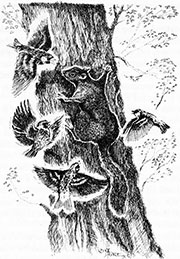

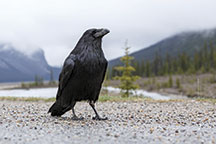
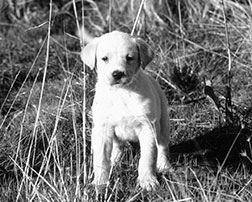
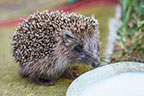
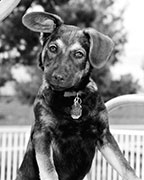
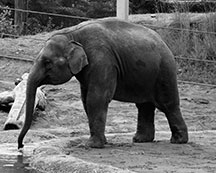
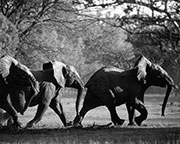
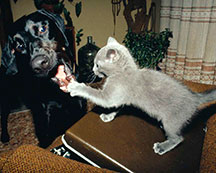
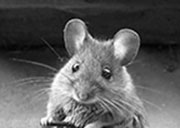
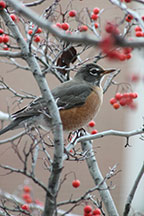
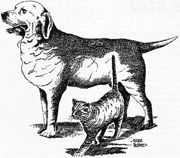
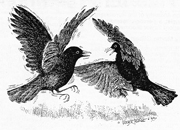
Do not be put off by the apparent frivolity of my opening anecdote. It is leading in the right direction.
It comes from a small book, The Specialist, only 29 pages, which had a tremendous vogue some 50 years ago, running through about 30 printings. It purports to be the reminiscences of an American backwoods carpenter in pioneering days who had the initiative to specialize. And what he chose to specialize in was the construction of those outdoor privies which were once such an essential feature of cottage life in Britain as well as America.
A client once came to him with a complaint about a privy he had built up, so Lem went along to see what the trouble was. It was right in the middle of haymaking. Hiding behind a barn, he watched the hired men visiting the little house and noted that they stayed there for an hour. Investigating further, he concluded that he had made “them holes too durn comfortable. So I gets out a scroll saw and cuts ‘em square, with hard edges.”
He went back to his observation post and exclaimed triumphantly, “I watched them hired hands goin’ in and out, and not one of them was stayin’ more than four minutes!”
The first motor vehicle acquired by our family was a one-ton Ford van, which my father, a peasant-farmer of the old school, bought in 1921. Up to that time the round of farm produce, which he ran in the nearest market town, had been serviced by a pony and trap. Our new transport came from an Army surplus sale and, having been intended for use in France, had a left-hand drive.
Very proud we were when it was delivered, painted bright green with my father’s name inscribed in yellow letters on both sides. It did not take long to equip it for its new career. A long cushion stuffed with horsehair was laid on the board seat behind the steering wheel. Behind it the men fixed up a rail as a backrest, and behind that was a shelf for boxes of eggs, cans of milk or crates of poultry.
More durable commodities, such as cabbages, sacks of potatoes, logs and peasticks, sat on the floor. Peasticks, beansticks and clothesposts often protruded from the back, making it necessary to tie the rear doors half open. There were no regulations in those days against ladling milk out of a bucket in a vehicle loaded with miscellaneous produce.
Driving the van was a two-man operation. The driver needed a mate sitting by his side to look out and put his hand out when a right turn loomed. It was too far for the driver to stretch across the width of the van and stick out his own hand, nor could he see what was approaching from the rear. There were, of course, no automatic signals.
The steering column sprang, almost upright, from the floorboards. Beneath the steering wheel were two levers, one on either side. One controlled the sparking rate, which apparently needed frequent adjustment, the other was the accelerator. There were no gears!
Eh? No gears? Well, there were two foot pedals, of which one was the foot brake. The other was officially the clutch combined with low gear. When the van had to go uphill and started to labor, the driver pressed his foot on this pedal and kept it there! Until the top of the hill was reached and the vehicle could move into top gear again. When climbing a long hill the engine became very hot. You could glance down at a gap in the floorboards, near the foot pedals, and see the exhaust pipe glowing red hot. I cannot remember ever feeling apprehensive about the van catching fire, though the heat penetrated through the soles of my boots.
In those days no regulations existed restricting the uses to which a vehicle could be put. So having pressed the van into use for all manner of farm jobs, during the week my father would occasionally take the family for an outing. It was swept and equipped with wooden benches, arranged lengthwise, and my mother and aunt provided themselves with cushions. The back doors were propped open so that we could enjoy a little of the scenery, and away we went, bound for a picnic. I treasured a photo of the whole family spreading the picnic hampers and cloths over the stones of Stonehenge.
What impresses me most as I look back on our trips in the old van is the lack of comfort. One could hardly be comfortable sitting bolt upright on a hard seat while striving hard to maintain the pressure on a pedal growing hot enough for a blacksmith to work on. To say nothing of the shuddering jolts every few yards as the vehicle bumped over potholes or skidded in ruts. And it wasn’t much easier for the passengers, swaying and falling against each other in the back. I have known times when it was a positive relief to have to clamber out and push the boiling vehicle up a sharp hill.
By contrast, motoring today is ultra-comfortable. We sit in luxuriously upholstered armchairs, radio providing background music, simple buttons and switches offering every control we need, even gear changes if we have an automatic model. It is so soothing and relaxing that we tend to forget we are hurtling along at 70 miles per hour . . . until we need to come to a sudden stop.
Which thought brings us back to Lem, the specialist, and his privy. Would his solution to his problem work with cars, do you think? If cars were less comfortable, would there be fewer accidents?
It would not be necessary to return to the primitive discomforts of our old Ford van. Something rather more sophisticated is indicated. For instance, a moderately painful electric shock when the speed limit was exceeded!
It may sound ludicrous, much as Lem’s seats with square edges, but the carnage on the roads, mainly through unwise speeding, is not laughable.
Peaceful Coexistence
by Ralph Whitlock
September/October 2012 Issue
Guardian Weekly September 15, 1991About Ralph Whitlock
Three letters in a week, one from Canada and two from the States, on a single theme demand a response, even though the answer seems to me to be obvious.
One reader gives an instance from his own experience: “... after watching a confrontation between my cat and the largest fox I have ever seen. Whether the cat had encountered the fox before, I don’t know, but on this occasion he faced up to the fox, a few yards away, with slightly arched back. The fox seemed perplexed and began to back away when the arrival of a human caused it to take off . . .”
Another notes that all the birds feeding at his bird table feed together. He says, “A couple of hyperactive squirrels periodically run through the gatherings of ground-feeding birds, scattering them, but the birds only jump a foot or two out of the way and then return immediately to their feeding. On the other hand, birds and squirrels will flee local cats on the prowl.”
This reader enquires, “Do the birds, as babies, have to learn to discriminate between squirrels and cats, or is this discrimination instinctive? Perhaps the answer is similar to the one about how do birds manage to fly in precise formation – that they rely on visual cues from other birds and that experience gets passed on via imitation.”
Yes, I am sure that is how it happens. Sam, our Pekinese dog, now growing old, likes to sun himself on the back lawn where the birds feed, and the birds have got used to him being there. Some of the rarer visitors keep their distance, but the common ones which come every day pay little attention to him, taking titbits from directly under his nose. But their reaction to us is very different. Humans are not to be trusted, because they can kill at a distance. These particular humans may be safe enough, but experience over countless generations tells them to be cautious.
The other query raises the question, What happens when domestic animals meet wild ones? Or when different species of wild ones meet? Do they tend to ignore each other except when competing for food?
Yes, that is precisely what happens. The cat and the fox, meeting each other unexpectedly face to face, drew away. They had no reason to quarrel. The cat, being on its own ground, arched its back in a warning gesture, which the fox accepted. After all, what would either of them have gained from a fight? And wild animals do not ever engage in a combat simply from a love of it!
Even in Africa, where lions, leopards, hyenas and other predators have to live in close proximity to their prey we can see them dozily spending a drowzy afternoon surrounded by peacefully grazing herds. At feeding time there is a flurry of activity, a wild chase for a few minutes after a chosen victim, and then, hunger satisfied, life resumes its interrupted tenor. The lions, the leopards, the cheetahs are always there; there is no place the herds of antelopes and wild beasts can go to escape their attention. But there is safety in numbers, and one can always hope that the victim is someone else. And once a kill has been made, one is safe for another day, which is all one can hope for.
What happens when predators are in competition? Well, there is a difference in approach. A lion, a leopard, a cheetah have different methods. A lion will attempt a sudden raid; a leopard will drop from an overhanging tree; a cheetah outruns even the fleetest prey. And where the predator is confronted by a formidable and persistent opposition, such as a pack of hyenas or a family of hunting dogs, it will often give and leave the field rather than fight for its rights. Aggression is only justified in the search for a meal, and if it involves running the risk of injury the game isn’t worth the candle.Inheritors of the Earth
Trouble at Stonehenge
by Ralph Whitlock
July/August 2012 Issue
Guardian Weekly May 19, 1991About Ralph Whitlock
I believe it was the distinguished Devonshire historian, Professor W. G. Hoskins, who asserted that, were it not for constant prodding of men by their wives, we would all still be living in caves! And only the other day I found myself agreeing with a writer who declared that the human race was naturally untidy. Without the benefit of statistics, I suggest that more men, undressing at night, leave their trousers where they fall than fold them and hang them in the wardrobe or even over the back of the chair. And the state of our city streets on Monday mornings testifies to our natural instinct to scatter things around. We tend to equate orderliness with being ordered about.
Civilization is under constant threat from those who prefer chaos, and it could be that chaos always wins the end. Great-grandfather William’s memory does not extend that far back, so we must use our imagination to appreciate the feelings of the inhabitants of, for instance, Silchester, 1500 years ago who from their town walls watched the Roman armies depart and gazed at the campfires of the rag-taggle scruffy invaders to whom the future belonged. We didn’t achieve anywhere near the same level of civilization again until Victorian times. And what must have been the delight of those medieval Turkish nomads when, in their attempts to return intensively settled Asia Minor to its former status of grazing land, they discovered an easy way of demolishing buildings by harnessing a team of oxen to a corner post and pulling hard.
These thoughts were prompted by the invasion, a few weeks ago, of a village I know well by a small army of travellers, hippies, nomads, call them what you will. They arrived in caravans, trucks, old buses, vans and other assorted vehicles over a period of several weeks and parked in a field whose owner had evidently given them permission. In the final stages of the occupation there were 70 or 80 vehicles and an estimated 1200 people in the 12-acre pasture. Some of the travellers were sleeping in their vehicles, some in tents, and a couple of barns offered rudimentary shelter on cold and rainy nights. How they managed for water and sanitation I don’t know.
Their numbers were considerably augmented at weekends by pop music addicts, who joined in an ear-shattering sing-song that kept the villagers awake more than a mile away and went on all night. They were not popular with their neighbors. Protest meetings were held and letters circulated in the local press. The climax came one weekend when a full-blooded, all-night concert was raided by the police. Fighting broke out, 12 policemen were injured, and an eviction order was very quickly secured. A week later the nomads had departed, leaving behind them a field churned into mud and an impressive accumulation of litter. “New Delhi,” as the travellers had labelled their ephemeral settlement, was no more.
Controversy rumbles on. Supporters of the nomads are now having their say. Those attending the final concert claim to have been as innocent as the newborn lambs in the adjacent fields and allege overreaction by the police. The relief of the villagers is tinged with apprehension that the convoy will return.
For somewhere in the esoteric background of at least a core of the travellers is a religious motive. It is, I suppose, based on sun worship, for it is linked with the summer and winter solstices and the two equinoxes, which have to be celebrated at Stonehenge. Trouble at Stonehenge is a quarterly phenomenon, circumvented at midsummer by the creation of a policed exclusion zone at a cost of several hundred of thousands of pounds.
This is the second invasion that the village has experienced in the past 40 years.
I remember it as an essentially agricultural community, peopled by small-scale farmers and laborers, with a few builders and artisans.
After the war, with all the amenities of urban life now available, its attractions were quickly discovered, and the first invasion followed. The place is now thoroughly suburbanized.
I was asked by one of the new residents how the old-timers would have dealt with the “hippy” invasion, and, as it happened, I could offer some clues. Though hippies are a new phenomenon, nomads are not. We have had gypsies in the countryside for centuries. When I was a boy a tribe of them would periodically descend on the village and camp on the wide grass verge of one of the lanes.
This happened to be a “chapel” village, and, as far back as I can remember, the chapel had a brass band. I recall a Sunday evening when the band marched half-a-mile to the gypsy encampment, played a few rousing hymns and invited the gypsies to the evening service. I doubt whether any came, but my mother had better success. Next Sunday she went to the camp and persuaded some of the mothers to send their children to Sunday School. We regulars, little snobs that we were, disapproved of having to sit next to these ragamuffins but were sternly rebuked.
The village doesn’t have a band now, and neither church nor chapel has a Sunday School. I wonder whether the respectable citizens of Silchester those 1500 years ago, viewing with distaste the shabby, long-haired rascals camping outside the walls, had any premonition of who would be the eventual inheritors of their lovely countryside?Happy Day, No Modern Conveniences
by Ralph Whitlock
January 2012 Issue
Guardian Weekly February 18, 1990About Ralph Whitlock
“Is seven your lucky number, Grandad?” I was asked, “February 7th was your birthday, and now you’re seventy-seven.”
That question and the snow that fell that day set me thinking about my arrival in this world on that night in 1914. Was it snowing then? I think not, or I would have heard about it. I have been told that my father had to get out of bed at two o-clock in the morning and cycle six miles over the hills to Salisbury to fetch the doctor, who had to dress, harness his pony and trap, and make the reverse journey to our village. The baby had safely arrived well before he did.
It was, I suppose, unusual to summon a doctor for such an ordinary event. Although no nurse lived in our village, most expectant mothers relied on neighbors who had had plenty of experience as midwives. However, the circumstances were rather special, for my parents, who had long wanted a family, had to wait 13 years for the arrival of myself, their firstborn, and my mother was 36. So I was important to them, though my importance tended to become a little diluted by the arrival of a brother and sister in the next few years.
What was it like, the world in which I found myself in that last glow of sunset before the nightmare of the First World War? Well, my father’s expedition that February night helps to set the scene. No telephone to summon the doctor. No cars. No local doctor or nurse. Incidentally, the weather records for that time reveal that the winter was mild, with “few frosts in January and February and much rain,” so perhaps my father had a wet journey.
I was born in one of the two bedrooms of our cottage on the terraced hillside of the valley in which our village sits. My father, who had started his working life as a shepherd, had recently acquired the tenancy of 12 acres of farmland and so at last, at the age of 40, had his foot on the first run of the farming ladder. From our windows we could look out on a yard and some miscellaneous building in the process of being developed into a proper farmstead. A grey New Forest pony, named Gipsy, joined our household soon after I did and was stabled in a derelict cottage at the bottom of our access path.
As our family grew, my brother and I were settled in the second of the two bedrooms where we spent the nights all through our school and adolescent years, though in the 1920s our father built a new wing to the cottage. That gave me an early lesson in the pattern of sunshine and shadows of life. Exciting and fascinating though the building of the new house was, the clearing of the site meant the sacrifice of the old apple tree in which the goldfinches nested and under which I could pick up lovely red Tom Putt “fallers” in autumn.
Life was by present-day standards primitive. My parents’ bedrooom was furnished with a commode, but we children made do with a chamber pot under the bed. Our downstairs lavatory was in a shed adjoining the house – a visit involving only a few steps outdoors, which made us more fortunate than many of our neighbors who had to trudge the length of the garden to the privy, next to the pigsty. On cold winter nights, such as we have been experiencing recently, our bed was warmed by bricks, heated in the oven and wrapped in flannel.
In our kitchen cum living room downstairs we had a black kitchen range, reputed to be the first ever installled in our village. It fitted on the open hearth, from which you could peer up the chimney and see the sky. The massively thick wall to the right of the range held a bread oven where my mother baked a batch of loaves most weeks. From the low black-beamed ceiling was suspended a bacon rack which always held some side of home-cured bacon and a ham or two.
On Saturday nights we children were bathed in a big galvanized iron bath in front of the fire, and I suppose my parents did the same after we had been put to bed. Or
perhaps they just “washed all over.” Sometimes, when my brother and I were small, neighbors would come to the house for potatoes or eggs or something while we were in the bath. They were invited to stand inside the door while my mother served them and no one was in the slightest embarrassed.
The kitchen was quite a large room, with a built-in dresser, a large table in the center, a grandfather clock, a harmonium, a rocking chair for my mother and a wooden armchair for my father. The only other downstairs room was a long narrow panttry, not much more than a corridor. Just inside the pantry door, perched on wooden stools, were large earthenware waterpans with board covers.These contained our drinking water, drawn fresh daily from a deep well by bucket and windlass, with a double supply on Saturday to last over the weekened.
We had no kitchen sink, washing up being done in bowls on the big table. On Mondays the week’s clothes wash took place in a room in the derelict cottage down the path, next to the pony’s stable. The water was heated in a copper on the otherwise disused hearth. Chopping up wood for the Monday wash was another Saturday job. At home the kitchen fire was never allowed to go out, except on Fridays, when my mother black-leaded the grate. We could not, of course, have even a cup of tea without first boiling the kettle on the stove.
My parents had had 13 years to grow used to the domestic routine before their family arrived. They were Victorian, both by birth and upbringing, and conversation at mealtimes tended to be much about old times and old timers, which probably has had much to do with my interest in such matters.
In retrospect it all sounds incredibly primitive and even deprived, but we didn’t find it so, not having the amentities of this day and age to compare it with. Almost all the homes in our village were much the same as ours, and I remember ours as a happy, busy, friendly place.
The Run-up to Christmas
by Ralph Whitlock
December 2011 Issue
Guardian Weekly December 2, 1984About Ralph Whitlock
In the city street I met this very good friend of ours, burdened with a sizeable parcel in glittering wrapping paper.
“Christmas shopping, like the rest of us?” said I, by way of conversation.
“Oh no,” she replied, with a tinge of hauteur. “This is George’s birthday present. I finished my Christmas shopping ages ago.”
I was puzzled, for I knew my cousin George’s birthday is on April 16. I said as much.
“Oh yes,” she agreed. “I don’t believe in leaving things to the last minute. I had all my Christmas presents wrapped and ready by the middle of October. And all the Christmas cards addressed, too.”
I staggered away, bemused. By the middle of October I had hardly become aware that we were having a Christmas this year. It was an event at least as distant as the next election. My cousin-by-marriage, Kay, I concluded, must be a bit of a freak. Fancy racing ahead of time like that!
But when, in the middle of November, I tried to order some ornithological Christmas cards from our county Nature Trust I learned that they had sold out long ago. “We started selling them in July,” I was told.
I began to wonder whether Kay’s was the standard attitude and mine the aberration.
Thinking about it, though, I realised that when I was farming we had our sights on Christmas much earlier in the year. We began, I suppose, in May, when we collected day-old turkey poults from the hatchery and installed them under infrared foster mothers in the barn loft.
There had been a time, in earlier years, when they were placed under broody hens, but that was before we learned that hens were carriers of sundry diseases to which the more delicate turkeys were exceedingly vulnerable. Under the broody hen regime and the subsequent mingling of the turkeys with all the other farmyard poultry, we seldom saved more than 60 percent of the birds. In the isolation of the barn loft, where they remained till the week before Christmas, we usually achieved 90 to 95 percent.
In those days, for the threshing of our corn ricks we relied on a peripatetic threshing machine, which arrived in the village at quite short notice and liked to thresh ricks for every farmer in the parish before leaving for its next assignment. If we missed this visitation, we might have to wait till the end of February before our ricks were threshed.
On one side of the farmyard we had a pair of derelict cottages, possessing the valuable feature of low-hung, substantial, oaken ceiling beams, ideal for suspending poultry for plucking. Here for day after day in the run-up to Christmas almost all the farm staff lived in a haze of feathers.
My father, I remember, used to kill the birds by wringing their necks; my mother, with a company of female assistants, dressed and trussed them. For days our farmhouse kitchen resembled nothing more closely than a poulterer’s shop. Down in their sties the pigs fed gluttonously on poultry offal.
Some of our poultry went to butchers’ shops but many more were delivered to private customers. In those years before the era of weather forecasts we anxiously scanned the skies and brushed up our traditional weather lore to decide whether there was any danger of snow. A heavy snowfall was a disaster, for the sunken lanes that led to our village quickly became blocked by drifted snow. There had been occasions when the turkeys, chickens, and geese had had to be delivered to the town in sacks hung pannier-fashion over the backs of farm horses, trekking over the open fields.
Nor was the Christmas poultry the only harvest on which we were engaged. Swedes, cabbages and savoys had to be trimmed, sprouts picked, potatoes bagged, and all had likewise to be transported to our urban customers. There was also a demand for berried holly (which we cut a fortnight or so before Christmas and stored in the farmyard, before gypsies had a chance to steal it!), for sawn logs and for Christmas trees. Not even the corn in August was a busier time than the run-up to Christmas.
Dovetailed somehow into all this activity was a crowd of social events of alarming proportions. I happen to have a list of them for 1944, the last year of the war. There was the Grand Red Cross Poultry Whist Drive, the Church Concert, the School Concert, the Women’s Institute Polay, the Village Party on Boxing Day, the Carol Singing, the Post-war Servicemen’s Recreational Centre Fund Entertainment, the Chapel Christmas tree and Party, the Christmas Eve Dance, as well as all the private functions, and most of them required weeks of preparation.
How did we manage about our Christmas shopping? That too had to be crammed into our visits to town, and many a present was purchased on the last excursion of all, on Christmas Eve.
The day after I met my cousin Kay I happened to mention to my teenaged granddaughter that Auntie Kay had finished her Christmas shopping and prepared her Christmas cards.
“I don't think much of that idea,” she gave as her opinion, after some thought. “All the preparation and anticipation are part of the fun of Christmas. I think Auntie Kay is missing out on it.”
There is no farm now, and so my grand-daughter won’t have the experience of dealing with scores of Christmas poultry. But there will be parties and socials and dances, and the making of Christmas puddings and Christmas cakes, and the shopping, including the last-minute searches for elusive and difficult gifts on Christmas Eve, when the hurrying shoppers are helped on their way by the Salvation Army band playing carols in the shopping precincts.
“It’s a climax,” says my granddaughter, “and that’s how Christmas should be. You should get busier and busier for weeks and look forward to things and get involved in things, until at last the great day comes.”
I agree. After all, Christmas celebrates the birth of a baby, and babies don’t arrive suddenly, out of the blue. Every mother knows that.The profitable pig
by Ralph Whitlock
November 2011 Issue
Guardian Weekly November 11, 1984About Ralph Whitlock
My wife, making a miraculous recovery from a massive brain hemorrhage last February, is resolutely regaining her culinary and other domestic skills, but now and again her memory needs a bit of prompting. To her consternation she had, for instance, forgotten the recipe for making the delicious West Country lardy cakes at which she once excelled. Fortunately, plenty of help and advice were forthcoming, and fat-oozing lardy cakes, enemies of all diets, are once again a frequent feature at our tea-table.
One of our informants, responsible for this very desirable development, appended to his instructions the footnote: “Of course, to make a proper old-time lardy cake you need the lard from a home-grown pig!”
Ah, yes! How well I remember it. And especially at this time of the year, for November is the month for killing the home-grown pig. Thereafter for the rest of the winter there were always sides of bacon on the bacon rack just beneath the kitchen ceiling, and always hams keeping warm, dry, and well-smoked in the chimney corner.
My father was the official village pig-killer, a post he held partly by virtue of being secretary of the village Pig Club and partly because he was the only surviving local resident with the necessary skill. By the time I had arrived on the scene he had acquired a farm, but not many years earlier he had been a cottager, with, like most of his neighbors, a pig in the sty at the bottom of the garden. The cottager’s pig was an idea that had been fostered by a succession of Liberal governments and was proving quite popular, like the contemporary scheme for promoting allotments.
As for the Pig Club, that was a primitive insurance society, members paid sixpence for every pig they acquired and in return were able to obtain compensation for any that died, other than by normal slaughter. The amount of compensation depended on the state of the club’s finances. One of my father’s duties was to inspect each pig as it took up residence, to make sure that, as far as he could tell, it was sound, and also to inspect the carcass of any casualties.
The club functioned very well until several more of the cottagers, other than my father, acquired small farms and began to keep pigs commercially. One in particular, whom we will call Walter Gabriel, made so many demands on the club funds that it became, in effect, a Walter Gabriel Benefit Society, until the club expired from financial anaemia.
At the peak of the era, however, most cottagers in our village kept a pig. The normal site for the sty was, naturally, as far from the cottage as possible, which meant next to the privy and the rhubarb patch at the end of the garden path. Thither the master of the house, expelled from the kitchen by a wife busily preparing the Sunday dinner, would retreat to spend a peaceful Sunday morning, communing with his pipe and his pig.
It was a meeting of kindred souls, in a silence punctuated by only occasional grunts from either party. With that peculiar lack of sentiment possessed (doubtless through necessity) by old-time countrymen, the man saw nothing incongruous in eventually slitting the throat of his companion, though the pig may not have viewed the matter with the same equanimity, as Thomas Hardy so rightly suggests in Jude the Obscure.
For me, when a boy, the protesting squeals of a pig being led to the slaughter were one of the authentic sounds of the November countryside, on a par with the metallic clanging of the wheelbinders and the “Wug off!” and “Coom hidder!” cries of the ploughman to his horses.
And here was I, a little lad holding the pig’s tail as two hefty men dragged it by its ears to the prepared pile of straw. There the butcher from the neighboring village quickly despatched it with a humane-killer, as by then required by law, though a few years earlier the pig-killer (my father) did the whole business with his knife. As it was, the butcher quickly dismantled his pistol and departed, leaving my father to carry on.
Across the lane from our house lived an old lady, Lizzie Collins, who had a reputation as a maker of black puddings. Always she was on hand to catch the blood when my father cut the jugular vein. As soon as she toddled off with her bucket of gore, we set fire to the straw and began the singeing process, the purpose of which was to get rid of the bristles. We burned them off with torches of twisted straw, then we poured buckets of cold water over the carcass and scraped it, then we singed it again.
Most of the men used knives for the scraping, but there was one old chap who maintained that the only proper tool for the job was the edge of a pewter candlestick, and he always came to work with a couple of them from his mantelpiece, in a sack.
Preliminaries ended, the pig carcass was wheeled in a wheelbarrow to the barn. There, with a gamrel between the hind legs to support it, it was hauled to a massive crossbeam, its nose dangling about two feet above the floor. With two of us, one on either side, holding his white apron against the carcass sides, my father now began work in earnest. With expert strokes of his knife he opened the abdomen and, probing inside, proceeded to extract the conglomeration of intestines which I came to know well.
“Take them up home to Mother,” he commanded, and the steaming mass was carried in a bath to the kitchen.
The ladies there assembled to deal with it outnumbered the men involved in the slaughter, for there was much to be done. Chitterlings to be cleaned, liver to be minced for making faggots, fat to be trimmed for melting down as lard . . .
Back in the barn the carcass was left hanging to cool overnight, with a sack wrapped around the snout to prevent the cats from getting at it. Next day the dismembering and manufacturing operations were continued until the kitchen resembled a butcher’s shop. Hams, trotters, eye pieces, cuttings, joints, ears for making brawn, hams, brains, chops and other morsels, the names of which I have forgotten, were laid out in orderly array.
The hams, eye pieces, sides of bacon and trotters were consigned to the silt in the dairy for weeks of salting, but in the meantime we feasted on delicacies. I particularly remember the “scraps,” which were indeed scraps of meat left over when the melted lard was strained off. “Cratchen” I believe they were called in Cheshire and Lancashire, and no doubt other regions had their own names for them. You ate them with pepper and salt, and it was difficult to avoid the sin of gluttony.
And the first use to be made of the lard itself was, of course, in a lardy cake. With dough fetched from the village bakery at half-past-three in the morning and rolled in layers of lard, sugar and currants.
How poor we were in those days! Our annual income was probably less than £100. But how rich!.
Starting the day...in slow motion
by Ralph Whitlock
October 2011 Issue
Guardian Weekly January 5, 1992About Ralph Whitlock
I dare say that many readers, like myself, enjoy spotting anachronisms in films and television programmes. You know the sort of thing – the stage coach draws up at the posting-inn, the passengers all in period costume climb out, and then the illusion of the age of Dickens is wrecked by the sight of an electric light pole in the background. Or Robin Hood is shown hiding behind a rhododendron thicket.
One of the most difficult problems for a producer trying to set a rural scene in the early years of the present century is to get a haymaking or harvesting background right. Time and again I have seen fields decorated with bales of hay or straw. If my memory serves me, the tractor baler did not put in its appearance until the late 1940s or 1950s. Before that, hay-bales or straw-bales were made by hand, at the rick and tied with hand-woven straw bonds. As a matter of fact, only hay or straw to be sold away from the farm was baled; for home consumption it was handled loose, with a prong.
Another pitfall which will beset producers of the future, if it has not already raised it head, will be to create an authentic village background for any period up to the early 1960s. the feature that has transformed the village scene since then is the superabundance of cypress trees. Most of them are Lawson's cypresses - an attractive and useful tree for forming a screen beloved by the new race of village residents, who like to keep their gardens private.
They are slow to start, but once the reach a height of five or six feet they grow several feet a year, making a taller screen than some of their planters bargained for and calling for drastic work with the pruning saw. Still, they are here to stay and, on the whole, they are an asset to the landscape. There can be no doubt, though, that they have completely transformed the rural scene. And any producer who photographs a modern village with a view to using the pictures as a background for a play set in, say the 1930s will be asking for trouble.
A suburban friend, country-bred, told me that he recently pointed to a bird flying high overhead and remarked to a neighbor,
“Look, there’s a jay!” To his surprise, the neighbor flatly refused to believe him.
“You can’t tell what sort of bird it is, flying and at that distance,” he declared.
And my friend said he wouldn’t be convinced.
It is, of course, quite easy, with experience. The jay, for instance, has a slow, flat flight and a typical crow-like silhouette; no country-man could mistake it. Some birds are more difficult but with practice it is even possible, as a rule, to distinguish between all the thrushes in flight (mistle-thrush, song-thrush, redwing, fieldfare and blackbird), between the numerous finches and even between some of the gulls.
Well after seventy years of practice I ought to be able to, oughtn’t I – but the incident set me thinking about some of the advantages I have gleaned from a lifetime of watching Nature, many of them still ongoing. For instance, I am not one of the natural early-risers. My wife is, but I am not. Get me out of bed at five o’clock in the morning and set me in front of a typewriter, and the paper in it would still be blank at seven. In the evening, however, I can happily tap away on the keys until nigh on midnight. My wife is a dynamo of energy in the mornings but collapses like a punctured tire in the evenings. She it is who gets up, prepares the breakfast and ruthlessly sweeps the bedclothes off my still somnolent figure. She complains, wiht some reason, about the lack of intelligent conversation at the breakfast table.
But half-an-hour later we are taking our morning walk in the woods, and I begin to wake up. I have to, if I am not to miss anything. I have to be alert to spot birds darting across the woodland ride. Sometimes there are a couple of roe deer, briefly visible before fading into the thickets; sometimes a rabbit or, less likely, a hare. At the woodland edge I sweep the panorama of fields with my field glasses, searching for the pheasants, pigeons, crows, gulls, partridges, lapwings and the odd kestrel, which ought to be there but are sometimes inexplicably absent. I am reminded that I have to keep my eyes skywards as well as groundwards and all around me.
Then there are the sounds. Here my wife has to take over, for my deafness makes it impossible for me to detect the call of the goldcrest or the squeaking of a shrew. But she can hear them, and sometimes she can point them out in time for me to catch a glimpse of them. She is my ears.
We both possess the sense of smell, fortunately undiminished.
“A fox has been across the track here in the night.”
I catch up with her and sniff. There is no mistaking the pungent scent of a dog fox. And a little farther on we see where he has been scratching at a mole-hill. We pause for a few minutes conversation with the woodman, who tells us of a badger he has met strolling along a woodland path, and of where to see crossbills.
So we come to the end of our walk, which has taken us about three-quarters of an hour, with our senses thoroughly awakened and honed for instant use. The mists of sleep have been dispersed, and I am ready to make full use of the day.
All hands to the harvest
by Ralph Whitlock
September 2011 Issue
Guardian Weekly September 5, 1982About Ralph Whitlock
It never occurred to us, when I was a boy at home on the farm in the 1920s, that the long summer holiday from school was meant to be a real holiday. We knew that it was simply the recognition by the school authorities that no rural children would attend school during harvest.
Experiences such as those recorded by the headmaster of a village school in Hampshire in the middle years of the nineteenth century in his log book must have persuaded them to bow to the inevitable.
The entry for July 20, 1868, reads: Children begin to stay away on account of harvest, to take their parents’ dinner to the field.
By September 13 they were still absent but had switched to other jobs: Attendance low, many of the children being employed in minding sheep, pigs, etc.
This being a forest region, harvests of one sort or another lasted a long time, for it was not until November 2 that the long-suffering dominie was able to record: Am rejoiced to find that Acorning has ended for this season and that nearly the whole of those absenting themselves on that account have returned to school this morning.
His personal involvement in village life prompted him to add: Having had a most bountiful harvest, such a one as the oldest inhabitants have no recollection of.
No doubt he himself had had a hand in gathering the corn harvest at least, for no-one in those days was exempt. As the corn ripened, the farmers scoured the village, staking a claim to the services of every person between the ages of 10 and 90. My father would express delight, over the tea-table, at securing promises from a one-armed ex-soldier, a 70-year-old roadman, widow Marsh and two townees who were holiday-making down at Glebe Cottage to help with the harvest. The schoolmaster and the curate had been snapped up by our neighbors a week or two earlier, but several of the employees of the local builder had committed themselves to helping us in the evenings.
In those days we were farming about 150 acres, but even on such a relatively small farm we needed 14 or 15 pairs of hands at harvest-time. Our carter with a team of two horses was fully occupied in cutting the corn with a binder. As the sheaves fell on the stubble they had to be picked up by hand and stood in stooks – hiles we called them. That was a task for old men, women and youngsters but one that could easily keep four or five of them busy.
A second team, with two one-horse wagons, was engaged in rick-making. Ideally three men and a boy were needed in the field, two of the men pitching sheaves on the wagon, one loading them and the boy leading the horses from hile to hile. At the rick four more men were required, three on the rick itself and one unloading the sheaves. Another boy waited to take the empty wagon back to the field.
I can just remember being taken in a push-chair to the harvest field and left under a hedge while my mother helped with the hiling. This must have been towards the end of WWI, when shortage of manpower made it imperative for women to lend a hand. And it wasn’t long after that that I was roped in.
“Go and turn them rooks off the hiles down t’other end of the field,” I was told, and away I toddled, to do my share.
“Aye, times baint like what they were,” lamented the bewhiskered older generation. “Things be easier now, wi’ all these machines.” They were talking about the binder.
My father remembered when all the harvest mowing was done by scythe. “The men used to line up and mow their way across the field,” he said. Each man was followed by a woman – his wife if he had one, otherwise his sister or sweetheart or mother or anyone who would work with him. She used to gather up the corn in armfuls as it fell and tie it into sheaves.
“Each of the women had a little tacker – boy or girl – hitched on to her. The little one had to pick out six long stalks and hand ‘em to the woman, for tying each sheaf. The woman twisted them into a bond. There was one chap, he was called the Lord of the Harvest, who took the leading scythe and set the pace for the mowers, and all the others had to keep up with him.”
“No,” he said, in answer to a question, “I never did that job, My mother was a widow, so she didn’t have a man to work wi’. She used to go gleaning, and I used to help her. Aye, harvest was a busy time then – busier perhaps than it is now, and that’s saying a lot.
“I remember there was some woman, when I was gleaning wi’ my mother, who stayed away for a day and when she came back the day after she brought a new baby wi’ her and put it under the hedge, snug in a rush basket, while she got on wi’ the work.”
Winning the harvest was like concluding a successful military campaign. The weather, the English climate, was the enemy, and what a sense of achievement it was when, by hard work, skillful deployment of forces and sometimes moonlight overtime, we managed to outmaneuver it.
And now one man with a combine-harvester, with another equipped with a tractor and trailer to haul the grain away, will tackle that acreage in less than a week. A skillful engineer and technician, he earns more in a week than a farm worker in the 1920s would earn in a year.
But no one was unemployed in the villages then.
I know a boy who is mentally retarded. Slightly, not severely. He is now nearly 20 and has never had a job in his life. In a country with three million unemployed he is never likely to. But in the village of my boyhood days he would have been set to work pretty quickly. There would have been plenty for him to do, and much happier he would have been doing it. He would have had a place, like everyone else, in the community.
I opted out of farming too soon. If I had a farm now I would be inclined to see what could be done to adapt it for a group of handicapped youngsters. Doing the work by hand, instead of by sophisticated modern machinery. Tending farm animals as individuals instead of en masse. I doubt whether it would be an economic proposition, but I feel sure they would find it a supremely satisfying way of life.
A Boiling Fowl
by Ralph Whitlock
August 2011 Issue
Guardian Weekly March 9, 1986About Ralph Whitlock
One of my elderly neighbors hailed me as I walked down the street.
“Can you come and kill an old hen for me?”
“I expect so,” I agreed.
“Tis me rheumatics,” she explained. “I han’t got the strength in me wrists.”
So I did the job, and stayed to help her pluck it.
Later in the day her daughter thanked me. “I don’t know why she bothers,” she added. “She doesn’t need to. Still, it’s no good arguing with her, and I couldn’t wring a chicken’s neck to save my life. I can’t understand how you can do it, you being so interested in birds.”
The old hen whose life I terminated was one of seven which have lived in my neighbor’s back garden for the past four or five years. Twice a day she has fed them, calling and talking to them as she hobbled down the path to their pen. She knew each one individually, of course, and they knew her. Now this hen, the most aged of them, had come to the end of a laying period and had shed about half her feathers.
“Won’t start laying again for months. I reckon I may as well have her for dinner.”
And so she did.
I understood her attitude. She and I both belong to a generation and an environment that accepted such matters without question. Food was something which, as far as possible, we acquired ourselves, not purchased in a shop.
In my family household we drank milk and ate butter derived from our own cows, baked bread from our own wheat, grew our own vegetables, and boiled our hens when they became too old to provide us with eggs. Most villagers kept a pig which was treated much as a family pet, until the time came for it to be a November sacrifice and a main source of meat for the coming winter.
Long before my age had reached double figures I had seen cocks treading hens and bulls serving cows; I had seen calves and lambs born; and I had assisted my father in his duties as the unofficial village pig-killer. Rabbits shot by my father on Saturday afternoons comprised a high proportion of the fresh meat on our table. Birth and death were familiar events to me.
It was true that great sadness came to our house for half-a-day when my father had to take old Gyp, the terrier who had shared our lives ever since I could remember, out to the yard and shoot her, but what else could he do when the poor old girl obviously had incurable cancer? Unpleasant duties such as this a man had to be prepared to undertake.
In the urban civilization that overwhelmingly prevails at this end of the century we have erected a barrier between ourselves and the natural cycle of life and death. More animals and birds than ever before are bred, reared, and killed for us to eat, but we are shielded from the actual processes. We do not have to take the sow to boar, we do not have to stay up all night helping a cow with a difficult calving, we do not have to wring a fowl’s neck and then pluck and disembowel her (at least, most of us don’t!). And when, like my neighbor’s daughter, we are confronted with one of these basic aspects of life, we tend to shudder and recoil.
Spring is on the wing. Already I have seen the first snowdrops and heard the first robins and thrushes singing. Hazel catkins are scattering their pollen all over the woods, and any day now I expect to see the first brimstone butterfly emerging from hibernation and flexing its wings. Soon these first tentative ventures of new life will merge into a stream, then a mighty river in full flood. There will be an upsurge of birth, new creatures being born everywhere.
And what will happen to them? Long before the autumn days start closing in, by far the greater proportion of them will be dead. It is necessary that that should happen. If all the progeny of a single pair of flies were to survive the summer they would amount to billions and vast areas of the earth would be uninhabitable for other species. But, of course, it is the role of flies to provide food for a multitude of other creatures.
For some insects, such as mayflies, life is so short that they do not, in their final imago stage, feed and have no mouth-parts or digestive organs. All they have to do is to dance for an hour or two in the spring sunshine, mate, lay their eggs and die.
The population of blue tits in Britain is relatively static, being estimated at around five million pairs. A pair of blue tits have only one brood in a summer, as a rule, but that brood usually consists of from five to twelve young ones. Let us put the average at eight. With father and mother that amounts to a family of ten.
Yet if the population is to remain static, before the next breeding season eight of the family must die. If the parents survive, then all the juveniles must perish. Their death is a necessity.
It is not, however, necessarily a tragedy. It is only human sentiment that so regards it. The old hen whose neck I wrung had come to the end of her life, and I ensured that death came to her quickly and painlessly. She had had a much longer and pleasanter life than those supermarket chicken we eat, which spend their brief lives of about eleven weeks in a congested hothouse. They have this in common, however, with the vast majority of creatures about to be born this spring – they die long before they reach maturity.
But a life span is a matter of relativity. Life must seem as long to a Mayfly enjoying its nuptial dance on a May afternoon as to a three-hundred-years-old oak falling to the woodsman’s axe. And the end is the same.
I refuse to accept that this is a morbid theme. When first I visited America, years ago, I commented that four subjects generally taboo at meal-times in Britain, were freely discussed over there. They were sex, religion, the workings of the speaker’s stomach, and how much money he or she possessed.
The range of table conversation has since been somewhat extended over here, but there is still a reluctance in both countries to discuss death. In this respect our immediate ancestors were more open and uninhibited than we are. Perhaps because they encountered death so much more frequently than we do.
Death is necessary and inevitable, and to keep alive Man must deal it out. All that is required of him is that when he is the killer he should be merciful. And my own view, perhaps a minority one, is that he should kill only from necessity, not for pleasure or recreation.Are Pigs Doomed?
by Ralph Whitlock
July 2011 Issue
Guardian Weekly May 29, 1983About Ralph Whitlock
“Pigs are either muck or money.” On that well-tried agricultural maxim, generations of farmers have based their pig-keeping activities.
The explanation is that pig-breeders can react to market trends more quickly than farmers of most other types of farm livestock. A cow produces one calf per year. The sheep farmer hopes that his ewes will have twins at the annual lambing. But a sow will produce, under good management, 2.5 litters of, say, 9 to 12 pigs per litter in twelve months. Therefore when pig-keeping is profitable a farmer can build up his stock very rapidly.
In times past, that natural reaction led to a well-recognized cycle. When the economics of pig-keeping were good, farmers in general rushed in to take quick profits. The pig population proliferated until soon the supply exceeded the demand and the market collapsed. Opportunist farmers then sold off all but their basic breeding stock and waited for the cycle to make pigs profitable again.
Such was the general order of things when pigs were a subsidiary enterprise on mixed farms. An old farmer in those days gave me his recipe for success: “A goodish few milking cows, a middling few sheep, a tidy few pigs, a few hens, ducks and geese, plus hard work!”
Pigs tended to be regarded as scavengers. One farmer I knew used to keep a batch of them in bullock-fattening yards in winter, where they thrived on the food the cattle wasted. Others allowed their pregnant sows to wander freely through woodland, as was common practice in the Middle Ages. Some grew fodder beet or other root crops for them, allowing them to dig them out of the open fields. Farmers who had a regular supply of whey from cheese-making could consider themselves lucky.
Now pigs have graduated to the status of an agribusiness.The specialist pig farm, which specializes in either breeding stock or fattening stock but usually not both, numbers its animals by the thousand. One unit I know of houses about 3,000 fattening pigs, turning out a regular weekly quota of 200, of the right weight for the factory.
For such a unit, the “in-and-out” production and marketing according to price fluctuations is a thing of the past. The pigs are expected to conform not only to the stipulated weights but to type.The modern factory wants a tailor-made pig, each exactly like its fellows in size and shape, so that it can supply its customers with standardized carcases, sides of bacon, joints and prepacked delicacies.
The economics of pig production are tight. The fattening pigs are kept in purpose-built buildings in which temperature, ventilation, light, and humidity are all automatically controlled at what have been found to be optimum levels. Rations are worked out and adjusted daily by computer, which programmes them for each separate pen of pigs. By connecting the computer to the food stores and the automatic mixing-machine, the pigman is able to deliver the correct amount of a properly balanced ration to each pen, simply by pressing a button.
The main purpose of all this sophisticated technology is to economize on food. A pig which lives in a well-designed house at a steady temperature will eat less than one exposed to the eccentricities of the weather. The computer ensures not only that the pigs are adequately fed but that they are not overfed.
For, despite all modern aids to economic production, it still takes about 5 pounds of pig food to produce one pound of weight increase in the pig’s carcass. Modern technological marvels can achieve improvements of fractions of a pound, and these, multiplied by the impressive numbers of pigs per unit, make the exercize worthwhile. But the basic equation remains.
Which brings us to the fundamental weakness of the pig as a producer of human food. Because its diet is much the same as ours it can be classified as a competitor.
A pig turned loose in a bakery or confectioners’ shop would have the time of its life and would quickly grow fat on bread rolls and cream cakes.
It would not fare so well in a meadow. Cattle and sheep, and, if it comes to that, deer, rabbits and a lot of tropical herbivores, are able to transform grass, which the human stomach cannot digest, into meat or milk, which it can. The pig has no such capacity. An old country fable tells of the man who had just managed to train his pig to live on hay and water when “the contrary creature died”! The pig can only translate a cheap food into an expensive one.
There is much to be said for a sizzling breakfast rasher, and Charles Lamb wrote a classic essay on the beauties of roast pork. Even thinking about the chitterlings, “scraps”, home-made faggots, chaps, brawn and other delicacies from the farmhouse pig when I was a boy sets my mouth watering. But they were luxuries, even then, and in the future they will become more so. We do not know just when the world human population reached its first 1000 million, but it had attained the second by 1925. It took only forty years to accumulate 3,000 million. Now there must be at least 4,000 million souls in the world, and the estimates for the end of the century range from 6,000 million to 7,500 million.
As it seems to be a matter of geometrical progression, by the year 2015 the population should have doubled itself and so stand at between 12,000 million and 15,000 million. “Stand” is a particularly appropriate word, for if we go on at that rate there will soon be standing room only. The population explosion is a far greater threat than that of nuclear war.
Already at least 15,000 people a day die of starvation, and two-thirds of the total population are, by our western standards, undernourished. Yet the demand for meat, eggs, and milk in the richer countries of the world is increasing by about 3.5 per cent per year. To meet that demand the quantity of feed grains, for use as animal rations, must increase by 3 per cent per year. If by the end of the century the human population has doubled from its present level, the output of food will also have to double, simply to feed all those people at the inadequate level of nutrition at present prevailing.
It just isn’t possible, without drastic adjustments. And one of the key adjustments which will have to be made is that feed grains for animals will have largely to disappear, to be replaced by grain for direct human consumption. Well, cattle and sheep can manage without feed grain, but pigs and poultry can’t. Exit the redundant pig. The pig and poultry agri-businesses seem doomed to vanish as rapidly as they have sprung up.
Limited numbers of pigs may still be fed on whey and other by-products, but the future of the pig in the twenty-first century, which is not so very far away, lies as the scavenger it used to be. Pigmeat will be a rural delicacy, produced by the baconer which feeds on household scraps in the sty at the bottom of the garden.On Cats
by Ralph Whitlock
May 2011 Issue
Guardian Weekly July 1, 1984About Ralph Whitlock
Most bird and beast corpses that I pick up find their way to the dissecting table of a veterinary naturalist who, in due course, supplies me with information, often surprising, about cause of death. One recent post-mortem verdict that occasioned no surprise featured a greenfinch I had found in my garden.
“Your greenfinch was definitely killed by a medium-sized or small mammal,” my friend reported. “It was bitten through the skull and through the neck. The most likely candidate is a cat once again, and to judge from the size and position of the teeth-marks I would say that the predator wasn’t very large. Do you have a smallish cat visiting the garden?”
My immediate reply was that I don’t. The cats in my neighbours’ houses are both large ones, and I have never seen any other trespassing on my property. And then I thought. What do I know about what cats visit my garden? The place could be familiar territory to a dozen cats without my being any the wiser. What does anyone know about the behaviour of any individual cat?
One of the first cats I remember was a lethargic old marmalade cat who shared a cottage with a retired farm worker. It spent much of the day sleeping on his lap.
“Never goes farther than the end of the garden,” the old chap declared. “I puts en out last thing at night, and first thing in the morning, there he is on the doorstep, waiting to be let in.” Except for one morning, when he failed to appear. Later that day he was released from a rabbit snare, a good two miles from home.
On the farm when I was a boy we had a dynasty of cats descended from a crippled tortoiseshell female we had found in an outlying barn. One of her front paws was permanently deformed where it had set itself after having been released from a gin (prevalent everywhere in those days).
The injury had not prevented her from producing and caring for a family of kittens, which were fat and lively when we found them.
I could well appreciate the authenticity of the portrait of the cat in that memorable book, The Incredible Journey. After spending months trekking homewards across the north Canadian wilderness the two dogs were in bad shape and only just able to stagger in but the cat who was their companion was as sleek and well-fed as when he started out, and there was evidence that he had found energy to sire a family or two of kittens en route.
When my radio programme, Cowleaze Farm, was on the air I remember pointing out to the two schoolgirls on one of our country walks a tabby-cat sitting quietly in the bottom of a hedge. It was a cat they knew well, having often stroked and tickled it on the kitchen hearthrug, but when they reached out hands to touch it, there in the hedge, they drew back, disconcerted.
“It doesn’t look like Bim,” they said. “It looks like a wild creature. It’s got a wild look in its eyes.”
“That’s all part of being a cat,” I assured them.
A volatile creature, a cat can change moods like a chameleon changes colour. It likewise learns quickly from experience and adapts accordingly.
A friend who lived in a woodland area in pre-myxomatosis days shared his establishment with two Jack Russell terriers and a cat. The terriers took their daily exercise in one of the several rabbit-infested hedgerows in the vicinity, first sending a bevy of rabbits scampering for their burrows and then undertaking the strenuous operation of digging them out.
In true Jack Russell style, they worked up a fury like berserk Vikings, spattering the countryside with soil for yards around, tearing at obstructing roots, and uttering appropriate war-cries. The cat meantime stationed itself strategically on the quiet side of the hedge, waiting patiently for a refugee rabbit to pop out.
My friend said that time and again he saw the cat sloping off with its reward, while the dogs continued their frenzied assault for half-an-hour or so after the operation was really over.
No friction existed between the cat and dogs. There never does between cats and other animals sharing the same home (I use the word “animals” in the sense of mammals; few cats can be trusted with a canary or budgerigar).
Once when we moved house we left behind a cat for our successors, thinking that she was too old to make the move. Dogs are primarily attached to people, but cats to places. The newcomers bought with them a dog – a quiet spaniel who had been brought up with cats and so had long ago overcome any antipathy he might have had towards them. The cat had also been used to sharing the home with dogs. So, after taking stock of each other warily for a couple of days, they settled down to a life apparently of tolerant indifference.
About a fortnight later a big pugnacious Boxer dog invaded the garden and pitched into the spaniel, who stood no chance against such a weighty adversary. The cat, indoors, heard the rumpus, went to the window and saw what was going on. With hardly a moment’s hesitation she bounded, a fireball of spitting, bristling, sharp-clawed vengeance, and landed accurately on that Boxer’s back.
The battle was over instantly. The Boxer vanished and never ventured into the garden again. And the spaniel’s owners marvelled at the perspicacity of a cat who was prepared, on an instant, to go to the rescue of a dog she had known for only two weeks.
She was a tortoiseshell cat, being a female. All tortoiseshell cats are females and all gingers male; at least, that is an almost inviolable rule, though I suppose that someone will write to tell me of an exception. And many, though not all, white cats are deaf.
On the farm in my boyhood days spaying cats, of either sex, was unheard of. We simply disposed of the numerous surplus kittens. For some reason May kittens were supposed to be unlucky. One theory for this illogical belief was that as May kittens were half-grown by August and September, when adders were about, there was always a danger that they would bring snakes indoors. But I don’t believe that was the real reason.
Of somewhat later date is the incident of two ginger cats, one male, the other spayed, which lived in adjoining houses and were sworn enemies. Neither would allow the other on its territory. But one day the spayed cat crept into its enemy’s house and sat on the rug, and the rightful occupant took no notice. That night the old lady, with whom the spayed ginger had lived, died. Her cat never went back, but the two cats thereafter lived together quite amicably to the end of their days.
The more one thinks about that episode, the more uncanny it seems. The cat whose mistress was dying recognised the approach of death in the house before it came. And so, it appears, did the ginger male next door. Or what do you make of it?
.
Washday a hundred years on
by Ralph Whitlock
April 2011 Issue
Guardian Weekly November 30, 1986About Ralph Whitlock
My long-deceased great-grandfather, whom I meet from time to time down the orchard, under the old apple tree where his ciderpress used to stand, had told my great-grandmother, Elizabeth, about my wife’s new spin dryer, so at our next encounter he brought her along, for my wife to fill in the details.
The meeting, it so happened, more or less coincided with the publication of that recent survey of how life has changed in Britain over the past forty years. In particular, my great-grandmother was intrigued by my wife having to spend less than half the time she used to at housework, and the spin dryer, of course, helped to explain why.
“The week was mapped out for us in advance,” said Elizabeth. “When a girl married she knew just what awaited her on each day of the week for the rest of her life.”
“Monday,” she explained, “was wash-day. Tuesday was ironing day. Wednesday was bedroom day. Thursday was cooking day. Friday was cleaning and polishing day. Saturday was the preparation for the Sabbath. Only a crisis, such as the arrival of a baby, permitted any alteration to the rules, and then whoever looked after you when you were in bed, followed the same routine.”
My wife, who was brought up in the same tradition, concurred, and the two women launched into an orgy of reminiscences, while we men sat on the log pile and gossipped of less important matters.
“What a battle washday used to be!” great-grandmother remembered. “Up before daybreak and getting the fire under the copper lighted . . .”
“I used to do that for you, very often,” put in great-grandfather.
“Yes, so you did,” she admitted. “Especially when the hearth fire had gone out overnight.”
“Aye, when that happened I had to get out the old tinder box, and sometimes it would take me twenty minutes or more to strike a light,” said William.
Twenty minutes to achieve a result which we would thoughtlessly invoke by striking a match or flicking an electric switch!
“Our copper really was made of copper,” Elizabeth went on. “It was set back in a recess of the wall of the old kitchen that doubled up as a dairy, you know.”
My wife knew. She had inherited it in due course.
“Then there was the starch to prepare. You did that while the copper was heating up. Two tablespoons of starch into the bowl and stir up. And the blue to be prepared too . . . but there, I always kept a blue-bag handy to dab on wasp stings and insect bites.
“When the copper was boiling, I put in the dirty clothes and gave ‘em a thorough boiling. Then fetched them out with the copper stick and dumped them in the tub for rinsing. Two lots of rinsing, in blue water, then through the mangle and out on the clothesline to dry.
“Old Maud, who lived next door, used to go along the road to help her niece, Susie, who had eleven children, Monday mornings. That was Susie Metcalf. Her man was a farm labourer and they had only a two-bedroomed cottage, with one living-room downstairs and a tiny kitchen, so there wasn’t room indoors for the copper. They had an old fireplace rigged up under a lean-to outside the back door, and that’s where Susie and Auntie Maud did their washing – for eleven children.
“Mind you, when we’d done the main wash and got the clothes on the line, we hadn’t finished. There were all the outdoor clothes to wash, like your granddad’s smock, and all the farm slacks. We used the same water for that. Never do to waste water, ‘cos it all had to be drawn from the well, by windlass. By the time I’d finished washing a dozen or two tatie sacks the water was half mud. But it was just as good for watering the garden.”
“That was my job on Saturdays,” said great-grandfather, “drawing up all the water from the well. Couldn’t do it on Sundays, of course.”
“Do you remember the old washday rhyme?” my wife asked, artfully.
They did. Great-grandmother recited it.
They that wash on Monday have all the week to dry.
They that wash on Tuesday are not so far awry.
They that wash on Wednesday are not so much to blame.
They that wash on Thursday wash for shame.
They that wash on Friday wash in need.
And they that wash on Saturday are dirty sluts indeed!
She finished triumphantly. My wife tactfully refrained from telling her that she has a habit of slipping a pile of washing in the washing-machine and leaving it to wash while she goes to church on Sunday morning. Washing on Sunday! So unthinkable that there wasn’t a stanza in the rhyme to describe such infamy.
Instead, Hilda switched to the topic of drying and explained how on wet days she is able, by using spin drier and tumble drier, to get the wash dried completely without even stepping outside the door. Great-grandmother sighed.
“You don’t know how lucky you are!
I wish I’d had those gadgets in my day. I allow he does, too,” she added, indicating great-grandfather, who grinned sheepishly.
“Twas one of those blowy Monday mornings, when the wind had got round high west after overnight rain. Good drying weather. I’d just got all the clothes on the line, reaching from the back door right down to the orchard, and they were all billowing out lovely in the wind . . . it was a big wash that day, I remember, when the clothes-post snapped off! There, I knew it was getting worse for wear, and I’d told him about it. Been on at him for weeks about it, and every time he’d say. ‘Yes, I’ll see to it,’ and did nothing. I suppose it was the weight of the clothes and the buffetting the wind was giving them. Anyway, off it snapped, and there went the clothes, all over the garden. Over the sprouts and taties and dahlias and wet grass, all my lovely clean clothes, trailing in the mud.
“Then round the corner of the house came these two blessed dogs, gamboling about with their dirty feet all over my clean sheets. And after them, his lordship there. ‘Hey, mother,’ he says, ‘can I have an early dinner today? . . . hullo, what’s up here?’”
“Then I hit him. It’s the only time in my married life I hit him, and I was sorry for it afterwards. But I reckon he deserved it, don’t you?”
We looked across at great-grandfather, but he had turned away. I think he was chuckling at the memory..
Copycat Behaviour
by Ralph Whitlock
March 2011 Issue
Guardian Weekly April 17, 1994About Ralph Whitlock
© ROGER PEARCE An interesting story of cooperation between animals comes to me from a Canadian reader who writes: “After working in an urban area of Malawi for three years we brought our dog to Canada with us. After six weeks in quarantine, he was brought to a farmhouse in west Quebec, an area of low hills, mainly rock and bush. He arrived in Canada during the summer, so needed little immediate adjustment to the climate.
“He arrived to find a cat in residence, a species unknown to him. Friends had departed for three years in Thailand, and we had agreed to cat-sit.
“Sacha, our dog, adapted well to his new environment. His most noticeable change was weight gain and improvements in his coat, as commercial dog food replaced the bone and meat meal diet of Africa.
“His first encounter with snow was memorable. Our first snowfall of the winter was generous, with about three inches on the ground overnight. As Sacha headed for the door, he stepped into a dusting of snow blown on to the porch. He immediately relieved himself in the porch and dashed back into the house. He then spent the day staring through the window at this strange environment, and it took a few days for him to accept that white was the new colour of the day.
“By the end of the winter, though, he became accustomed to being put in harness and towing our young daughters across the snow on a toboggan. He developed a very thick and long coat and grew long hair between the pads on his feet.
“Although Max was an urban cat, he found that the old farmhouse, with a partially finished basement, offered excellent mousing opportunities when the mice migrated to the basement to escape the winter. Max would administer the coup de grâce but would always abandon his expired quarry to be disposed of by humans.
“In summer Max became an outdoor cat, wandering through the 200 acres of bush all day and often by night. His hunting skills transferred well to the outdoors, but he missed the proximity of a human to do the cleaning-up. He solved the problem by enlisting the aid of Sacha.
“I never determined how they communicated, but Max would return to the house and approach Sacha. The two would then head off into the bush, the dog following the cat’s lead. A few minutes later the pair would return, walking side by side, Max with his tail erect with pride, Sacha with a mouse dangling from his mouth. The trophy would be dropped at the door, awaiting disposal by a human. Neither animal ever played with the trophy or attempted to eat it!”
My correspondent mentions another remarkable peculiarity about Max. Two years later, his owners returned on leave and were immediately greeted by Max, who dashed across the floor and leaped into his father’s arms, where he settled on his shoulders, purring loudly.
“Have you discovered his liking for potato-peelings?” he asked, and, proceeding to the kitchen, peeled a potato. Max devoured the peelings with relish. But when his owners departed Max refused to look at any potato peelings, nor would he ever recline again on anyone’s shoulders.
A reader in Antigua tells me of a remarkable example of feline behaviour which he remembers from years ago. The family cat, living at his parents’ home in Edinburgh, displayed evidence of a strange extra sense about the imminent approach of a member of the family. His parents’ house overlooked an open park, with shops down the road and around a corner, and public tramcars up and down the road. A family member might arrive from either road direction or by one of two ways across the park, and at quite irregular times.
The cat, at peace inside the house, would suddenly get up, jump out of a high window, go down the path and then sit staring in the right direction until the family member appeared! No previous sight; no particular sound; no regular timing! Uncanny is the only word for it.
My Canadian correspondent has a postscript. He writes that his cat also prefers the toilet bowl as a water supply source but cannot lift the lid. So she has determined that strong miaows will bring either a human hand to ease access or someone who, coming to investigate, will lift the lid to use the toilet and leave the seat up.
Dangerous Beauty
by Ralph Whitlock
February 2011 Issue
Guardian Weekly, February 16, 1986About Ralph Whitlock
Being naturally indolent, I am sure that I owe a debt of gratitude to our little dog, Sam, who insists on being taken for his woodland walk every day, regardless of the weather. Mind you, I enjoy them, once I have started; it is just that I need the incentive to climb into those extra layers of winter clothing and venture outside the door, into the blizzard, downpour, gale or whatever unpleasantness is prevailing.
I exaggerate. Winter weather, provided one is well fortified against it, is not unpleasant. The other morning, when the thermometer was registering five or six degrees of frost, Sammy and I found ourselves in fairyland. Every twig, every shrub, every dry grass-stalk was swathed in rime, with sparkling cobwebs dangling like tinsel from the trees. Underfoot the crisp, dead leaves crunched and crackled. I made a point of stamping though the icy covering of puddles, to release some drinking water for the birds, until I realised that it was all frozen.
The larger ones were ideal for sliding on. I was tempted to try but the thought that at my age broken bones do not mend so quickly dissuaded me. When I returned home, though, nostalgia prompted me to turn the pages of a village Women’s Institute scrapbook until I found the quotation I wanted. It is an extract from the log-book of the village school, dated 1878.
“Hearing that about a dozen boys were sliding on a pond when they ought to have been in school I followed them with the cane and plied it freely. It had a good effect.”
If I had been a boy at that school in 1878 undoubtedly I would have been one of the culprits.
Later in the day came news of a horrific road accident on the main road, a couple of miles away. Two persons killed, seven injured and five or six cars smashed. “Black ice! It’s a killer!”
So far this winter our weather has been even more changeable than usual. We have experienced some very hard frosts but none has lasted more than two or three days.
Before the end of the week the hoar frost which I had found so exhilarating had evaporated, its vapour enveloping the countryside in a thick mist. Every horizon had vanished, trees were a dark blur with no definite outlines. Sammy and I walked alone in a shapeless, dream-like world.
There was another accident on the main road that morning. A multiple pile-up. More casualties. “It happens every time,” our policeman told me. “These morning fogs are killers.”
Next day the mist had vanished and the frost had not returned. It was one of those rare winter days when, although the sun has little warmth, the brilliance of the light it sheds on golden willow-twigs, crimson dogwood shafts, indigopurple hedgerows, glossy ivy leaves, spruce needles and emerald fields of wheat is, if anything, enhanced. Winter sunshine is always beautiful.
To visit a far sector of the forest I got the car out of the garage. Negotiating an uphill bend of a country lane, I slowed down to almost walking pace as I found that bashful winter sun staring me straight in the eye. A brilliantly golden sun beginning to fade to red as it sank towards the horizon, but still dazzling. I crept slowly around the corner until it was no longer straight ahead and then fumbled for my dark glasses, which I should have been wearing anyhow. They helped, though did not give full protection.
“More accidents, I'll be bound,” was the thought that entered my head, and I was right.
“Coming up over that rise on the main road, you get the sun right in your eyes at about half-past three. It blinds you. That’s what must have happened to the driver of this car. He must have slammed on his brakes, and the lorry, coming up fast behind him, cannoned into him. Didn’t have a chance. Everybody in the car killed. I tell you, this winter sun, low in the sky, is a real killer.”
Of course, I could readily understand just how it happened. As our good policeman described.
But afterwards, when I pondered over these accidents, so wasteful of human life and happiness, I remembered how I had enjoyed all three of those weather conditions branded as “killers.” For me they are all part of the joys of winter. But not for the unhappy people involved in those accidents. Because they had been sitting in cars and hurtling along faster than was safe.
I grant that speeds that are safe on black ice or in mist, or when travelling with the sun in your eyes, are pretty low. But surely it is better to arrive at your destination late than at the mortuary early.
“What is this life, if, full of care, We have no time to stand and stare?”
I know the answer to that. It’s damned dangerous.
My son-in-law in America has a Cadillac, more high-powered than most cars on British roads, but he is restricted at all times to driving at not more than 55 mph. Even to me it seems frustrating to be ambling along at that speed, with a high gear to spare, on a freeway with room for five lanes of traffic each way.
Yet American motorists tend to refrain from exceeding the limit because they know that the motorways are well supplied with speed cops with power to fine offenders on the spot. The most effective deterrent to any crime in the world is the certainty of getting caught..
Back to Tea-Kettle Broth
by Ralph Whitlock
January 2011 Issue
Guardian Weekly, October 16, 1988
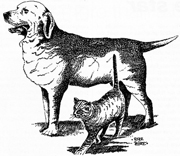
About Ralph Whitlock
At the launching party of my book, The Lost Village, back in June I indulged in some reminiscences about tea-kettle broth, which was my frequent breakfast in the lean days of the 1920s. It could be described, I suppose, as bread-and-milk without the milk. You crumbled bread into a basin, sprinkled it liberally with pepper and salt, poured hot water on it and ate it with a spoon. Quite tasty, though not perhaps a well-balanced breakfast for a growing boy.
I must add that my mother rang the changes quite efficiently. On most mornings we had bacon, fried in winter and cold in summer, from the cottage pig flitches suspended under the rafters in the kitchen, but tea-kettle broth had to suffice on perhaps two mornings a week. The kitchen fire had to be lit to boil the kettle for the teapot, anyway, so there was economy in it as well. We finished the meal with bread-and-jam – home-made, of course.
The memory was refreshed for me the other week when I learned that the morning cup of tea is definitely bad for us. The warning came from a conference of nutrition experts at Norwich. Specifically, it was given by Dr. Ian Johnson, of the Institute of Food Research, who assured us that the tannin in tea prevents our bodies from absorbing the iron in other foods.
Professor Arnold Bender, Emeritus Professor at London University, backed him up, with the recommendation that, as an early morning drink, orange juice is much better. “The iron in an egg is virtually not absorbed at all because of interferring substances, he said, “but if you take orange juice with your egg then you will increase the proportion greatly.”
Valuable advice, which, incidentally, vindicates me in my liking for boiled nettle-tips as a vegetable in April. Nettle-tips, as I tell my unconvinced wife every spring, are full of iron at a time when our bodies need it most.
But wait! What is this about the breakfast egg? Only a week or so ago we were being warned against eating eggs because of their cholesterol content. Four eggs a week are the maximum compatible with good health, especially for elderly characters, we were advised. Well, when I eat eggs for breakfast I like to have two of them, so that implies eggs on only two mornings a week. What do I have on the other five?
Cereals? But presumably the same objection applies to them as to brown bread. Quite recently scientists have made our blood creep by claims that the insecticides and nitrates applied to farm crops persist longer in the high fibre of brown bread than in white. For years we have been told that brown bread is better for us than white, but apparently it’s just as dangerous.
What then? No slice of toast? What! with butter? Not likely. In the matter of cholesterol butter is as lethal as eggs are. Perhaps I should allow myself one slice of white bread, toasted, and plaster it with some of that synthetic vegetable spread which my wife thinks helps her to keep her weight under control. I will eat that with my glass of orange juice. But perhaps it will be as well to check what the vegetable spread consists of: “Hydrogenated vegetable oil; whey; butter; salt; emulsifiers (monoglycerides, lecithin); whey solids; flavourings; natural colours (annatto, curcumin); vitamins A and D.”
I cannot recognize more than half those ingredients, but at the back of my mind are other warnings I have read recently about additives. Are these additives? I don’t know. Better, perhaps, to be sure. With my orange juice and white bread I will have just marmalade or jam.
Oh, no I won’t. Marmalade and jam are mostly sugar, and I have been warned against sugar if I wish to keep obesity at bay. And honey, of which I am very fond, is, I am assured, just another form of sugar. So, it’s back to tea-kettle broth!....
And now, while the water in the saucepan is simmering to the boil, preparatory to receiving two eggs for my breakfast, allow me to initiate you into the mysteries of boiling an egg, the one and only branch of culinary art at which I can claim to be an expert.
Always bring the water to the boil first. Slide the eggs in gently. Allow them four minutes in the boiling water – the three-and-a-half minutes often recommended is not quite enough. When you remove them from the saucepan, place them, small and uppermost, in their egg-cups and tap with a spoon to break the shell. This prevents them continuing to cook. Cover with an egg-cosy until the toast is spread, with best butter, and you are ready to eat.
I keep my hand in practice about once a week, when I happen to rise first. On the other days my wife gets the breakfast, and then we have scrambled egg on toast or poached eggs, or friend eggs with rashers and tomatoes, or any other combination of good things which she is adept at devising. And may I offer my felicitations, or commiserations, to those of you who, in the pursuit of longevity, prefer to join the nutrition experts in their breakfast of orange juice and tea-kettle broth..
Christmas Games for a Laugh
by Ralph Whitlock
December 2010 Issue
Guardian Weekly, December 19, 1991
About Ralph Whitlock
Drawing by Roger Pearce
A Christmas being a season for memories as well as merriment, I like to dig again into the big box where all the family diaries are kept and jog my mind into remembering events of long-past years. The most assiduous diarist in our family was my mother, who tended to record, however, strictly domestic events. Such as, “Washing day as usual. Not much rain but hardly any drying either.” My own efforts are not much more informative. In the late 1920s the entries dealt largely with how much pocket money my father owed me for doing certain jobs at specified rates – a fruitless exercise, incidentally, for this, being the period of the Great Depression, I hardly ever got paid.
However, the feature that struck me most in this year’s perusal of the diaries was the remarkable number of Christmas and New Year parties. They seldom started before Christmas because, in the run-up to the festivities everybody was too deeply involved in the preparation of Christmas fatstock. Christmas celebrations in our family began on Christmas Eve, with the hanging-up of pillowcases, and the first party was the family one at home on Christmas Night.
Thereafter the parties came in quick succession. Boxing Day was the occasion of the Grand Village Christmas Party, attended by virtually everyone who was not bedridden. Then we had the Vicar’s Christmas Party, the Church Sunday School Christmas Party, the Chapel Sunday School Christmas Party, the Band of Hope Christmas Party, the Cricket Club Christmas Party, numerous private Christmas parties, and several public Christmas parties in neighbouring villages. Just after the war we also organized a Young Farmers’ Club Christmas Party.
Since those days I have attended many Christmas parties of a different type. Office Christmas parties, company Christmas
parties, Christmas parties given by sundry organisations, private Christmas parties – and very pleasant most of them have been. However, they nearly all followed the same pattern, which differs in one important respect from the old-time ones. Today we meet and chat, circulating (if the congestion is not too great) with drinks in our hands, but at the old-time parties we played games. Silly games, childish games, but, by heck! we enjoyed them!
At our Village Christmas Party (Held in the old army hut which served our village in lieu of a war memorial) we would start with Musical Knees, Musical Hats or some other version of Musical Chairs and progress to Blowing out the Candle Blindfolded, Passing Balloons (or Matchboxes) without handling them, Avoiding the Hassock, Poor Pussy, Spot Dances, the Okey Okey and other frivolities I have forgotten. After a series of the more exhausting games, such as The Old Stage Coach, we would collapse into whatever chairs we could find to listen to the local comedian give a dialect monologue. Edward Slow’s dialect verses were popular items, but the more ambitious lads tried to go one better. Jonas, our star turn, obliged with a string of yarns, culminating with reflection that “Well, now I must be getting along to rack up the hosses.” Usually, too, there was a group which sang popular songs – “The Fleet’s in Port again,” “Let’s have a Tiddly at the Milk Bar” and “We Want a Little White Room” are three which I can recall to mind but pop music groups were still a thing of the distant future. We generally finished with community singing of old songs as in the Last Night of the Proms – prompted by reference to the News Chronicle Song Book.
Frequently my own role seems to have been that of stooge. I remember that on one occasion I was learning to play the auto-harp and had progressed as far as one tune, which I could perform reasonably well. So they sent me out to the stage to keep the audience quiet for a few minutes while the rest were preparing for the next item. For a few minutes, they said, but the time dragged on. I played my set piece three times, to be urged on to do it yet again by a voice from behind the curtain. In despair I turned to a tune I hadn’t properly practiced and made a mess of it. I was rescued just before the audience started throwing things at me.
Then there was the time I fancied myself as a conjuror. I started off with the recommended patter and produced the first mystifying trick, but what I didn’t know was that my brother had discovered beforehand how each one worked and had primed some of his pals.
“That’s simple,” they shouted out, “We could do that!”
“All right, come and do it then,” I challenged, falling for the trap. And they came out and did just that. Being slow on the uptake, I repeated this four or five times before I realized what was happening. Needless to say, the audience loved it.
I have often thought since that I missed a golden opportunity for working out a television act like Tommy Cooper’s many years before he came on to the stage.
One year I wrote a Christmas play for children, and we performed it at the Christmas party. It was a pantomime but it served the same purpose. Its title, The Kidnapping of Father Christmas. I think, it went down all right. It might have been better with a more efficient producer (who happened to be me), but I fear I enjoyed the rehearsals too much. They were hilarious.
Such are some of my Christmas party memories. To savour them properly you would have to imagine a dusty, overcrowded old army hut, lit by swinging oil-lamps and heated by a slow-combustion, coal-burning stove, with the snow drifting down outside and threatening to cut the village off from ‘civilisation’ for the next week and nobody caring one bit!
The Workhouse Bread Van
by Ralph Whitlock
November 2010 Issue
Guardian Weekly, Sept. 11, 1988
About Ralph Whitlock
Drawing by Roger Pearce
A letter from my American daughter one morning last week caused me to blink and look again, in disbelief. And that was before I have even opened it. The two orange-coloured 25 cent stamps on the envelope bore the inscription “Bread Wagon 1880s.” The years fell away like myself gazing at an almost identical bread-wagon (or should I write ‘waggon’?) of similar date, not in America but in a clump of bushes on our downland farm in Wiltshire.
It must have been in about 1938. An old-established livery-stable in the town, clearing out its stock of antique horse-drawn vehicles to make urgent room for up-to-date motor cars had approached us in its search for a dumping-site. In due course eight or ten old coaches, landaus, broughams, and other carriages bearing now obsolete and forgotten names were towed to the remote graveyard we provided and there left to disintegrate. They would be worth a mint of money now, but no-one realised that fifty years ago. For a time we used the weatherproof ones for storing tools, binder-twine, and other farm accessories, but during the war residents of a housing estate nearby began helping themselves to bits and pieces for fuel (then scarce), and by around 1945 even the wheels had disappeared.
Like a mongrel at Crufts, there was among the more elegant relics of a vanished era a battered and ramshackle covered van which caused my father to exclaim, when first he saw it, “Surely not? It can’t be!”
And he could never make up his mind whether it was indeed the old Workhouse bread-van which featured so prominently in his boyhood memories or one very similar to it.
His father had died, through a tragic mishap, at the age of thirty-three, leaving a widow and three small children, the youngest of whom (my father) was six months old. So my grandmother became a pauper and would have qualified for admission to the district Workhouse if she had not inherited a tiny cottage. The Guardians of the Poor therefore awarded her weekly allowance of five shillings and two loaves of Workhouse bread.
Anyone who has read Ian Anstruther’s book The Scandal of the Andover Workhouse (published 1973) may be disposed to think that the horrific conditions he exposed ended in 1847. Some of them, such as setting the half-starved inmates to spend 13 hours a day pounding animal bones into manure, were indeed discontinued, but the system continued to function well into the twentieth century and in the 1800s was as flourishing as ever. The workhouse was a doom-laden spectre in the home where my father was reared. A major disaster, like the breaking of a teacup, was sufficient to send his mother into a flood of tears, with the lament, “Now we shall all have to go to the Workhouse.”
My father has left some notes of his memories of the Workhouse bread-van, which every Friday used to turn up in our village with the pittances for the paupers.
“Once it had been painted black,” he noted, “but many long and dirty years must have elapsed since that event. I knew it as of the same colour as a frock-coat by the time the scarecrow gets it. On the front seat the Relieving Officer and the driver sat bolt upright, a stiff posture which they may have thought added to their dignity but which was, in fact, made essential by reason of a wooden partition rising vertically behind them.
It was the slowest vehicle I have ever seen. I have more than once seen a labourer, dung-spurling in the fields, stop and hold his prong upright at arms length, squinting up and down it in mock gravity to see whether it was moving or not. The horse was a sleep-walker. It was only half-alive, being, like us, dependent for its livelihood on the Guardians of the Poor. With every rib as prominent as a newly-struck furrow it staggered along till it reached the well-known halt at Mrs. Cragg’s cottage. There, on feeling the reins relax, it stopped dead and immediately fell into a profound sleep.
My father remembered the faded chamois-leather money-bag from with the Relieving Officer distributed the paupers’ dole. The Relieving Officer was “not an unkindly old man, though hard work and long acquaintance with the seamier side of life had roughened him. He was paid by the Guardians of the Poor.”
“The roll-call ended, the poor-folk flocked out to the bread-van where the driver a Workhouse inmate, was throwing open the door. Though the driver’s hands were noticeably engrimed with dirt, they were at least as well acquainted with soap and water as were those of the other paupers who mixed the dough.”
The memory of the Workhouse loaves evidently brought back the smell of them to my father and made him wrinkle his nose. “They were flat and never properly baked,” he recalled. “We guessed they were strong on bran and miller’s offal, and some swore by sawdust and sour milk. Above all, they stank.”
Hungry as they were, the children seldom finished their weekly bread allowance but slipped down from their perches around the table with a blasphemous, “Thank God for a good tea. Amen,” rather than touch the disgusting stuff. Fortunately, grandparents and neighbours saved the day on many
occcasions by sending round to the cottage quartern loaves of home baking.
It seems hardly credible that such conditions prevailed in our English villages at so short a time ago that an American commemorative postage stamp can revive memories of them in a generation still living..
Harvest is Timeless
by Ralph Whitlock
October 2010 Issue
Guardian Weekly, Oct. 9, 1994
About Ralph Whitlock
Drawing by Roger Pearce
It is harvest. The combine-harvesters are trundling across the extensive arable fields around my home. The weather is, to use a descriptive Wessex word, “caddling” … too many showers for the grain to dry properly, but that does not worry the modern farmer. When it rains the combine ceases to work, but as soon as the sun shines again it resumes. If the grain is damp, no matter. Back at base is a grain drier which will quickly reduce the moisture content to an acceptable 15 percent.
My imagination is reaching back to the first harvests gathered from these fields, say, 5,000 years ago. Then the fields would have been filled with people. The entire tribe would have been there, from small children gleaning stray ears or chasing off rooks and pigeons to old men who could still turn and spread a sheaf to catch the sunbeams. They knew, beyond doubt, that this was for them the climax of the year. Upon winning a successful harvest depended whether they would eat well or go hungry during the coming winter.
What other difference would we notice in the local people harvesting these same fields 5,000 years ago?
They would, of course, be using sickles with blades of sharp-edged flints, but the technique of tying sheaves with straw bonds was doubtless known as far back as that. We would, however, be surprised at the comparative youthfulness of the company.
Archaeologists have worked out that, when Stonehenge and Avebury were built, 50 per cent of the people were aged less than 20 years, 40 percent less than 40 years, and only 2 percent were more than 40.
But as I thought about those distant people, I realized that the gap between them and myself was not as great as between me and the driver of the combine-harvester!
The harvests of the 1920s are still clear in my memory. In the weeks before we started cutting the grain the local farmers toured the village, enlisting the aid of every able-bodied male and a good many females, too.
The schoolmaster, the postman, the thatcher, the local artist – everybody was roped in. After all, it needed a team of seven, as well as a boy to lead the horses, for carting sheaves and rick-building, and usually another team at work cutting the grain and stacking the sheaves in stooks.
From Lammas-tide onwards for about six weeks the calendar was forgotten. As secretary of our village cricket club, I knew it was futile to arrange any fixtures after the end of July. August was virtually a non-existent month. Even if daily papers had been obtainable, we would have had no time to read them and no interest in them. It wasn’t that we were cut off from the outside world, it was simply that the outside world had ceased to matter to us.
I remember harvests of the 1920s and 1930s, though by the 1940s the world was beginning to impinge on our way of life. But I cannot give a date to any harvest. I remember cutting barley fields from which blue butterflies, many of them now rare, emerged in clouds. I remember holocausts of rabbits escaping from those same fields. I remember stooking a field of sheaves, then, after rain, throwing them down again to dry, and then, after yet more rain, cutting the bonds and carting the grain and straw loose. I remember building big wheat ricks and enjoying picnic meals with our backs against the walls. But I couldn’t put a date to any one of those experiences. They are just details in one eternal, timeless harvest.
The more I think about it, the more I realize how close we came to bridging the gap between us and our primitive ancestors. Those young people harvesting their crops around the hill had no records to feed their memory. Some of them might recall some dramatic event during last harvest … or was it the harvest before? Whenever it was, the memory would soon fade. But harvest was timeless. It was a natural phenomenon that always came round at the appointed season. It was hardly a feature of either past or future; it was the eternal present.
Scared of Thunder
by Ralph Whitlock
September 2010 Issue
Guardian Weekly, September 8, 1991
About Ralph Whitlock
Drawing by Roger Pearce
“Our young Golden Labrador, recently acquired, goes frantic in a thunderstorm,” writes a Worcester correspondent. “We just don’t know what to do with him. Can you suggest anything? We understand that this is quite a common reaction.”
Yes, it is. Sam, our Pekinese, surrenders to panic when the thunder starts. We admit him to our bedroom, with the light switched on and us trying to comfort him, and he is still scared out of his wits. He howls and whimpers, he paws frantically to get out, or to get in, and when the storm begins to recede he creeps under the bed and stays there for the rest of the night.
Most of the other dog-owners tell much the same story. They would have been able to sleep through the storm themselves, they say, if it hadn’t been for the wretched dog! “In the end he got us so thoroughly awake that we got up and made a cup of tea!” is a lament I hear quite frequently. It is true that not all dogs exhibit the same extreme reaction. One correspondent says of her late fox terrier that, “she didn’t kick up a row but used to tremble violently and salivate copiously,” and that, I think, is typical of the reaction of a dog used to being left to fend for itself. Hardly any report their dogs as being completely unmoved.
It is not just the noise and the bright flashes. Now that Sam has become familiar with thunderstorms he can detect the approach of one before we can. When on a hot, humid day he follows us around, panting and looking beseechingly to be picked up, we suspect a coming thunderstorm, and sooner or later it arrives. And this is understandable, for a meteorologist has explained to me that even on a fine, clear day the atmostphere is charged with electricity. At ground level the charge is negative, but in the air it is positive, and it increases by 120 to 150 volts for each metre (or yard) of height. When a violent storm develops, this electric charge increases at a prodigious rate.
When it reaches 500,000 volts, a flash of lightning occurs. With all that electricity in the air it is no wonder that animals react to it.
So, of course, do we, though not so intensely. Instances have been known of men finding their hair standing on end just before seeing a lightning flash. And no wonder! Lightning appears to flicker because the electrical discharge follows the same path twice! The charge strikes the earth at a speed of about sixty miles per second but then surges back up the same path. The path it follows is only a few millimetres in diameter but within that narrow space the temperature reaches up to 30,000 degrees Centigrade. As this immensely powerful charge disperses in the clouds we hear its effects in the form of thunder.
Until about one hundred and fifty years ago lightning was the only form of electricity known to most people. There are a lot of things we still don’t know about lightning, but our ancestors knew less, and they had every reason for alarm at such a powerful and unpredictable force. Old customs linger.
Some country folk, for instance, always get up and get dressed during a thunderstorm at night. This behaviour may have a logical origin, for in the days when most cottages were thatched there would be little time to dress if the place were struck by lightning. Others, though perhaps not many nowadays, open at least one door to the outside, and this too may have a sensible explanation. It is a precaution against ball lightning or ‘fire-balls,’ which enter a room and float about in an erratic manner. Normally they do no damage, even if they touch a person, but occasionally they burst with a loud explosion. It would be quite reasonable to open a door to allow one to stray outside, especially by someone who had seen one.
It used to be common practice for a housewife to cover with cloths all mirrors and other furniture with shining surfaces when a thunderstorm was imminent and hurriedly to hide away cutlery in drawers. The belief was that bright surfaces attracted lightning. When umbrellas first became fashionable a type was marketed with a metal lead dangling from the rear and trailing along the ground. A personal lightning conductor! As for mirrors, it was said that they were covered during a thunderstorm because if you looked into a mirror while a storm was raging you would see the Devil looking over your shoulder!
A reader asked whether it is true that a thunderstorm will never cross a river. Not entirely, but there is an element of truth in it. A thunderstorm will follow a course dictated largely by the ground temperature, and the ground temperature is highest over ploughed ground and built-up areas, not so high over woodlands, and the lowest over water. Therefore a storm will tend to avoid crossing a river and will follow the enclosing hills, though that is not an invariable rule.
I haven’t had many reports about cats but gather that they are similarly affected, or at least some of them, as are horses. In a recent thunderstorm a valuable horse of my acquaintance was so frightened that it dashed against a barbed-wire fence and did itself damage requiring the attentions of a vet. I wonder whether wild animals react in the same way? I doubt it, because birds seem not a bit worried by all the noise and flashes. But has anyone observed in a thunderstorm the reaction of wild animals? Say deer?
I asked a neighbour how his two-year-old reacted and was told that he crowed with delight and said, Bang! Bang! So evidently small children are not naturally terrified by all the rumpus. When they show fear they have caught the reaction from grown-ups!
An Indian Ocean Idyll
by Ralph Whitlock
June 2010 Issue
Guardian Weekly, July 9, 1995
About Ralph Whitlock
Drawing by Roger Pearce
One of the joys of writing this column is the correspondence it attracts from all over the world. Hardly a week passes without the postman bringing around a dozen letters, often from far-away countries. But I thought the distance record had been broken when, in the middle of April, a letter arrived from the Abrolhos Islands. I had to consult a large-scale world atlas before I found them, and, seeing they are so remote and so little known, I thought that readers may like to know a little about them.
They lie in the Indian Ocean, 60 miles west of Geraldton, Western Australia, and consist of 122 coral islands extending over about 100 miles of ocean. My correspondents are a schoolteacher and her partner, who look after the children of the cray-fishing community for the 14 weeks of the season. Crayfish, or rock lobster, are in tremendous demand and fetch high prices. They live on North Island, which is one mile long by half a mile wide and is virtually a coral island, with beautiful sandy beaches.
It is surprising what manages to survive in these somewhat limited surroundings. A colony of wallabies is thriving. The island has a huge lizard population, not so well loved by the children because they eat the birds’ eggs. Birds are everywhere. Graceful sea-eagles are regularly seen soaring on air currents, along with a variety of terns, and the ubiquitous gulls share the islands with up to 40 regular visitors. There are no roads, and hence no traffic, and the only method of getting to the islands is by small plane or boat. Hi-tech has arrived, though, as most of the fisher families have mobile phones.
And what did my correspondent write to me about? She wanted to recommend the herb valerian for insomnia. She ways: “When the generators go off at 10 pm, there is very little to occupy oneself should a bout of insomnia occur. This gentle herb can be most useful.” Well, well.
I had not intended to return to the topic of Rat-Kings, but a letter from South Africa supplies such a logical explanation of the phenomenon that I cannot resist sharing it with my readers, who must have been as puzzled and intrigued as I have been.
The letter-writer quotes from a book, Mammals Of South Africa by Austin Roberts, published in 1951 by the Trustees of the Mammals of South Africa Book Fund. This is what it has to say about the Black Rat: “In their shelters nests are made of soft material gathered from outside. Here the young are born, and a number of instances have been recorded of ‘Rat-Kings’ resulting from the young getting their tails so inextricably entangled together with the nest materials that they form a compact bunch, from which they seem unable to free themselves. As they are unable to forage for themselves in this entangled state, other rats continue to feed them for the rest of their lives.”
So the occurrence of Rat-Kings is a natural phenomenon, though evidently it is confined to the Black Rat, as stated in my original description.
Psychic Animals
by Ralph Whitlock
April 2010 Issue
Guardian Weekly, April 4, 1993
About Ralph Whitlock
Drawing by Roger Pearce
Over the past few weeks we have turned our attention from time to time to the problems of animal awareness, and I have given some examples to which the only answer is the query, How do they know? or How did they do it? The animals in question seemed to know instinctively what to do in the circumstances, and the instances I quoted all had happy endings. But what of the opposite reactions, where an animal exhibits what seems to be an unreasoning antipathy towards a person?
I have a letter from a reader, who now lives in Australia but who was brought up in Warminster, which reads: “My father, well-known for his love of animals, including the most ferocious Alsatian in Warminster (which would sit quietly with him, whereas it would sometimes attack strangers), was frightened of horses. He told me that horses could sense this. He took me one day up to a field in Heytesbury where a horse was standing on the safe side of a five-barred gate. The horse immediately bared its teeth and glared ferociously at my father. ‘I wouldn’t dare to go into the field while he was loose,’ said my father.”
Now how did the horse, and other horses too, know that the man was afraid of them?
The same reader also relates a story of two horses trapped in a fire in the Australian bush. Most of the property was destroyed, including the house, but the two horses survived by finding a spot – the only spot – in the middle of a paddock which was not consumed. The only explanation that suggests itself is that the horses instinctively sought the dampest patch of grass in the paddock.
I remember recounting an incident, some few years back, of a carter whose horses exhibited a pronounced reluctance to take their wagon through a deep ravine. By beating them and cajoling them he eventually persuaded them to venture, and all the time they were sweating and eager to hurry through. Pausing at the exit, he heard a rumble and an almighty commotion behind him and turned to see the ravine blocked by a landslide.
It ties in with the belief that horses are psychic and able to see ghosts, including the ghosts of persons not yet dead! In my book, Wiltshire Folklore and Legends, I relate how in 1944 or 1945 a girl was returning home on her pony after dark when she came to a prehistoric track, the Ridge Way, at the top of Hackpen Hill on the way from Marlborough to Avebury. Suddenly the pony stopped and refused to budge. Try as she would, she couldn’t make him traverse that track, so she had to turn round and return home by a much longer route.
In the same locality a lady was riding her horse on the downs when it suddenly stopped, pricked up its ears and refused to go another step. The rider urged it forward, whereupon it veered around and galloped back the way it had come.
Nor are horses the only animals gifted with second sight, or at least with overpowering premonitions. Again from Wiltshire, a lady showing a couple of friends around the Wiltshire countryside decided to take a short cut by way of a footpath. A small dog belonging to one of the friends took a violent objection to that path, forcing its mistress to take a much longer route. On the return journey the lady picked up the dog to prevent a repetition of that nonsense, but it struggled free and went off along the roundabout way, rejoining the party when they left the footpath.
Later inquiries revealed that the suspect path was a section of the Ridge Way.
Sheep can apparently be included among psychic animals. One night a Wiltshire shepherd was tending some sick lambs on a hill when he heard the clock of Pewey Church strike midnight. “All of a sudden,” said the shepherd, “all the ewes started hollerin’, all three hundred of ‘em. The dog went mad with fear and bolted away across the downs, yelping – the only time I ever saw him scared of anything.” And yet the shepherd could hear nothing.
“I stood by the pens and listened, and all was quiet. I put me hand on me head and felt my hair, and it were standin’ straight up under me cap.”
And he never had any idea as to what caused the rumpus.
One other story of sheep. Labourers were winnowing corn in a down barn late one autumn afternoon when they heard the sound of galloping hooves approaching through a flock of grazing sheep outside. The sheep were panic-stricken, the barn doors were slammed shut, and the men heard the “scrooping” sound of a leather saddle. Then the sounds died away, as though the horseman had passed, and the sheep resumed their grazing. But nobody saw anything.
Feline Ghosts
by Ralph Whitlock
October 2009 Issue
Guardian Weekly, August 20, 1995
Drawing by Roger Pearce
At least seven or eight letters have fallen on my desk over the past five or six weeks on the intriguing topic of cat ghosts. The first letter is a straightforward one from Popondetta in Papua New Guinea. It starts off with the query, “Have you ever heard of a cat ghost?” and proceeds to answer it.
“Several years my family had a well-loved black cat call Minou. When he died at the age of 10 years we acquired a replacement pet for our two children. Minou, however, was determined to live on in spirit. For months after his death he was seen around the house by all the family. Sometimes he would dash out in front of us, almost causing us to trip. At other times we would be obliged to step over him, only to look back and realise there was no cat lying on the floor. Our new kitten seemed oblivious to her ghostly predecessor!”
Now a letter from North York, Ontario. “Some years ago we acquired two kittens. A friend waylaid two people outside the Humane Society building in Toronto who were taking in two cats and two kittens. She begged for the kittens and brought them to us. About two weeks later, I was in bed and falling asleep, when I distinctly felt a cat walking over me. Thinking one of the kittens was in the room, I got up and turned the light on. Nothing. the next day I mentioned this to a friend with whom I shared the house, and he astonished me by saying exactly the same thing had happened to him – the sensation of a cat walking on the bed.
“We could only assume that the kittens’ mother, whom the Humane Society had had to destroy, had come back to check on us and to make sure her children were well. The experience was never repeated.”
From South Australia: “We had a much loved and extremely active and naughty cat called Sophie. She was an ordinary enough black and white moggie, apart from the fact the she loved football. Whenever she heard one of the children bouncing a football outside she would hurl herself against the door and demand to join in.
“Sadly, when she was only 18 months old she died a lingering death from a blood disease. During her last few days, she slept at our feet on the bed. When the poor little thing finally died she manifested her second unusual characteristic by visiting us and meowing in our bedroom after we were in bed (but not asleep). We both felt her jump on to the bed and begin kneading the bedclothes and then heard her beginning to purr loudly. Naturally, when we got up and turned the light on, she wasn’t there.
“I should point out that my husband had been a gravedigger for a few years, and hence neither of us are given to supernatural imaginings. We were, however, astounded by our ghost and have not told many people for fear of being laughed at. To us, however, the occurrence was very real. We have heard the odd meow and have seen the occasional movement out of the corner of our eyes, but nothing as powerful as the initial experience, and her presence has gradually faded away.”
Drunk as a Squirrel
by Ralph Whitlock
September 2009 Issue
Guardian Weekly, April 10, 1994
Drawing by Roger Pearce
To add to my collection of stories of the strange behavior on the part of animals, a reader from Sidmouth, Devon, sends the following delightful contribution:
“A few years ago,” he writes, “I grew runner beans against a balcony we had outside our bedroom at Guildford, Surrey. At that time I was making sloe gin, and when I had bottled the gin I had a quantity of sloes, which had been soaking in gin and sugar for months. So I spread the sloes and their kernels around the runner beans as a mulch.
“A few days later, my wife spied a grey squirrel lying prone on his tummy on the top rail of the balcony balustrade. We thought he was dead, but after a while he raised himself up and slowly climbed down the balcony. There he ate some more of the gin-soaked kernels and then dragged himself back to the balustrade and laid out on his tummy again in the sun. As drunk as a lord!
“He had gone by the next day …”
By a coincidence, I received in the same week another letter featuring a squirrel from a reader in Vancouver, Canada. This reader lives on the edge of Stanley Park, where I remember watching the squirrels which abound there when I was in Vancouver. They are black squirrels, though I understand that they are just a colour variation of the familiar grey squirrel, and they are a bit of a menace to neighbouring householders who take a pride in their gardens.
My correspondent writes: “I was walking to the bank yesterday when, as I approached a corner, a squirrel ran ahead of me. A young woman, coming the other way, took a cigarette stub from her mouth and flicked it at the squirrel. (I deplored the fact that this young woman should be smoking and also that she should have teased the little animal, though that is beside the point.) The squirrel, however, did not run off but pounced on the cigarette end and started nibbling it.
“I thought, poor thing; he thinks it’s a peanut, and he’ll spit it out pretty quick. But he didn’t. As I approached he ran ahead of me to the safety of a sidewalk and settled down to his trophy. He peeled off the paper and the filter and then chewed greedily on the grubby little stub of tobacco. He was hooked! This squirrel was a nicotine addict.”
So here we have examples of two animals who have succumbed to what we regard as purely human vices or weaknesses. All that is needed now is a story of an animal who is hooked on drugs!
And now the story of Marco Polo, – who, like his namesake, was a notable explorer – for a wood mouse. It comes to me from a reader who lives near Banbury.
“I first met Marco Polo when he was sitting on the very front corner of a small armchair in the sitting-room, busily washing his face. He paused and looked at me; then got down quite leisurely and scuttled off behind my desk. We decided to trap him, in a cage trap that didn’t kill, because he was a wood mouse, not a house mouse. He was a sweet little animal, with a pale front and huge eyes and ears, and he made very little mess in the kitchen. We knew he would go outside in the spring to breed.
“The trap was baited with sunflower seeds and jam, and, sure enough, there was Marco Polo next morning, fast asleep. He slept all day and in the evening was taken to the far end of the churchyard where he leapt away into the long grass. Before releasing him, however, we cut a tuft of hair from his back, to identify him. Next day we could see he had been in the kitchen again, so the trap was re-set. He was caught again. This time he was taken up a neighbouring hill, and it took him two days to get back. But there he was, in the trap in the morning.
“We decided to take him to a nature reserve on the far side of the village. Between us and where we released him was more than 4 km and the way involved negotiating almost all the houses in the village, crossing a busy main road and swimming across a brook. Besides which, we took him in the car, which involved a detour through another village. This time he took four days to return but then was in the trap again!
“We hadn’t the heart to turn him out again, especially as the weather turned colder, so now he is living here until the spring, when no doubt, he will move out …”
This, in its way, equals some of the remarkable journeys recorded for larger animals. Here was a mouse which could not see more than a few feet, even if the way was clear, and certainly could not navigate by the stars. We can only credit it to a well-developed homing instinct.
© 2009-2018 Short North Gazette, Columbus, Ohio. All rights reserved.
Return to Homepage www.shortnorth.com